
Beyond VIBGYOR: Why Pink Doesn't Appear In The Rainbow

The rainbow , a breathtaking natural phenomenon, has captivated humans for centuries. Its vibrant colors, typically ranging from red to violet, evoke a sense of wonder and awe. However, one color often sparks curiosity – pink. Why isn't pink, a color we see in sunsets and flowers, part of the traditional rainbow spectrum?
Understanding the Rainbow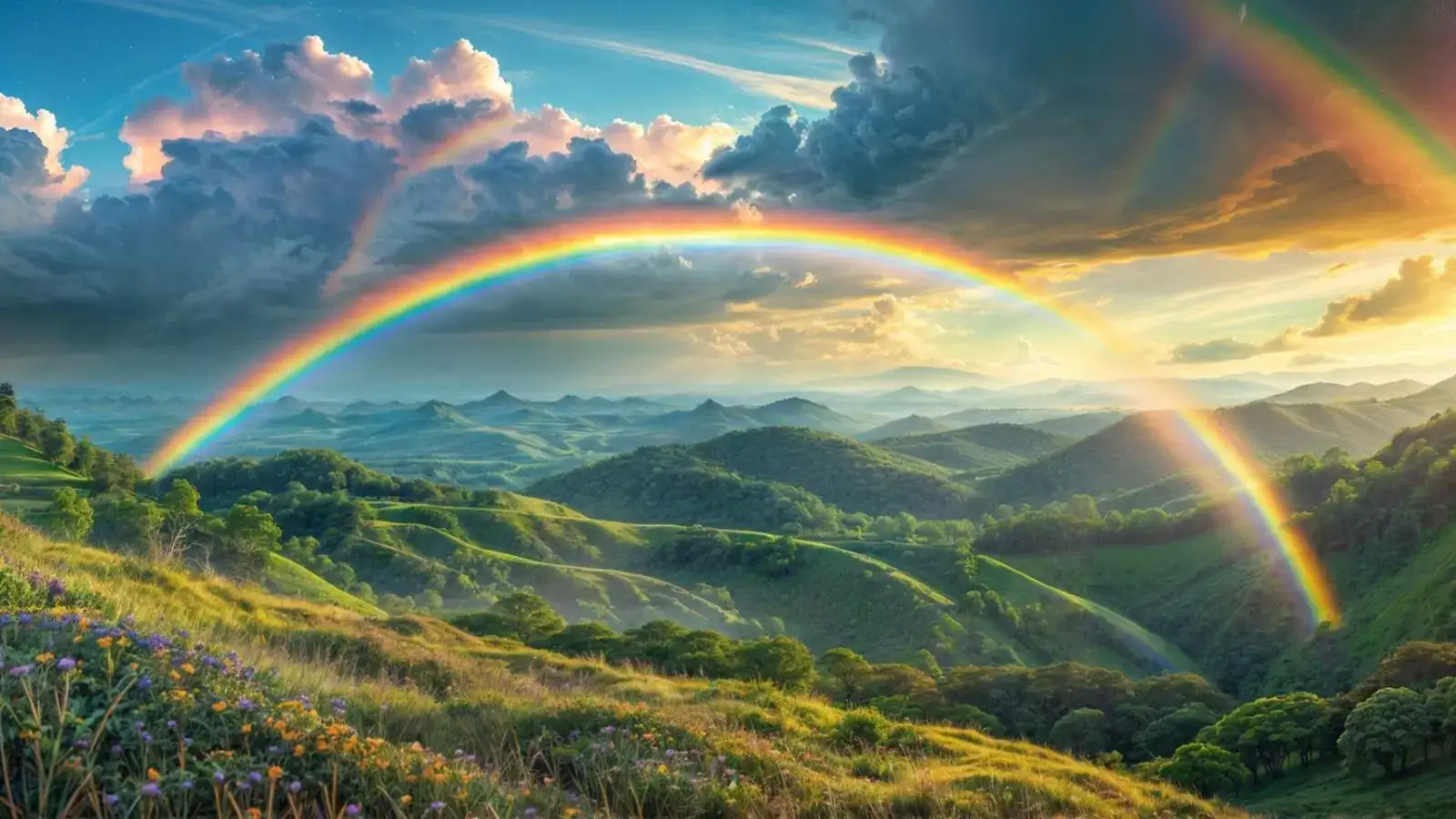
A rainbow is created when sunlight passes through water droplets in the air, refracting light into its individual colors. This process, known as dispersion, separates white light into its component colors, which we perceive as a band of colors in the sky.
The Visible Spectrum
The colors of the rainbow, often remembered using the acronym ROYGBIV, correspond to specific wavelengths of light:
1. Red (approximately 620-750 nanometers)
2. Orange (590-620 nanometers)
3. Yellow (570-590 nanometers)
4. Green (520-570 nanometers)
5. Blue (450-520 nanometers)
6. Indigo (420-450 nanometers)
7. Violet (400-420 nanometers)
Pink's Wavelength
Pink, a tint of red, has a wavelength that falls within the red spectrum (approximately 620-750 nanometers). However, pink's specific wavelength is not distinct enough to be separated from red during the dispersion process.
Why Pink Isn't Included
There are two primary reasons pink isn't considered a rainbow color:
1. Wavelength overlap: Pink's wavelength overlaps with red, making it difficult to distinguish as a separate color.
2. Lack of distinct spectral band: Unlike the other rainbow colors, pink doesn't have a distinct spectral band, making it impossible to isolate during dispersion.
The rainbow's colors are determined by the physical properties of light and water, not by human perception or artistic interpretation. While pink may not be part of the traditional rainbow spectrum, it remains a vibrant and important color in our visual experience.
Understanding the Rainbow
A rainbow is created when sunlight passes through water droplets in the air, refracting light into its individual colors. This process, known as dispersion, separates white light into its component colors, which we perceive as a band of colors in the sky.
The Visible Spectrum
The colors of the rainbow, often remembered using the acronym ROYGBIV, correspond to specific wavelengths of light:
1. Red (approximately 620-750 nanometers)
2. Orange (590-620 nanometers)
3. Yellow (570-590 nanometers)
4. Green (520-570 nanometers)
5. Blue (450-520 nanometers)
6. Indigo (420-450 nanometers)
7. Violet (400-420 nanometers)
You may also like
- Quote of the day by Madeleine L'Engle: "Life, with its rules, its obligations, and its freedoms, is like a sonnet: You're given the form, but you have to..."
- What Modern People Can Learn from Hanuman Ji's Greatest Failure
- Social Media Sparks Change in Film Representation: A Look at 'Peddi'
- Wildflowering: Letting love bloom naturally
- Blind Date with a Book: Find your next read without judging the cover
Pink's Wavelength
Pink, a tint of red, has a wavelength that falls within the red spectrum (approximately 620-750 nanometers). However, pink's specific wavelength is not distinct enough to be separated from red during the dispersion process.
Why Pink Isn't Included
There are two primary reasons pink isn't considered a rainbow color:
1. Wavelength overlap: Pink's wavelength overlaps with red, making it difficult to distinguish as a separate color.
2. Lack of distinct spectral band: Unlike the other rainbow colors, pink doesn't have a distinct spectral band, making it impossible to isolate during dispersion.
The rainbow's colors are determined by the physical properties of light and water, not by human perception or artistic interpretation. While pink may not be part of the traditional rainbow spectrum, it remains a vibrant and important color in our visual experience.






More from our partners


Loving Newspoint? Download the app now
