
Bishnupur Travel Guide: A Weekend Among Bengal's Historic Temples and Handlooms

In West Bengal's Bankura district, Bishnupur is a heritage town where temple architecture and traditional craftsmanship tell stories of a remarkable cultural past. Once an important centre under the Malla rulers, the town developed a distinctive architectural style that transformed fired clay into intricate scenes of mythology, royal life and everyday activities.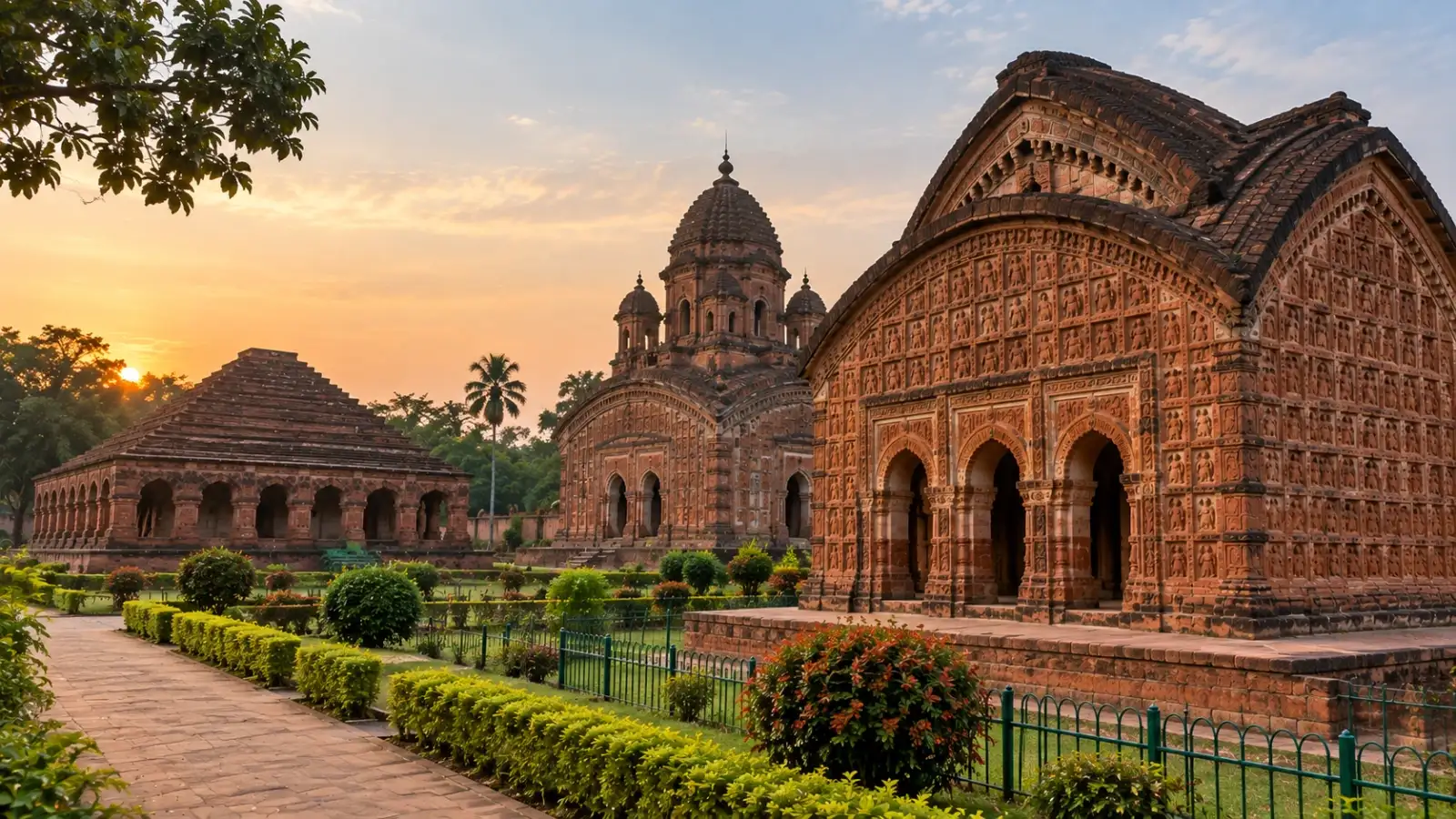
Bishnupur is also closely associated with Baluchari sarees , celebrated for their elaborate woven designs, along with terracotta pottery and a distinctive tradition of Hindustani classical music. These cultural attractions make the town an appealing weekend destination for travellers interested in history, architecture and handmade crafts.
A two-day visit offers enough time to explore the principal temples, discover the local weaving tradition and sample regional Bengali food. Rather than treating Bishnupur as a quick sightseeing stop, allow yourself time to appreciate the details that make its heritage distinctive.
Unlike a conventional temple with a single prominent tower, Rasmancha has a distinctive form that sets it apart from other historic religious buildings in Bengal. Its design reflects the region's architectural experimentation during the Malla period.
Spend time examining the building from different angles rather than taking photographs from a single viewpoint. The arrangement of arches, rooflines and brickwork becomes easier to appreciate when viewed as a complete architectural composition.
What makes the temple especially interesting is its detailed terracotta decoration. Panels across the exterior depict scenes associated with the Ramayana and Mahabharata, along with other figures and motifs that reflect the artistic interests of the period.
Look closely at the surviving relief work, where individual panels reveal the skill involved in shaping clay into detailed compositions. The carvings are not simply decorative additions. They provide a visual record of religious storytelling and the artistic traditions supported by the Malla rulers.
The terracotta panels include scenes inspired by Hindu mythology, floral patterns and ornamental designs. The density of the decoration shows how architects and craftspeople used fired clay to create elaborate surfaces without relying on extensive stone carving.
Take your time when examining the walls. A knowledgeable local guide can help explain the stories represented in the panels and identify details that might otherwise go unnoticed.
After visiting the temples, make time for the Dalmadal Cannon, a historic iron cannon linked to the town's military history and local legends. It offers a different perspective on Bishnupur, reminding visitors that the settlement's past involved more than religious patronage and artistic achievement.
The temple circuit can involve considerable walking, particularly during warmer months. Wear comfortable footwear, carry water and plan outdoor visits for the cooler parts of the day.
Many Baluchari designs depict scenes inspired by the Ramayana, Mahabharata, mythology and historical courtly life. Rather than being added through embroidery after the fabric is completed, the patterns are woven into the textile using specialised techniques.
The tradition has a wider history associated with Bengal, including the village of Baluchar in Murshidabad. Bishnupur subsequently became an important centre for its revival and continued production.
A workshop visit can help explain how designs are developed, how threads are arranged and how the weaving process produces detailed figures and patterns. Ask whether a demonstration is available before arriving, as not every workshop operates as a visitor attraction.
If you plan to purchase a saree, enquire about the silk, weaving technique, design and care instructions. Prices vary considerably according to the materials, complexity and time involved. Buying from a reputable weaver or seller can also give you a better understanding of the work behind the finished garment.
The Bankura horse is one of the region's most recognisable craft forms. Traditionally associated with the wider Bankura region, these stylised terracotta horses are distinguished by their elongated necks, upright ears and decorative details.
Smaller pieces can make practical souvenirs, particularly for travellers who want to bring home a reminder of Bengal's craft heritage without purchasing a large object.
When shopping, ask about the origin of the item and whether it was made locally. This is especially useful when several products have similar designs but different production methods.
The tradition is associated with a style of classical singing that has its own historical lineage and musical characteristics. It adds another dimension to the town's cultural identity, which is often discussed mainly in terms of temples and textiles.
If you are visiting during a local cultural programme or music event, check whether performances are open to visitors. Schedules may vary, so it is best to confirm arrangements before planning your day around a concert.
Posto bora, made with poppy seeds, is a preparation worth looking for if it is available. Visitors can also ask about local sweets, including Mecha Sandesh, which is associated with Bishnupur and is made using ingredients such as gram flour and jaggery.
For a simple meal, look for an establishment serving a traditional Bengali thali. These meals can provide a useful introduction to the balance of flavours and textures found in regional cooking.
If you follow a vegetarian diet or have food allergies, confirm the ingredients and preparation method before ordering. Recipes and menus vary between establishments.
The summer months can be hot, with limited shade at several outdoor monuments. During the monsoon, the surrounding countryside becomes greener, although rainfall may affect travel plans and access to some locations.
The Bishnupur Mela, generally held in late December, is worth checking if you are interested in local crafts, music and cultural activities. Dates and programmes can change, so confirm the schedule before travelling.
Once in Bishnupur, a combination of walking and local transport, such as an auto-rickshaw or battery-operated toto, can make it easier to visit monuments spread across the town.
For a relaxed weekend, consider staying overnight rather than attempting every attraction in a single day. Accommodation options include hotels and guest houses, with some properties located conveniently for sightseeing.
Check train schedules, accommodation availability and monument opening arrangements before departure, especially if travelling during a festival or public holiday.
The best way to experience the town is to balance its major landmarks with time spent understanding the details. Look closely at the temple panels, speak to artisans where possible and explore the local food scene without rushing from one attraction to another.
For travellers seeking a cultural weekend in West Bengal, Bishnupur offers a distinctive alternative to a conventional city break. It is a place where history is visible in the buildings, woven into textiles and preserved through the skills of local craftspeople.
Bishnupur is also closely associated with Baluchari sarees , celebrated for their elaborate woven designs, along with terracotta pottery and a distinctive tradition of Hindustani classical music. These cultural attractions make the town an appealing weekend destination for travellers interested in history, architecture and handmade crafts.
A two-day visit offers enough time to explore the principal temples, discover the local weaving tradition and sample regional Bengali food. Rather than treating Bishnupur as a quick sightseeing stop, allow yourself time to appreciate the details that make its heritage distinctive.
Day 1: Explore Bishnupur's Remarkable Terracotta Temples
Begin at Rasmancha
Rasmancha is one of Bishnupur's most recognisable monuments and a useful starting point for exploring the town's architectural heritage. Built during the reign of Malla ruler Bir Hambir around 1600, the structure has an unusual pyramidal appearance, with arched galleries surrounding its central platform.Unlike a conventional temple with a single prominent tower, Rasmancha has a distinctive form that sets it apart from other historic religious buildings in Bengal. Its design reflects the region's architectural experimentation during the Malla period.
Spend time examining the building from different angles rather than taking photographs from a single viewpoint. The arrangement of arches, rooflines and brickwork becomes easier to appreciate when viewed as a complete architectural composition.
Discover the Jor Bangla Temple
The Jor Bangla Temple, also known as Keshta Rai Temple, is another essential stop. Its architecture draws inspiration from traditional Bengali hut-shaped structures, particularly the curved roofs associated with rural homes.What makes the temple especially interesting is its detailed terracotta decoration. Panels across the exterior depict scenes associated with the Ramayana and Mahabharata, along with other figures and motifs that reflect the artistic interests of the period.
Look closely at the surviving relief work, where individual panels reveal the skill involved in shaping clay into detailed compositions. The carvings are not simply decorative additions. They provide a visual record of religious storytelling and the artistic traditions supported by the Malla rulers.
Visit Shyam Rai Temple
The Shyam Rai Temple is particularly notable for its five-spired design, commonly described as a Pancha Ratna temple. Its architectural form and richly decorated exterior make it one of Bishnupur's most important heritage attractions.The terracotta panels include scenes inspired by Hindu mythology, floral patterns and ornamental designs. The density of the decoration shows how architects and craftspeople used fired clay to create elaborate surfaces without relying on extensive stone carving.
Take your time when examining the walls. A knowledgeable local guide can help explain the stories represented in the panels and identify details that might otherwise go unnoticed.
See Madan Mohan Temple and the Dalmadal Cannon
Madan Mohan Temple is another significant monument associated with Bishnupur's religious heritage. Its architecture and decorative features offer further examples of the region's distinctive temple-building traditions.After visiting the temples, make time for the Dalmadal Cannon, a historic iron cannon linked to the town's military history and local legends. It offers a different perspective on Bishnupur, reminding visitors that the settlement's past involved more than religious patronage and artistic achievement.
The temple circuit can involve considerable walking, particularly during warmer months. Wear comfortable footwear, carry water and plan outdoor visits for the cooler parts of the day.
Day 2: Discover Baluchari Sarees and Traditional Crafts
Visit a Baluchari Weaving Workshop
Bishnupur is one of the best-known centres for Baluchari silk sarees. These textiles are admired for their intricate woven designs, particularly on the pallu, the decorative end of the saree.Many Baluchari designs depict scenes inspired by the Ramayana, Mahabharata, mythology and historical courtly life. Rather than being added through embroidery after the fabric is completed, the patterns are woven into the textile using specialised techniques.
The tradition has a wider history associated with Bengal, including the village of Baluchar in Murshidabad. Bishnupur subsequently became an important centre for its revival and continued production.
A workshop visit can help explain how designs are developed, how threads are arranged and how the weaving process produces detailed figures and patterns. Ask whether a demonstration is available before arriving, as not every workshop operates as a visitor attraction.
If you plan to purchase a saree, enquire about the silk, weaving technique, design and care instructions. Prices vary considerably according to the materials, complexity and time involved. Buying from a reputable weaver or seller can also give you a better understanding of the work behind the finished garment.
Explore Bishnupur's Terracotta Craft Tradition
Terracotta craftsmanship extends beyond the temple walls. Local artisans produce decorative objects, figurines, pottery and other items using fired clay.The Bankura horse is one of the region's most recognisable craft forms. Traditionally associated with the wider Bankura region, these stylised terracotta horses are distinguished by their elongated necks, upright ears and decorative details.
Smaller pieces can make practical souvenirs, particularly for travellers who want to bring home a reminder of Bengal's craft heritage without purchasing a large object.
When shopping, ask about the origin of the item and whether it was made locally. This is especially useful when several products have similar designs but different production methods.
Experience Bishnupur's Musical Heritage
Bishnupur is also known for the Bishnupur Gharana, a distinctive school of Hindustani classical music that developed under royal patronage.The tradition is associated with a style of classical singing that has its own historical lineage and musical characteristics. It adds another dimension to the town's cultural identity, which is often discussed mainly in terms of temples and textiles.
If you are visiting during a local cultural programme or music event, check whether performances are open to visitors. Schedules may vary, so it is best to confirm arrangements before planning your day around a concert.
What Should You Eat in Bishnupur?
Food provides another way to experience the region's culture. Local eateries serve Bengali meals that may include rice, dal, seasonal vegetables, posto preparations and other familiar regional dishes.Posto bora, made with poppy seeds, is a preparation worth looking for if it is available. Visitors can also ask about local sweets, including Mecha Sandesh, which is associated with Bishnupur and is made using ingredients such as gram flour and jaggery.
For a simple meal, look for an establishment serving a traditional Bengali thali. These meals can provide a useful introduction to the balance of flavours and textures found in regional cooking.
If you follow a vegetarian diet or have food allergies, confirm the ingredients and preparation method before ordering. Recipes and menus vary between establishments.
Best Time to Visit Bishnupur
October to March is generally a comfortable period to explore Bishnupur. The weather is often more suitable for walking between temples, examining exterior carvings and visiting weaving workshops.The summer months can be hot, with limited shade at several outdoor monuments. During the monsoon, the surrounding countryside becomes greener, although rainfall may affect travel plans and access to some locations.
The Bishnupur Mela, generally held in late December, is worth checking if you are interested in local crafts, music and cultural activities. Dates and programmes can change, so confirm the schedule before travelling.
You may also like
How to Reach Bishnupur
Bishnupur has its own railway station and is connected to Kolkata by train. Travellers can also reach the town by road, with journey times depending on the starting point, traffic and route conditions.Once in Bishnupur, a combination of walking and local transport, such as an auto-rickshaw or battery-operated toto, can make it easier to visit monuments spread across the town.
For a relaxed weekend, consider staying overnight rather than attempting every attraction in a single day. Accommodation options include hotels and guest houses, with some properties located conveniently for sightseeing.
Check train schedules, accommodation availability and monument opening arrangements before departure, especially if travelling during a festival or public holiday.
A Weekend Worth Spending Slowly
Bishnupur offers a rewarding combination of architecture, textiles, food and music. Its terracotta temples demonstrate the artistic achievements of the Malla period, while Baluchari sarees and local pottery reveal the continuing importance of traditional craftsmanship.The best way to experience the town is to balance its major landmarks with time spent understanding the details. Look closely at the temple panels, speak to artisans where possible and explore the local food scene without rushing from one attraction to another.
For travellers seeking a cultural weekend in West Bengal, Bishnupur offers a distinctive alternative to a conventional city break. It is a place where history is visible in the buildings, woven into textiles and preserved through the skills of local craftspeople.






Loving Newspoint? Download the app now
