
What Is Brain Rot? The Internet Trend That's More Than Just a Meme

Brain Rot has become one of the most talked terms of the internet’s most talked about terms, especially among Gen Z and Gen Alpha. Gen Z influences everyone as they give people to express themselves with the pressure of being judged. While it starts as an internet joke, the term now reflects growing concerns about digital habits and their impact on mental well being. The phrase is commonly used after spending hours endlessly scrolling videos, memes are viral trends that provide entertainment but little mental stimulation.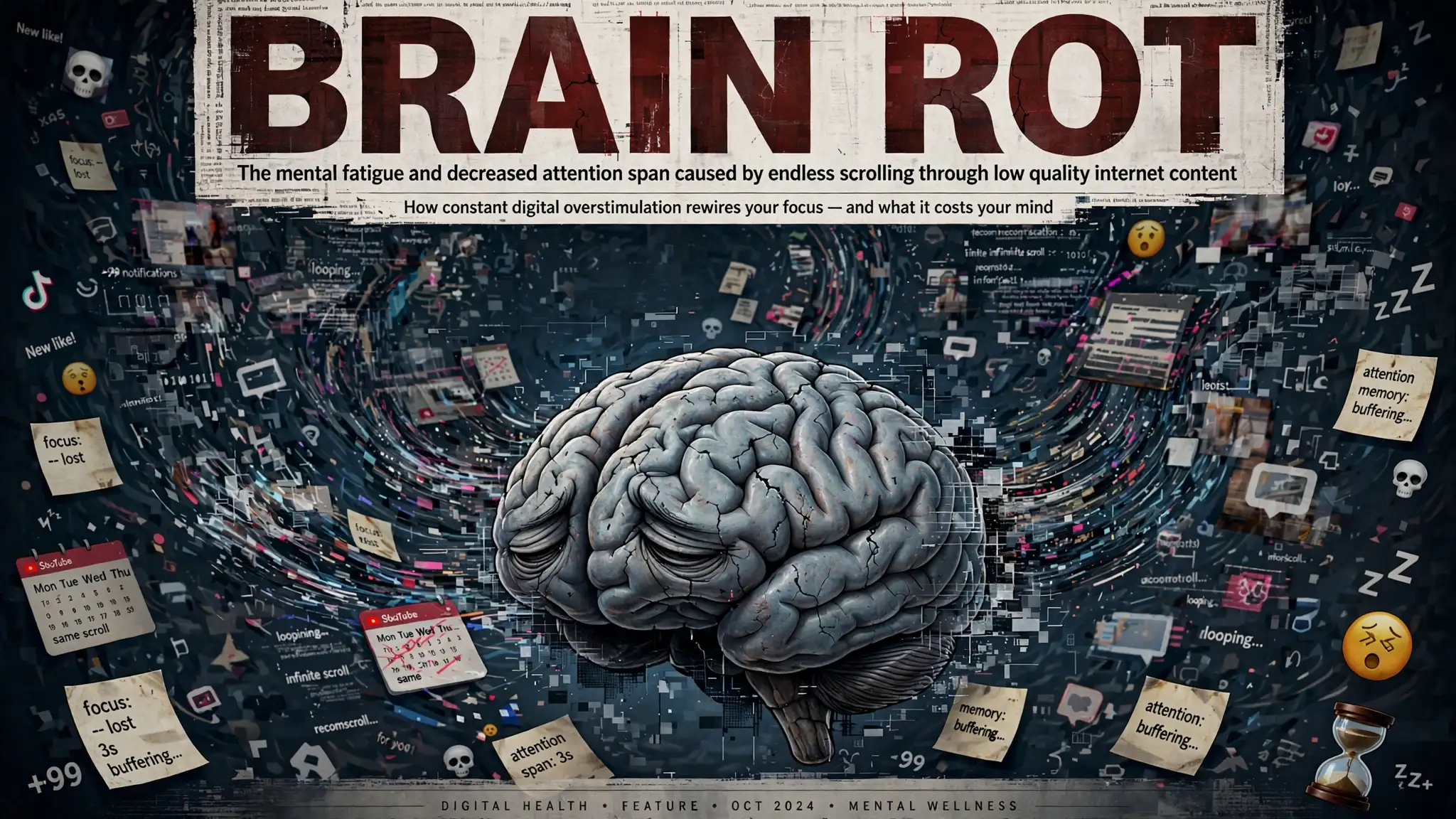
Generally Brain Rot refers to the mental fatigue and decreased attention span caused by the endless scrolling through low quality internet content. It also describes the hyper specific, absurd internet slang and memes that remain in the digital overconsumption.
People experiencing brain rot often say that they can not concentrate for long periods, constantly crave new content, and feel mentally drained despite doing very little. Forget information quickly, lose motivation for productive tasks.
This phrase became popular on platforms like, TikTok, Instagram reels, X (formerly Twitter) reddit. Users jokingly caption it in their posts, comments and even in the replies, this term is used both humorously and seriously. Viral meme compilations, absurd humour, AI generated videos and repetitive internet jokes have contributed to the popularity of the phrase.
Social media is a platform with endless content which can keep you engaged for hours and more, infinite scrolling encourages continuous consumption without natural stopping points. Short form videos provide instant entertainment, constant switching between videos trains the brain to seek quick rewards. Every funny clip becomes viral and releases a small amount of Dopamine, this creates a cycle where the users keep refreshing feeds for another quick hit of entertainment. The information overload leaves the brain feeling overwhelmed, and the brain can not process hundreds of unrelated pieces of content in a short period of time.
The psychologist says that the feeling is real even though “brain rot ” is not an official psychological condition, research suggests that excessive screen time and constant digital stimulation can reduce the attention span, affect memory learning and increase mental fatigue. However, occasionally social media use alone does not permanently damage the brain. The concern lies in prolonged, unhealthy digital habits.
When people believe in the idea that prevention is better than cure, then nothing can leave a negative impact on a human. The preventive measures we can use to avoid it are:
The popularity of the phrase has started conversations about digital wellness, screen addiction, health social media habits, mindful technology use, and many influencers now encourage the followers to reduce unnecessary scrolling and focus on real life experiences.
Brain rot may have started as a humorous internet expression, but it reflects a genuine concern about the effects of excessive digital consumption. While social media is not that harmful, when used in excess, can make people feel mentally drained. Understanding the trend can help people build healthier online habits, improve focus and create a balance between life on and off screen.
What is Brain Rot ?
Generally Brain Rot refers to the mental fatigue and decreased attention span caused by the endless scrolling through low quality internet content. It also describes the hyper specific, absurd internet slang and memes that remain in the digital overconsumption.
People experiencing brain rot often say that they can not concentrate for long periods, constantly crave new content, and feel mentally drained despite doing very little. Forget information quickly, lose motivation for productive tasks.
How has this trend become popular ?
This phrase became popular on platforms like, TikTok, Instagram reels, X (formerly Twitter) reddit. Users jokingly caption it in their posts, comments and even in the replies, this term is used both humorously and seriously. Viral meme compilations, absurd humour, AI generated videos and repetitive internet jokes have contributed to the popularity of the phrase.
Why does it happen ?
Social media is a platform with endless content which can keep you engaged for hours and more, infinite scrolling encourages continuous consumption without natural stopping points. Short form videos provide instant entertainment, constant switching between videos trains the brain to seek quick rewards. Every funny clip becomes viral and releases a small amount of Dopamine, this creates a cycle where the users keep refreshing feeds for another quick hit of entertainment. The information overload leaves the brain feeling overwhelmed, and the brain can not process hundreds of unrelated pieces of content in a short period of time.
You may also like
- Meet Parag Agarwal: Ex-Twitter CEO and IIT Bombay alumnus who was removed by Elon Musk but came back with his own AI startup valued at $2 billion
- Messi and Yamal: A Generational Clash in the 2026 FIFA World Cup
- Forget white vinegar: This natural powder cleared yard ants in 15 minutes, but it only works when dry
- SIP vs SSY: If you invest ₹2,000 per month in Sukanya Samriddhi and an SIP, which one will generate higher returns?
- 8th Pay Commission: If a fitment factor of 2, 2.5, or 3 is granted under the 8th Pay Commission, the salary will rise to this level..
Common signs of Brain Rot
Everything comes with effects where, brain rot comes with after effects :- Difficulty in reading long articles or books
- Difficulty reading long articles or books.
- Checking the phone every few minutes.
- Watching videos without remembering them.
- Feeling bored quickly.
- Trouble focusing during work or studies.
- Constantly switching between apps.
- Reduced patience for slow-paced activities.
Is Brain Rot Real ?
The psychologist says that the feeling is real even though “brain rot ” is not an official psychological condition, research suggests that excessive screen time and constant digital stimulation can reduce the attention span, affect memory learning and increase mental fatigue. However, occasionally social media use alone does not permanently damage the brain. The concern lies in prolonged, unhealthy digital habits.
Can You Prevent Brain Rot ?
When people believe in the idea that prevention is better than cure, then nothing can leave a negative impact on a human. The preventive measures we can use to avoid it are:
- Limit screen time, set daily timers for social media, take regular breaks, and avoid overconsumption. Even if you are bored, try not to scroll endlessly.
- Consume better content, include content of your interests, and support meaningful learning. Follow creators who provide value.
- Spend time reading books, magazines or newspapers. Long form reading helps improve focus and reduce the negative impact of excessive screen time on mental health.
- Practice digital detox, have phone free mornings or evenings, avoid scrolling before bedtime. Avoid the content that could leave a negative impact on sleep.
- Do offline activities. Try exercising, journaling, painting, cooking, walking, spending time with family and friends.
Positive side of the trend
The popularity of the phrase has started conversations about digital wellness, screen addiction, health social media habits, mindful technology use, and many influencers now encourage the followers to reduce unnecessary scrolling and focus on real life experiences.
Brain rot may have started as a humorous internet expression, but it reflects a genuine concern about the effects of excessive digital consumption. While social media is not that harmful, when used in excess, can make people feel mentally drained. Understanding the trend can help people build healthier online habits, improve focus and create a balance between life on and off screen.






Loving Newspoint? Download the app now
