
Brown Rice Vs Quinoa: Which Is Healthier And Higher In Fibre?

Both brown rice and quinoa have earned a place in healthy diets because they are nutrient-rich, minimally processed and easy to include in everyday meals. From Indian curries and dals to salads and grain bowls, both can be used in a variety of dishes.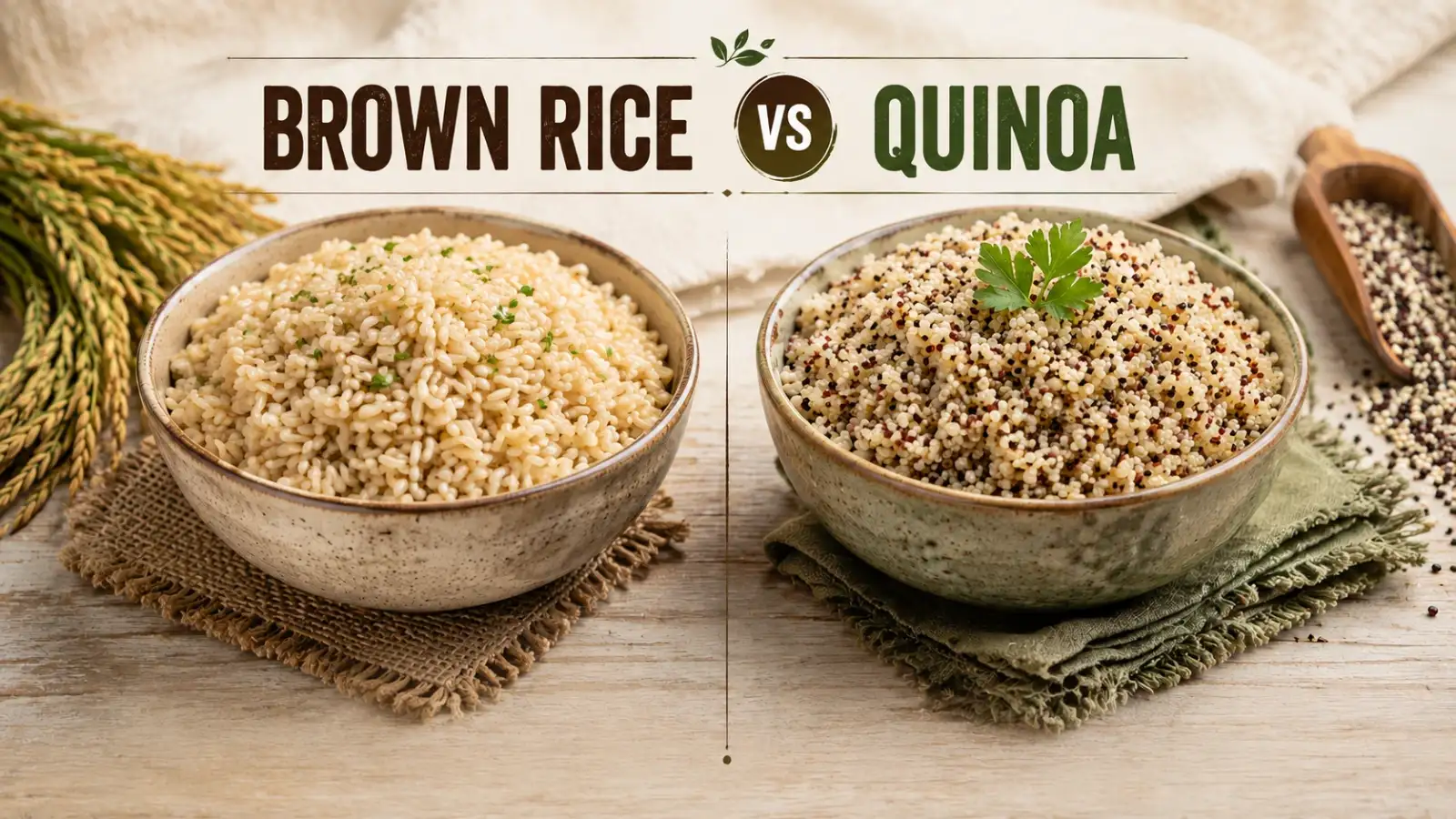
However, if fibre is your top priority, quinoa has an advantage over brown rice.
Based on USDA nutrition data, 100g of cooked quinoa provides around 2.8g of dietary fibre, while the same amount of cooked brown rice contains approximately 1.6g to 1.8g of fibre.
This means quinoa can provide roughly 50% to 75% more fibre than brown rice in the same quantity.
Fibre-rich foods are also associated with several long-term health benefits. Higher fibre intake has been linked with a lower risk of conditions such as cardiovascular disease, type 2 diabetes and colorectal cancer.
Including fibre-rich foods such as vegetables, fruits, pulses, whole grains and seeds in your daily diet can therefore be an important part of a balanced eating pattern.
Also Read: Leftover Rice Recipes: 4 Traditional Indian Ways to Reuse Cooked Rice
Per 100g cooked, quinoa contains approximately 4.4g of protein, while brown rice provides around 2.3g to 2.7g.
Quinoa is also considered a complete protein because it contains all nine essential amino acids. This can make it particularly useful for people looking to include more plant-based protein in their meals.
Quinoa also provides several important micronutrients, including magnesium, iron and folate.
Brown rice, however, should not be overlooked. It remains a nutritious whole grain and provides whole-grain carbohydrates, along with several vitamins and minerals.
However, satiety depends on much more than the grain itself. Portion size, cooking method and accompanying ingredients all influence how filling a meal feels.
For example, pairing either brown rice or quinoa with vegetables, beans, lentils, curd or healthy fats can create a more balanced and satisfying meal.
However, if fibre is your top priority, quinoa has an advantage over brown rice.
Based on USDA nutrition data, 100g of cooked quinoa provides around 2.8g of dietary fibre, while the same amount of cooked brown rice contains approximately 1.6g to 1.8g of fibre.
This means quinoa can provide roughly 50% to 75% more fibre than brown rice in the same quantity.
Why Is Fibre Important?
Dietary fibre does more than support healthy digestion. It can help you feel fuller after meals and may support better control over overall food intake.Fibre-rich foods are also associated with several long-term health benefits. Higher fibre intake has been linked with a lower risk of conditions such as cardiovascular disease, type 2 diabetes and colorectal cancer.
Including fibre-rich foods such as vegetables, fruits, pulses, whole grains and seeds in your daily diet can therefore be an important part of a balanced eating pattern.
Also Read: Leftover Rice Recipes: 4 Traditional Indian Ways to Reuse Cooked Rice
Quinoa Vs Brown Rice : What About Protein?
The brown rice vs quinoa comparison becomes even more interesting when protein is considered.You may also like
- He has a PhD, MPhil, multiple degrees and years of academic experience, yet drives a cab after college hours; Why Dr E Thirumalai Raja's viral resume is raising questions about India's academic system
- What is Bio-Solar Technology? Find out how it boosts solar panel efficiency.
- 9 Home Remedies To Treat Mild Skin Allergies
- 15 Effective Home Remedies To Treat Under Eye Dark Circles
- Meet 16-year-old Durgesh Shimpi MH19 Chipsvala's teenage founder who lost his father at nine and then built a ₹3 crore banana chips brand out of his kitchen
Per 100g cooked, quinoa contains approximately 4.4g of protein, while brown rice provides around 2.3g to 2.7g.
Quinoa is also considered a complete protein because it contains all nine essential amino acids. This can make it particularly useful for people looking to include more plant-based protein in their meals.
Quinoa also provides several important micronutrients, including magnesium, iron and folate.
Brown rice, however, should not be overlooked. It remains a nutritious whole grain and provides whole-grain carbohydrates, along with several vitamins and minerals.
Which One Keeps You Fuller?
Foods containing more fibre and protein may help promote feelings of fullness. Since quinoa contains more of both compared with brown rice, it may have an advantage when it comes to creating a more satisfying meal.However, satiety depends on much more than the grain itself. Portion size, cooking method and accompanying ingredients all influence how filling a meal feels.
For example, pairing either brown rice or quinoa with vegetables, beans, lentils, curd or healthy fats can create a more balanced and satisfying meal.
Brown Rice Vs Quinoa: Which Should You Choose?
If fibre content is your deciding factor, quinoa comes out ahead. It offers more fibre per 100g cooked and also provides more protein.Choose quinoa if you want:
- More fibre per serving
- Higher protein content
- A complete plant protein
- A nutrient-dense grain alternative
Choose brown rice if you want:
- An affordable everyday staple
- A familiar whole grain
- A versatile accompaniment for Indian meals
- Whole-grain carbohydrates






Loving Newspoint? Download the app now
