
Can AI-Generated Videos Fool Millions? Here's How to Spot Them

Not long ago, a fake video was easy to spot. The editing looked rough, the audio didn't match the lips and the entire clip felt unnatural. If something looked suspicious, most people could tell within seconds. That isn't always true anymore.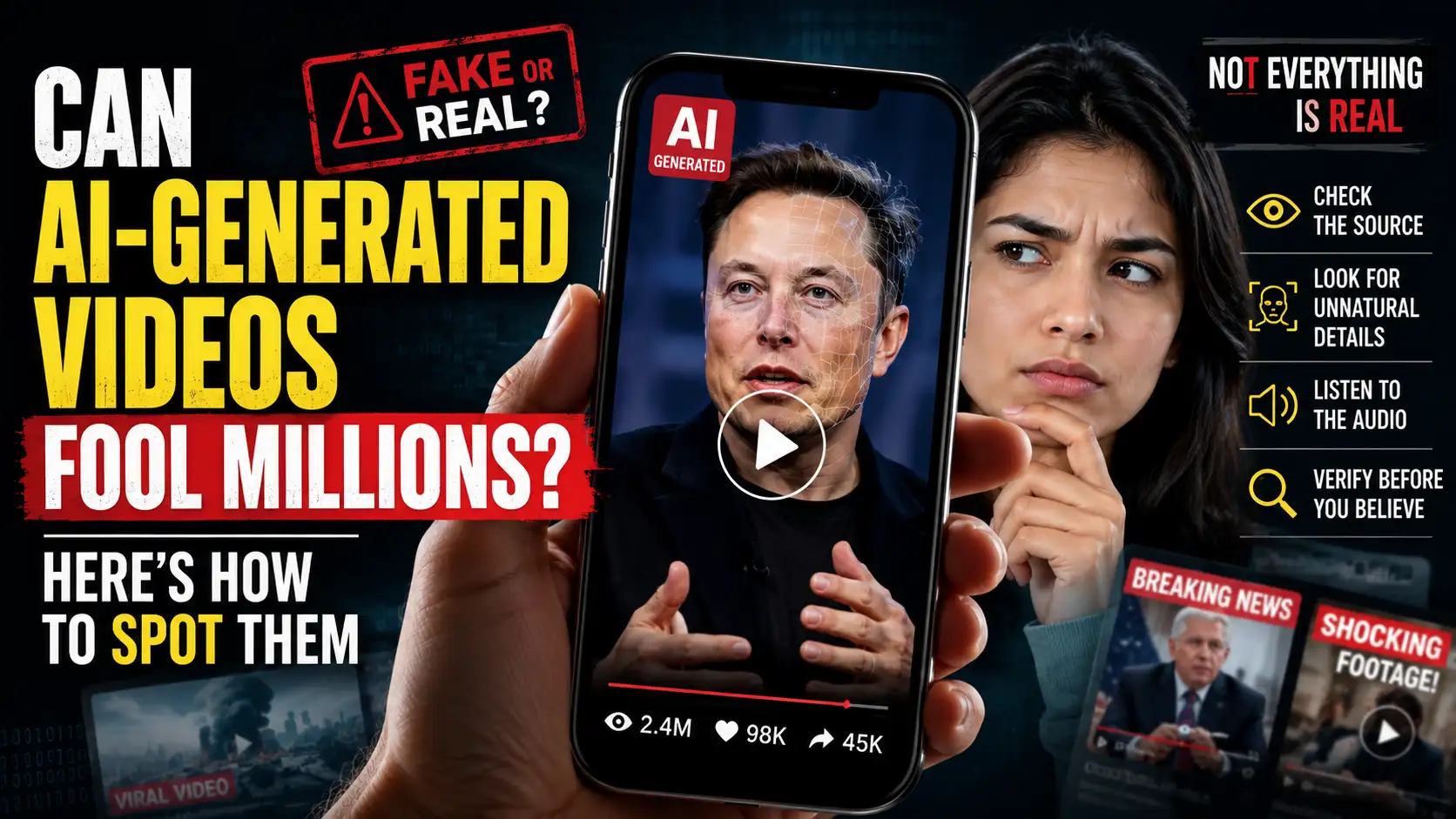
Today's AI tools can generate videos that look remarkably real. A public figure can appear to say something they never said. A celebrity can be shown promoting a product they've never endorsed. In many cases, the difference between a genuine video and a fabricated one isn't visible at first glance. That's exactly why experts say digital awareness matters now more than ever.
In the past few years, artificial intelligence has developed at an amazing rate. Where it used to require expensive software and professional editing skills, you can now do it via online tools open to just about anyone.
Modern AI can recreate facial expressions, match lip movements with generated speech and even clone someone's voice using only a short audio sample. Some creators use these tools to make educational videos, visual effects or harmless entertainment. Others use them to spread false information or create misleading content that is designed to attract traffic. That's where the real concern begins. The technology itself isn't the problem. It's how easily it can be misused.
Why So Many People Believe These Videos
Most of us still trust what we can see. A convincing video often feels more believable than a written post because our brains naturally connect moving images with reality. That's one reason AI-generated videos spread so quickly. By the time someone questions whether the clip is genuine, it may already have been viewed thousands or even millions of times.
Today's AI tools can generate videos that look remarkably real. A public figure can appear to say something they never said. A celebrity can be shown promoting a product they've never endorsed. In many cases, the difference between a genuine video and a fabricated one isn't visible at first glance. That's exactly why experts say digital awareness matters now more than ever.
When Fake Started Looking Real
In the past few years, artificial intelligence has developed at an amazing rate. Where it used to require expensive software and professional editing skills, you can now do it via online tools open to just about anyone.
Modern AI can recreate facial expressions, match lip movements with generated speech and even clone someone's voice using only a short audio sample. Some creators use these tools to make educational videos, visual effects or harmless entertainment. Others use them to spread false information or create misleading content that is designed to attract traffic. That's where the real concern begins. The technology itself isn't the problem. It's how easily it can be misused.
Why So Many People Believe These Videos
Most of us still trust what we can see. A convincing video often feels more believable than a written post because our brains naturally connect moving images with reality. That's one reason AI-generated videos spread so quickly. By the time someone questions whether the clip is genuine, it may already have been viewed thousands or even millions of times.
Next Story