
Can Your Brain Create Pain? The Science of Nociplastic Pain

Pain is usually understood as an alarm. Touch something hot, injure your ankle or cut your finger and pain tells you to protect the affected area. But what happens when the pain continues even though doctors cannot find an obvious injury causing it? The answer is one of the most important developments in modern pain science. Researchers now recognise that pain can arise from altered processing within the nervous system, even when there is no clear tissue damage or nerve injury explaining the experience. This does not make the pain imaginary. It means pain is a complex protective experience generated through the interaction of the nervous system, body and brain.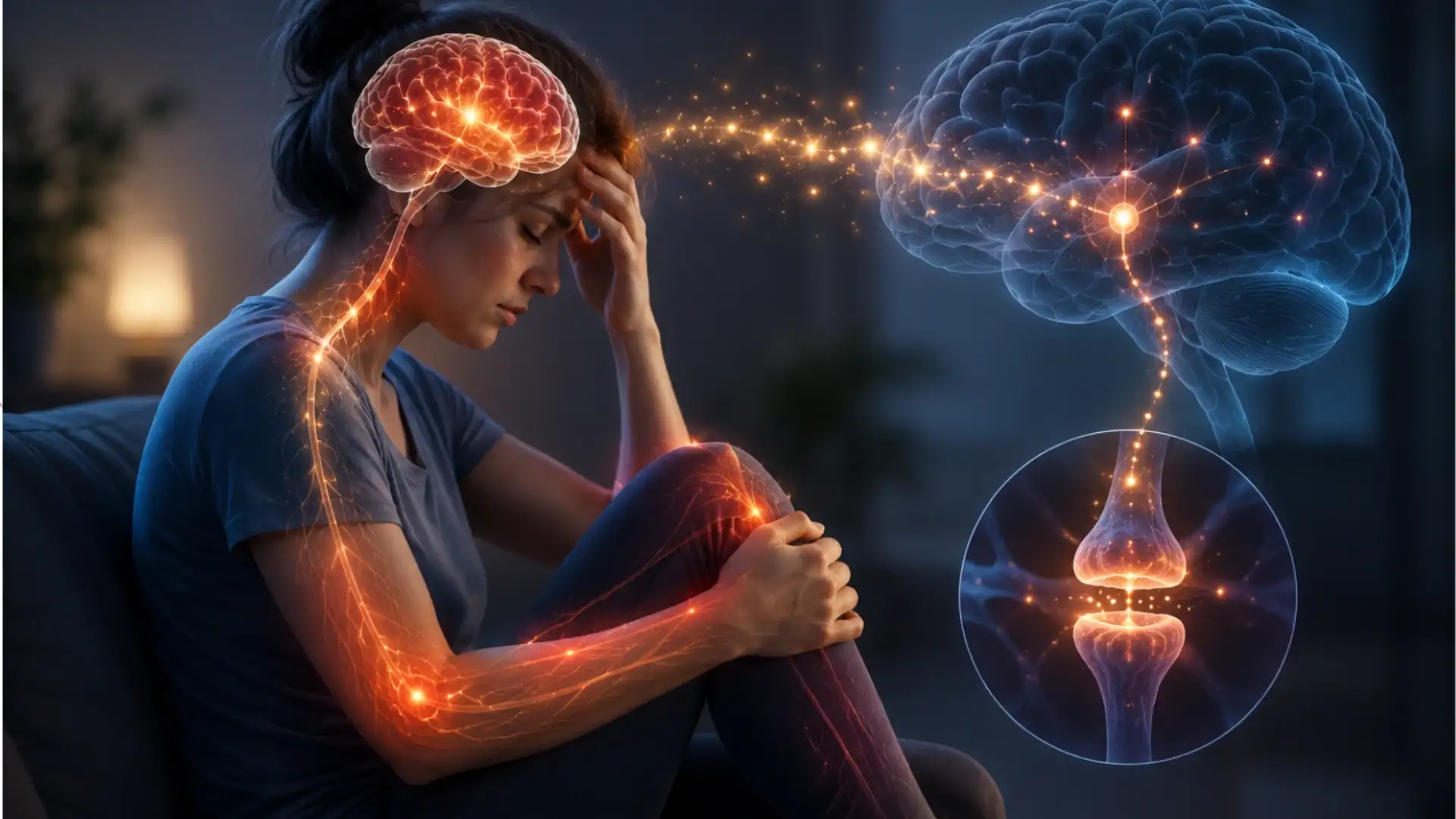
The National Institute of Neurological Disorders and Stroke distinguishes several mechanisms of pain. Nociceptive pain is associated with tissue damage or inflammation, while neuropathic pain is associated with nerve damage. Nociplastic pain involves altered pain processing without clear evidence of tissue damage, inflammation or nerve injury explaining the pain.
This distinction is important because it changes how scientists understand persistent pain .
A 2024 review describes nociplastic pain as arising from altered nociception and discusses changes in central nervous-system processing and pain modulation.
In practical terms, the nervous system can become more responsive to signals that might previously have been ignored.
If pain is generated through changes in nervous-system processing, the sensation is still physically real to the person experiencing it. The absence of a visible injury does not mean the nervous system is functioning normally.
Modern research is increasingly focused on understanding these altered processing pathways rather than treating unexplained pain as imaginary.
Nociplastic pain was formally adopted as a mechanistic pain descriptor by the International Association for the Study of Pain in 2017, adding another framework alongside nociceptive and neuropathic pain.
The deeper lesson is that pain is not simply a measurement of damage. It is a sophisticated protective system, and sometimes that system can remain active long after the original threat has disappeared.
Pain Is More Than a Damage Meter
Pain and tissue damage are related, but they are not identical.The National Institute of Neurological Disorders and Stroke distinguishes several mechanisms of pain. Nociceptive pain is associated with tissue damage or inflammation, while neuropathic pain is associated with nerve damage. Nociplastic pain involves altered pain processing without clear evidence of tissue damage, inflammation or nerve injury explaining the pain.
This distinction is important because it changes how scientists understand persistent pain .
The Nervous System Can Become More Sensitive
Researchers studying nociplastic pain have proposed that changes in pain modulation and sensory processing within the nervous system can contribute to heightened sensitivity.You may also like
- Children using social media at younger age perform worse in school tests, study says: What Indian parents need to know
- How much did a Manhattan apartment cost 50 years ago? The numbers reveal how NYC changed
- SIP or ULIP: Which investment is better for building a ₹1 crore fund?
- Spraying vinegar solution on car and home keys: 5 reasons this simple trick may actually help
- Inside Jharipani Castle: What its architecture reveals about life in colonial-era Uttarakhand
A 2024 review describes nociplastic pain as arising from altered nociception and discusses changes in central nervous-system processing and pain modulation.
In practical terms, the nervous system can become more responsive to signals that might previously have been ignored.
The Pain Is Still Real
The phrase "it's all in your head" is particularly unhelpful here.If pain is generated through changes in nervous-system processing, the sensation is still physically real to the person experiencing it. The absence of a visible injury does not mean the nervous system is functioning normally.
Modern research is increasingly focused on understanding these altered processing pathways rather than treating unexplained pain as imaginary.
Why This Matters
The distinction matters enormously for people living with persistent pain. It can explain why scans do not always provide a complete picture of someone's experience.Nociplastic pain was formally adopted as a mechanistic pain descriptor by the International Association for the Study of Pain in 2017, adding another framework alongside nociceptive and neuropathic pain.
The deeper lesson is that pain is not simply a measurement of damage. It is a sophisticated protective system, and sometimes that system can remain active long after the original threat has disappeared.






Loving Newspoint? Download the app now
