
Common Food Storage Mistakes That Shorten Shelf Life and How to Avoid Them

Every week, thousands of households throw away food that has gone bad far sooner than expected. Soft tomatoes, slimy spinach, moldy bread, and sprouted potatoes are common sights in many kitchens. While we often blame the quality of supermarket produce, the true culprit is usually how we store our ingredients after bringing them home.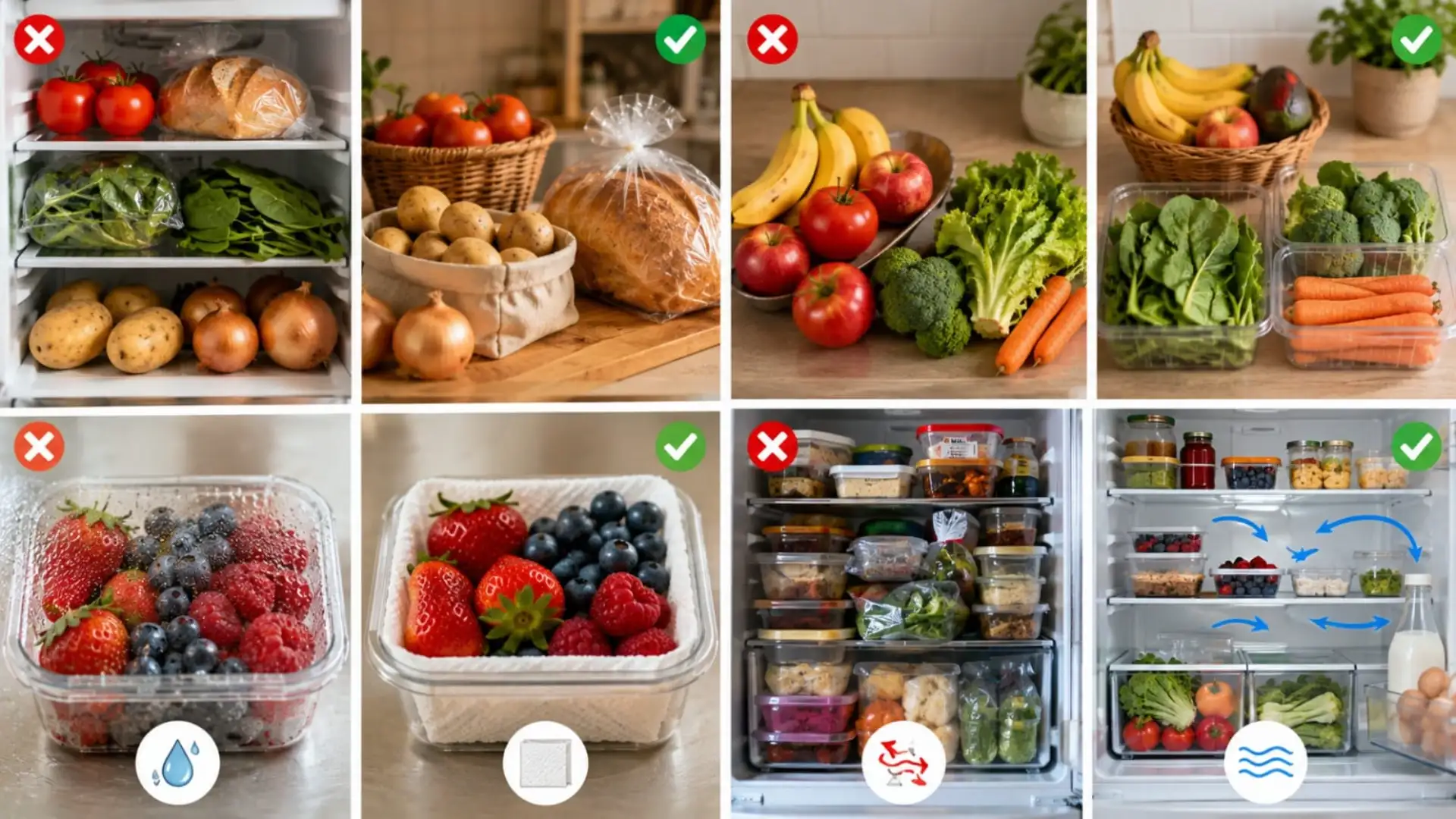
Understanding common food storage mistakes that shorten shelf life can help you save significant amounts of money and keep your food tasting fresh. Correcting a few simple habits around your fridge, pantry, and kitchen counter can instantly extend the life of your fresh groceries.
Fresh tomatoes are a prime example. Placing tomatoes in the fridge destroys their rich flavor and creates a mealy texture. Bread is another item that suffers when refrigerated because cold air speeds up crystallization, causing it to go stale much faster than when stored at room temperature or frozen. Similarly, potatoes and onions should remain in a cool, dark cupboard. Storing potatoes in cold environments converts their starches into sugars, leading to dark, sweet spots when cooked.
Bananas, apples, tomatoes, and avocados are high ethylene producers. If you store these next to sensitive items like leafy greens, broccoli, carrots, or cucumbers, the gas causes them to yellow and decay within days. Keeping ethylene producing fruits in a separate fruit bowl or basket away from delicate vegetables prevents premature spoilage and extends freshness throughout your kitchen.
Excess moisture creates the perfect environment for mold growth and bacterial development. Soft fruits like strawberries, raspberries, and blueberries are especially vulnerable. Washing them before storage traps water beneath the skin, causing fuzzy mold to appear within forty eight hours. Always keep berries dry in paper towel lined containers and rinse them just before you plan to eat them.
When you block air vents and fill shelves completely, cold air cannot circulate properly. This creates warm pockets where bacteria can multiply rapidly. Furthermore, overloading moisture control drawers can turn them into damp containers, causing delicate salad leaves and herbs to become soggy and spoil quickly. Leave enough space around your items and store raw meats on the bottom shelf to prevent cross-contamination from dripping juices.
Understanding common food storage mistakes that shorten shelf life can help you save significant amounts of money and keep your food tasting fresh. Correcting a few simple habits around your fridge, pantry, and kitchen counter can instantly extend the life of your fresh groceries.
Storing Produce in the Wrong Environmental Conditions
One of the most frequent errors happens before food even enters the fridge. Many people assume that placing every fresh item directly into the refrigerator is the best way to preserve it. However, cold temperatures can actually damage certain fresh ingredients.Fresh tomatoes are a prime example. Placing tomatoes in the fridge destroys their rich flavor and creates a mealy texture. Bread is another item that suffers when refrigerated because cold air speeds up crystallization, causing it to go stale much faster than when stored at room temperature or frozen. Similarly, potatoes and onions should remain in a cool, dark cupboard. Storing potatoes in cold environments converts their starches into sugars, leading to dark, sweet spots when cooked.
Combining Ethylene Producing Produce with Sensitive Crops
Another major issue is storing reactive fruits and vegetables together. Certain fruits naturally produce ethylene gas, an organic hormone that accelerates ripening in nearby crops.You may also like
- Kangana Ranaut Celebrates National Handloom Day, Advocates for Indian Textile Heritage
- Preparations Underway to Impose New Levy on LPG Cylinders; Costs Likely to Rise
- Building a Healthy Workforce through Reproductive Healthcare Benefits
- Train News: 3AC, Sleeper, or Chair Car? Which is best for a long train journey?
- Deposit money just once in this Post Office scheme offering 7.4% interest and receive ₹6,000 every month..
Bananas, apples, tomatoes, and avocados are high ethylene producers. If you store these next to sensitive items like leafy greens, broccoli, carrots, or cucumbers, the gas causes them to yellow and decay within days. Keeping ethylene producing fruits in a separate fruit bowl or basket away from delicate vegetables prevents premature spoilage and extends freshness throughout your kitchen.
Washing Fresh Berries and Produce Too Early
The desire for clean food leads many people to wash all their fresh fruits and vegetables as soon as they return from the market. While washing is essential before eating, doing so before long term storage introduces unnecessary moisture.Excess moisture creates the perfect environment for mold growth and bacterial development. Soft fruits like strawberries, raspberries, and blueberries are especially vulnerable. Washing them before storage traps water beneath the skin, causing fuzzy mold to appear within forty eight hours. Always keep berries dry in paper towel lined containers and rinse them just before you plan to eat them.
Packing Your Refrigerator Beyond Its Breathing Capacity
A packed, overcrowded fridge might look satisfying, but it can severely affect proper food preservation. Refrigerators rely on continuous airflow to maintain a consistent cold temperature throughout every shelf and drawer.When you block air vents and fill shelves completely, cold air cannot circulate properly. This creates warm pockets where bacteria can multiply rapidly. Furthermore, overloading moisture control drawers can turn them into damp containers, causing delicate salad leaves and herbs to become soggy and spoil quickly. Leave enough space around your items and store raw meats on the bottom shelf to prevent cross-contamination from dripping juices.






Loving Newspoint? Download the app now
