
Crocodile mothers carry babies in the same jaws that can crush bones, and scientists know why


While crocodiles are renowned for having one of the most powerful bites in the animal kingdom, female crocodiles use those dangerous jaws with amazing dexterity while caring for their offspring. Biologists researching the behaviour of these creatures have seen mothers carry out hatchlings from nests and move them to the water in such a way that the process does not harm any baby. Even though crocodiles are incredibly strong animals, they are able to exert the necessary pressure for moving fragile babies in their jaws without dropping them. It is thought that special receptors located in the oral cavity play a vital role in this process. This fascinating example shows that the crocodile family is much more devoted to each other than is commonly believed.
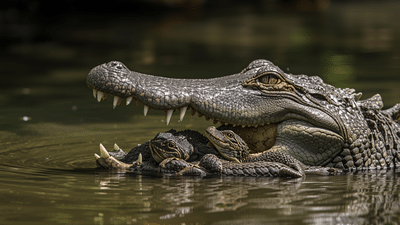
Why crocodile mothers carry babies in their mouths
For most individuals, seeing a crocodile hold babies between its huge teeth can be quite scary. However, baby crocodiles might feel quite safe within the huge mouth of their mothers.
Generally, females lay eggs within a nest made of either mud, sand or plant matter near water bodies. The babies start producing chirping sounds while still in the eggs, just before hatching. This sound informs their mother that the offspring are about to hatch.
Studies on crocodilian behaviour show that mothers will dig open their eggs to lift babies from them and place them in their mouth for the journey to the water. As reported by the ENES Bioacoustics Research Lab, mother crocodiles can carry several hatchlings at once and keep them away from any predator attacks.
It is essential to note that baby crocodiles hatch very small and defenceless. They can fall prey to different birds, fish or other reptiles before reaching water.
How crocodiles control their deadly bite with surprising precision
Crocodiles are known for having some of the strongest bites ever recorded among any living animal species. According to studies carried out at Florida State University, the muscle structure of crocodiles produces incredible crushing power intended for holding onto their prey.
The powerful muscles involved in closing the jaws are counteracted by incredibly sensitive pressure sensors present near the snouts and mouths of the crocodiles. Crocodilians are blessed with incredibly sensitive sensory organs that help them detect even the slightest movement and pressure.
The crocodiles' bite control system allows mothers to exercise an unbelievable level of control. Crocodiles can bite down with crushing force on their prey when hunting, yet apply barely any pressure on their fragile hatchlings. This is the same way humans can hold onto delicate objects, despite being able to apply much more pressure than they do.
This is one of the reasons why crocodiles are able to survive without changing very much after millions of years.
Crocodile parenting is more caring than many people realise
Although crocodiles are often viewed as cold-blooded and unfeeling hunters, scientists are beginning to see complex parentage patterns among crocodilians. Unlike other reptiles, which lay eggs and leave them unprotected, the mother crocodiles stay by their nest sites, protecting the eggs from potential threats such as monitor lizards, birds, and mammals.
According to the findings of the study, 'Environmental challenges influencing maternal care and nesting success in the Broad-snouted Caiman', mothers stay near the nesting sites as they have to safeguard their eggs from these dangers. Even when the babies come out, some crocodile mothers guard them in nurseries until they grow up.
Researchers studying the evolution of reptiles say that crocodilian mothers may give us clues about the ancient archosauria class of animals. Archosauria consists of the dinosaurs and current-day birds. The parenting instincts found in crocodiles are very sophisticated for reptiles.
What crocodile mothers teach us about animal behaviour
The picture of a crocodile holding babies in her mouth is an idea that will change many preconceptions held by humans about predators and parenting in the animal world. Animal behaviour tends to be much more complicated than instinctive attacks for the purpose of survival.
In the case of crocodiles, the sharp and dangerous jaws used to kill prey can also be utilised as protection and care for the future generation. The very same jaws that can execute some of the strongest bites in nature can be gentle enough to carry baby crocodiles without hurting them.
According to researchers, this combination of power and gentleness shows the incredible ability of crocodilians to adapt themselves to the changing environment on planet Earth: these creatures have been around for more than 200 million years now.
Why crocodile mothers carry babies in their mouths
For most individuals, seeing a crocodile hold babies between its huge teeth can be quite scary. However, baby crocodiles might feel quite safe within the huge mouth of their mothers.
Generally, females lay eggs within a nest made of either mud, sand or plant matter near water bodies. The babies start producing chirping sounds while still in the eggs, just before hatching. This sound informs their mother that the offspring are about to hatch.
Studies on crocodilian behaviour show that mothers will dig open their eggs to lift babies from them and place them in their mouth for the journey to the water. As reported by the ENES Bioacoustics Research Lab, mother crocodiles can carry several hatchlings at once and keep them away from any predator attacks.
It is essential to note that baby crocodiles hatch very small and defenceless. They can fall prey to different birds, fish or other reptiles before reaching water.
How crocodiles control their deadly bite with surprising precision
Crocodiles are known for having some of the strongest bites ever recorded among any living animal species. According to studies carried out at Florida State University, the muscle structure of crocodiles produces incredible crushing power intended for holding onto their prey.
The powerful muscles involved in closing the jaws are counteracted by incredibly sensitive pressure sensors present near the snouts and mouths of the crocodiles. Crocodilians are blessed with incredibly sensitive sensory organs that help them detect even the slightest movement and pressure.
The crocodiles' bite control system allows mothers to exercise an unbelievable level of control. Crocodiles can bite down with crushing force on their prey when hunting, yet apply barely any pressure on their fragile hatchlings. This is the same way humans can hold onto delicate objects, despite being able to apply much more pressure than they do.
This is one of the reasons why crocodiles are able to survive without changing very much after millions of years.
Crocodile parenting is more caring than many people realise
Although crocodiles are often viewed as cold-blooded and unfeeling hunters, scientists are beginning to see complex parentage patterns among crocodilians. Unlike other reptiles, which lay eggs and leave them unprotected, the mother crocodiles stay by their nest sites, protecting the eggs from potential threats such as monitor lizards, birds, and mammals.
According to the findings of the study, 'Environmental challenges influencing maternal care and nesting success in the Broad-snouted Caiman', mothers stay near the nesting sites as they have to safeguard their eggs from these dangers. Even when the babies come out, some crocodile mothers guard them in nurseries until they grow up.
Researchers studying the evolution of reptiles say that crocodilian mothers may give us clues about the ancient archosauria class of animals. Archosauria consists of the dinosaurs and current-day birds. The parenting instincts found in crocodiles are very sophisticated for reptiles.
What crocodile mothers teach us about animal behaviour
The picture of a crocodile holding babies in her mouth is an idea that will change many preconceptions held by humans about predators and parenting in the animal world. Animal behaviour tends to be much more complicated than instinctive attacks for the purpose of survival.
In the case of crocodiles, the sharp and dangerous jaws used to kill prey can also be utilised as protection and care for the future generation. The very same jaws that can execute some of the strongest bites in nature can be gentle enough to carry baby crocodiles without hurting them.
According to researchers, this combination of power and gentleness shows the incredible ability of crocodilians to adapt themselves to the changing environment on planet Earth: these creatures have been around for more than 200 million years now.
Next Story