
The Death of Waiting: How We Forgot the Value of Patience

Remember when downloading a song meant waiting for the progress bar to crawl across the screen? Or when ordering something online meant expecting it to arrive next week, not tomorrow and certainly not in ten minutes. Back then, waiting wasn't exciting, but it was normal.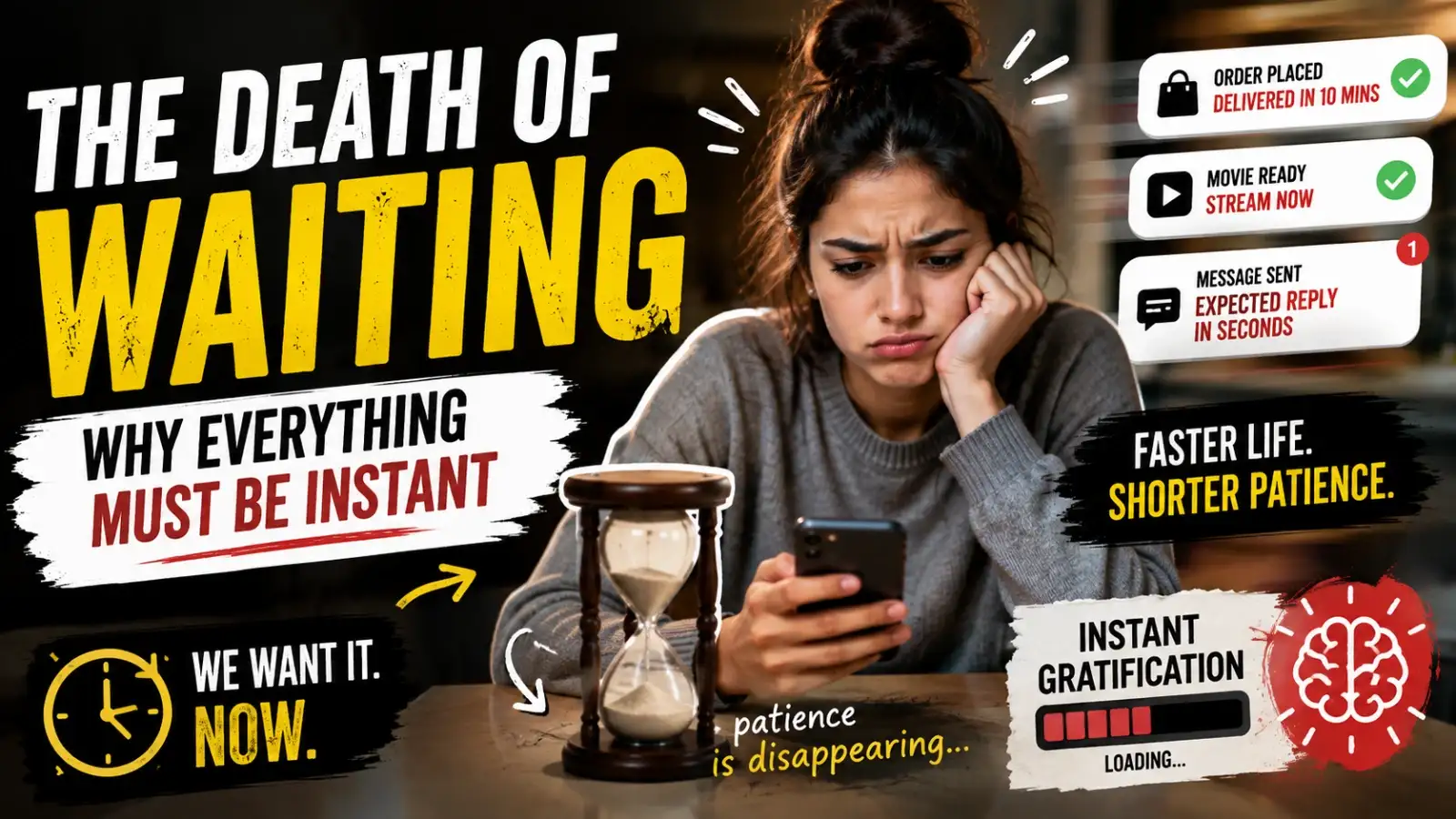
Today, even a buffering symbol for five seconds feels annoying. If food takes longer than expected, we check the delivery app every few minutes. If someone doesn't reply to a message, we start wondering if they're ignoring us. If a webpage takes too long to load, there's a good chance we'll close it and move on. Somewhere along the way, waiting stopped being part of life and started feeling like a mistake.
What once felt incredibly fast soon starts feeling slow. A delivery that arrives in two days can suddenly seem disappointing because another service promises same-day shipping. A friend who replies after a few hours might seem distant simply because we're used to seeing "typing" appear within minutes. The bar keeps moving.
Silence feels awkward. Doing nothing feels unproductive. We've trained ourselves to expect constant stimulation, which means even the smallest delays can feel frustrating. Waiting hasn't become longer. Our patience has become shorter.
But some of the most meaningful things simply refuse to happen instantly. Trust takes time. Friendships deepen over years. Skills improve through repetition. Healing has no express delivery. The things we value most still move at the pace they've always moved.
Waiting gives us time to imagine, appreciate, and look forward to something. When everything becomes immediate, that sense of anticipation slowly disappears. Sometimes the wait is part of the experience.
Maybe it's okay if a text gets answered later. Maybe a book is better enjoyed one chapter at a time instead of rushing to finish it. Maybe not every quiet moment needs to be filled with scrolling. Slowing down doesn't mean falling behind. Sometimes it simply means paying attention.
Perhaps the real challenge today isn't learning how to get things faster. It's remembering that not everything meaningful was ever meant to be instant.
Today, even a buffering symbol for five seconds feels annoying. If food takes longer than expected, we check the delivery app every few minutes. If someone doesn't reply to a message, we start wondering if they're ignoring us. If a webpage takes too long to load, there's a good chance we'll close it and move on. Somewhere along the way, waiting stopped being part of life and started feeling like a mistake.
Convenience Has Changed Our Expectations
Technology has made life easier in ways that are genuinely remarkable. We can book a cab, pay bills, shop for groceries, stream a film, or learn a new skill without leaving the house. The problem isn't convenience itself. The problem is that once we get used to something being instant, our expectations quietly change.What once felt incredibly fast soon starts feeling slow. A delivery that arrives in two days can suddenly seem disappointing because another service promises same-day shipping. A friend who replies after a few hours might seem distant simply because we're used to seeing "typing" appear within minutes. The bar keeps moving.
We're Not Just Losing Time; We're Losing Tolerance
The biggest change isn't in technology. It's in us. Many of us have become uncomfortable with empty moments. Standing in a queue, waiting for a train, or sitting alone for a few minutes often leads to the same reaction: we reach for our phones.You may also like
- Don't make this mistake while taking possession of your flat, or you could face a huge financial loss..
- KCC Tips: Get funds for farming through KCC—who can apply?
- Fraud involving patients... 2,359 hospitals removed from Ayushman scheme, 1,200 banned..
- Boomers to Gen Z: How Indias Investment Habits Evolved From LIC And Gold to SIPs & Crypto..
- Kotak Bank launches hybrid home loan; interest rate and EMI to remain fixed for up to 65 months..
Silence feels awkward. Doing nothing feels unproductive. We've trained ourselves to expect constant stimulation, which means even the smallest delays can feel frustrating. Waiting hasn't become longer. Our patience has become shorter.
The Cost of Wanting Everything Now
This habit doesn't stay limited to shopping or streaming. It slowly enters other parts of life. We expect careers to grow quickly. We want fitness results within weeks. We hope relationships will feel effortless from the beginning. We compare our lives to carefully edited moments online and wonder why real life takes longer.But some of the most meaningful things simply refuse to happen instantly. Trust takes time. Friendships deepen over years. Skills improve through repetition. Healing has no express delivery. The things we value most still move at the pace they've always moved.
Why Waiting Isn't Always Wasted Time
There is something surprisingly valuable about anticipation. Think about planning a holiday months in advance or counting down the days to a concert you've been waiting to attend. The excitement often begins long before the event itself.Waiting gives us time to imagine, appreciate, and look forward to something. When everything becomes immediate, that sense of anticipation slowly disappears. Sometimes the wait is part of the experience.
Maybe We Don't Need Everything Instantly
None of this means we should give up modern conveniences. Few people genuinely want slower internet or longer queues. But perhaps we don't need every part of life to move at the speed of a notification.Maybe it's okay if a text gets answered later. Maybe a book is better enjoyed one chapter at a time instead of rushing to finish it. Maybe not every quiet moment needs to be filled with scrolling. Slowing down doesn't mean falling behind. Sometimes it simply means paying attention.
Life Isn't a Loading Screen
Technology has solved many problems, but it cannot remove the fact that some of life's best moments take time. Love grows slowly, confidence builds gradually, and dreams rarely arrive overnight.Perhaps the real challenge today isn't learning how to get things faster. It's remembering that not everything meaningful was ever meant to be instant.






Loving Newspoint? Download the app now
