
10 Desert Destinations Where There Is Far More to See Than Dunes

Deserts are often imagined through the same familiar images: endless dunes, camel rides, blazing afternoons and dramatic sunsets. But that picture leaves out much of what makes the world's desert regions fascinating.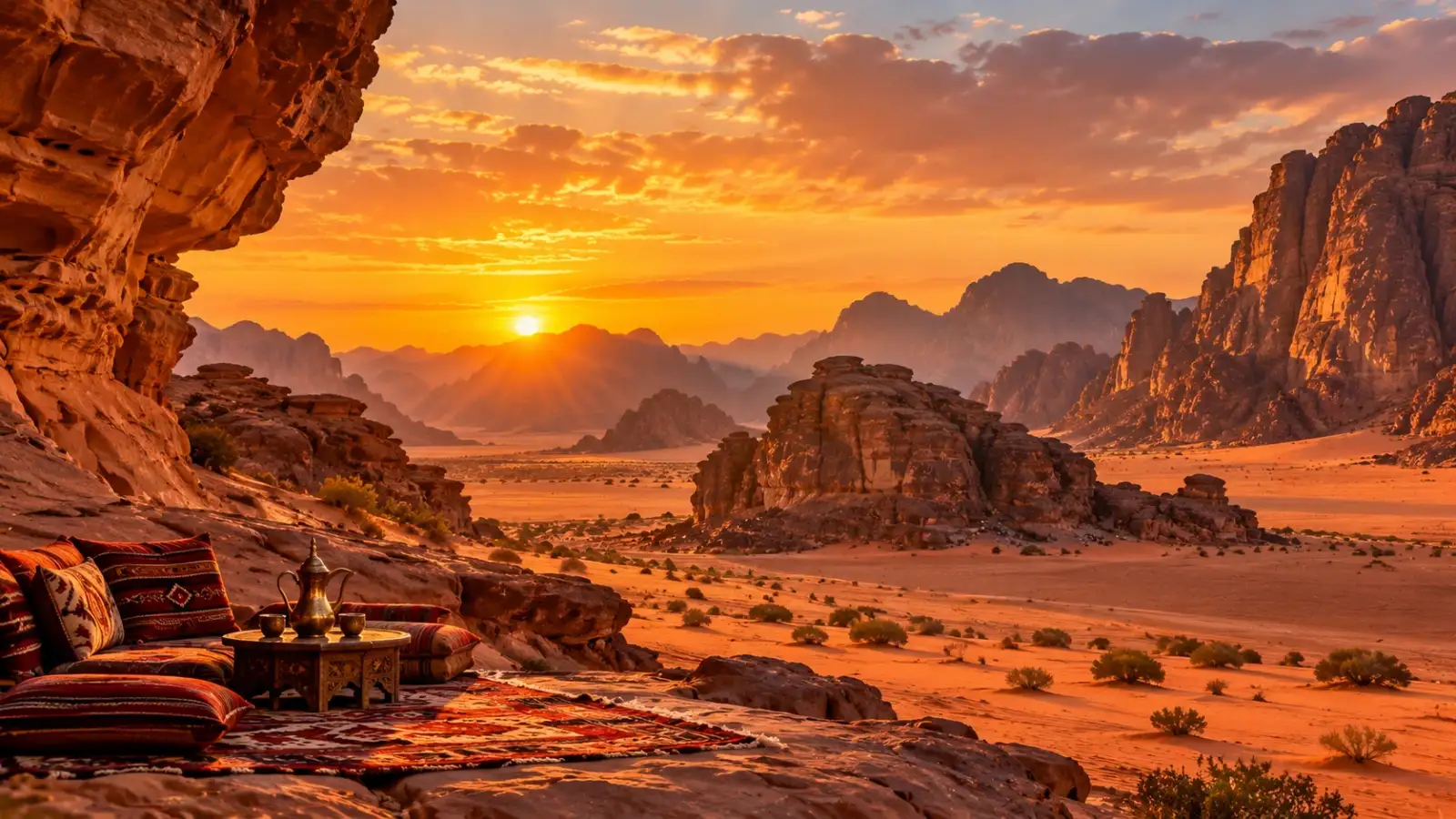
Some deserts contain ancient settlements, volcanic landscapes, enormous canyons, wildlife reserves and archaeological sites. Others have salt flats, underground water systems, dramatic rock formations or night skies so clear that astronomy has become one of their biggest attractions.
The desert can also be surprisingly full of life. Plants and animals have adapted to extreme temperatures and scarce water, while human communities have developed sophisticated ways of living in environments that initially appear almost impossible to inhabit.
From the Thar to the Atacama and from Jordan's red-rock wilderness to California's boulder-filled high desert, these destinations reveal a much more varied side of desert travel .
Around San Pedro de Atacama, travellers can explore landscapes that appear almost otherworldly. The El Tatio geyser field offers an early-morning experience among steaming geothermal formations, while the surrounding altiplano contains lagoons and mountains at elevations of more than 4,000 metres.
The desert becomes even more impressive after dark. The exceptionally clear skies have made the region a major destination for stargazing and astronomy. Away from city lights, the Milky Way becomes a major part of the landscape rather than something visible only under ideal conditions.
Atacama therefore feels less like a conventional desert and more like an enormous natural laboratory, where geology, astronomy and extreme climate come together.
The landscape has also been shaped by thousands of years of human activity. The Jordan Tourism Board notes evidence of ancient habitation and highlights the area's connection with Bedouin culture and the Nabataeans.
Visitors can explore Wadi Rum by four-wheel-drive vehicle, on foot or through guided experiences with local Bedouin communities. The region also offers opportunities for climbing, hiking and astronomy-based experiences.
Night transforms the desert completely. With limited artificial light, the enormous sky becomes part of the experience, and organised stargazing activities allow visitors to observe stars and planets against the dark landscape.
Wadi Rum's appeal therefore comes from the relationship between rock, culture and sky rather than simply from its sand.
Jaisalmer's famous yellow sandstone architecture gives the city its distinctive golden appearance. The enormous Jaisalmer Fort rises above the surrounding landscape, while havelis, temples and narrow lanes reveal the city's long history as a desert trading centre.
But there is considerably more to the region than its architecture. Gadisar Lake provides a striking contrast to the dry landscape, while Desert National Park offers an opportunity to see desert-adapted wildlife. India's official tourism portal highlights the park's importance for species including the Great Indian Bustard and various migratory birds.
The surrounding desert also supports cultural experiences involving traditional music, dance and local communities. This makes Jaisalmer particularly interesting for travellers who want to combine natural landscapes with heritage rather than simply visit a dune camp.
The Namibian Ministry of Environment and Tourism describes the park as containing dunes, Sesriem Canyon, gravel plains, mountain ranges, inselbergs and ephemeral rivers. It is also home to animals including oryx, Hartmann's mountain zebra, springbok, giraffe and leopard.
Sossusvlei remains one of the region's iconic sights, particularly because of the stark contrast between pale salt and clay surfaces, towering orange dunes and ancient camelthorn trees. But travelling deeper into the park reveals a much broader ecosystem.
The Naukluft Mountains provide opportunities for hiking, while the park also offers wildlife viewing, birdwatching, four-wheel-drive routes and photography. Stargazing is another attraction because of the low levels of artificial light.
Namib-Naukluft demonstrates that even one of the world's most visually famous deserts contains multiple landscapes within a single protected area.
Rock climbing is one of the park's major attractions, with thousands of climbing routes across its distinctive boulder formations. Hiking trails also pass through valleys and rocky landscapes, while historic sites such as Keys Ranch provide insight into the people who once lived and worked in the desert.
The night sky is another major attraction. The National Park Service highlights Joshua Tree's dark skies and opportunities for stargazing, alongside hiking, photography and rock climbing.
The environment can also be unforgiving. Summer temperatures can become extremely high, water is not available throughout the interior and mobile reception can be limited.
Joshua Tree is therefore best understood as a desert wilderness rather than simply a scenic drive. Its appeal comes from geology, plants, wildlife, history and exceptionally dark skies.
Instead of endless dunes, visitors encounter narrow canyon-like formations, rocky walls and vegetation concentrated around water. The contrast between the dry surrounding landscape and the greener valley makes the area particularly striking.
The wider Tabuk region also contains archaeological and geological attractions, meaning a journey here can combine desert exploration with history.
The experience is less about crossing a sea of sand and more about discovering how water has created pockets of life inside an otherwise arid environment.
These formations rise from the desert floor in unusual shapes. Some resemble giant mushrooms, animals or abstract sculptures, creating a landscape that feels completely different from the golden dunes commonly associated with Egypt.
The surrounding Black Desert adds another layer to the journey, with darker volcanic hills and rocky terrain creating a sharp visual contrast.
The White Desert is especially atmospheric around sunrise and sunset, but its appeal is really geological. The shapes are evidence of the slow work of wind and erosion over enormous periods of time.
That diversity creates a completely different type of desert experience. The landscape can stretch towards distant mountains with almost no obvious sign of settlement, while traditional nomadic communities continue to live across parts of the wider region.
The Gobi is also important for palaeontology. Fossils discovered in the region have helped scientists understand prehistoric life, including dinosaurs that lived millions of years ago.
Travelling through the Gobi therefore involves much more than looking at dunes. It can involve wildlife, fossils, nomadic culture, geology and some of the most expansive landscapes in Asia.
The region became famous internationally because its scenery was used for numerous films and television productions, particularly Westerns. Visitors can still encounter film-related attractions while exploring the wider landscape.
The desert's appeal, however, does not depend entirely on its cinematic history. Its geological formations and unusual climate create an environment unlike most of mainland Europe.
For travellers already exploring Andalucía, Tabernas provides an opportunity to experience a dramatically different side of Spain without travelling to another continent.
Desert National Park near Jaisalmer protects an important ecosystem and provides habitat for the Great Indian Bustard, one of India's most threatened bird species. India's official tourism information also highlights the area's migratory birdlife and desert ecology.
Traditional villages and local crafts provide another perspective on desert life. Homes, clothing, food and water practices have evolved around the realities of living in an arid environment.
This makes the Thar particularly interesting because the desert is not an empty background. It is a living cultural landscape where people, wildlife and harsh environmental conditions have adapted to one another.
In the Atacama, the main attraction might be a geyser field or a high-altitude lagoon. In Joshua Tree, it could be a granite formation or a dark night sky. In Wadi Rum, ancient rock art and Bedouin culture sit alongside enormous sandstone mountains. In the Namib, wildlife survives among some of the planet's oldest desert landscapes.
Even the idea of water looks different in these environments. A desert lake, spring, seasonal river or green valley can become the centre of an entire ecosystem and often explains why people settled there in the first place.
That is why the most memorable desert journeys are rarely just about watching the sun disappear behind a dune. They are about understanding how life, geology, history and culture have adapted to places where water is scarce and the landscape can appear almost limitless.
Some deserts contain ancient settlements, volcanic landscapes, enormous canyons, wildlife reserves and archaeological sites. Others have salt flats, underground water systems, dramatic rock formations or night skies so clear that astronomy has become one of their biggest attractions.
The desert can also be surprisingly full of life. Plants and animals have adapted to extreme temperatures and scarce water, while human communities have developed sophisticated ways of living in environments that initially appear almost impossible to inhabit.
From the Thar to the Atacama and from Jordan's red-rock wilderness to California's boulder-filled high desert, these destinations reveal a much more varied side of desert travel .
Atacama Desert , Chile Is a World of Volcanoes, Salt Flats and Geysers
Northern Chile's Atacama Desert is one of the most extraordinary landscapes on Earth. It is widely described by Chile's official tourism organisation as the world's driest desert, yet its landscape is anything but monotonous. The region combines salt flats, high-altitude lagoons, geysers, volcanoes and immense valleys.Around San Pedro de Atacama, travellers can explore landscapes that appear almost otherworldly. The El Tatio geyser field offers an early-morning experience among steaming geothermal formations, while the surrounding altiplano contains lagoons and mountains at elevations of more than 4,000 metres.
The desert becomes even more impressive after dark. The exceptionally clear skies have made the region a major destination for stargazing and astronomy. Away from city lights, the Milky Way becomes a major part of the landscape rather than something visible only under ideal conditions.
Atacama therefore feels less like a conventional desert and more like an enormous natural laboratory, where geology, astronomy and extreme climate come together.
Wadi Rum , Jordan Has Mountains Rising From the Desert
Wadi Rum is often associated with vast red sands, but its most striking feature is arguably its rock landscape. Towering sandstone and granite formations rise above broad valleys, creating a dramatic setting that has earned the region the nickname "Valley of the Moon".The landscape has also been shaped by thousands of years of human activity. The Jordan Tourism Board notes evidence of ancient habitation and highlights the area's connection with Bedouin culture and the Nabataeans.
Visitors can explore Wadi Rum by four-wheel-drive vehicle, on foot or through guided experiences with local Bedouin communities. The region also offers opportunities for climbing, hiking and astronomy-based experiences.
Night transforms the desert completely. With limited artificial light, the enormous sky becomes part of the experience, and organised stargazing activities allow visitors to observe stars and planets against the dark landscape.
Wadi Rum's appeal therefore comes from the relationship between rock, culture and sky rather than simply from its sand.
Jaisalmer , India Combines Desert Landscapes With a Living Fort City
The Thar Desert around Jaisalmer offers a very different desert experience. Here, the landscape is inseparable from centuries of architecture, trade and settlement.Jaisalmer's famous yellow sandstone architecture gives the city its distinctive golden appearance. The enormous Jaisalmer Fort rises above the surrounding landscape, while havelis, temples and narrow lanes reveal the city's long history as a desert trading centre.
But there is considerably more to the region than its architecture. Gadisar Lake provides a striking contrast to the dry landscape, while Desert National Park offers an opportunity to see desert-adapted wildlife. India's official tourism portal highlights the park's importance for species including the Great Indian Bustard and various migratory birds.
The surrounding desert also supports cultural experiences involving traditional music, dance and local communities. This makes Jaisalmer particularly interesting for travellers who want to combine natural landscapes with heritage rather than simply visit a dune camp.
Namib-Naukluft, Namibia Has Dunes, Canyons and Wildlife
Namibia's Namib-Naukluft Park is enormous, and its landscapes extend far beyond the towering dunes that have made Sossusvlei famous.The Namibian Ministry of Environment and Tourism describes the park as containing dunes, Sesriem Canyon, gravel plains, mountain ranges, inselbergs and ephemeral rivers. It is also home to animals including oryx, Hartmann's mountain zebra, springbok, giraffe and leopard.
Sossusvlei remains one of the region's iconic sights, particularly because of the stark contrast between pale salt and clay surfaces, towering orange dunes and ancient camelthorn trees. But travelling deeper into the park reveals a much broader ecosystem.
The Naukluft Mountains provide opportunities for hiking, while the park also offers wildlife viewing, birdwatching, four-wheel-drive routes and photography. Stargazing is another attraction because of the low levels of artificial light.
Namib-Naukluft demonstrates that even one of the world's most visually famous deserts contains multiple landscapes within a single protected area.
Joshua Tree , United States Turns the Desert Into a Giant Natural Sculpture
Southern California's Joshua Tree National Park looks nothing like a classic dune desert. The park lies where the Mojave and Colorado desert ecosystems meet, producing a landscape of twisted Joshua trees, huge granite boulders, dry valleys and rugged mountains.Rock climbing is one of the park's major attractions, with thousands of climbing routes across its distinctive boulder formations. Hiking trails also pass through valleys and rocky landscapes, while historic sites such as Keys Ranch provide insight into the people who once lived and worked in the desert.
The night sky is another major attraction. The National Park Service highlights Joshua Tree's dark skies and opportunities for stargazing, alongside hiking, photography and rock climbing.
The environment can also be unforgiving. Summer temperatures can become extremely high, water is not available throughout the interior and mobile reception can be limited.
Joshua Tree is therefore best understood as a desert wilderness rather than simply a scenic drive. Its appeal comes from geology, plants, wildlife, history and exceptionally dark skies.
Wadi Al Disah, Saudi Arabia Brings Green Valleys Into the Desert
In north-western Saudi Arabia, Wadi Al Disah demonstrates that desert landscapes can contain surprisingly lush pockets. The valley is surrounded by towering sandstone cliffs and contains date palms, grasses and natural water sources in parts of the landscape.Instead of endless dunes, visitors encounter narrow canyon-like formations, rocky walls and vegetation concentrated around water. The contrast between the dry surrounding landscape and the greener valley makes the area particularly striking.
The wider Tabuk region also contains archaeological and geological attractions, meaning a journey here can combine desert exploration with history.
The experience is less about crossing a sea of sand and more about discovering how water has created pockets of life inside an otherwise arid environment.
The White Desert, Egypt Looks More Like Another Planet
Egypt's White Desert offers one of the strangest desert landscapes in North Africa. Located within the Farafra region, the area is famous for bright chalk formations that have been sculpted by wind erosion.These formations rise from the desert floor in unusual shapes. Some resemble giant mushrooms, animals or abstract sculptures, creating a landscape that feels completely different from the golden dunes commonly associated with Egypt.
The surrounding Black Desert adds another layer to the journey, with darker volcanic hills and rocky terrain creating a sharp visual contrast.
The White Desert is especially atmospheric around sunrise and sunset, but its appeal is really geological. The shapes are evidence of the slow work of wind and erosion over enormous periods of time.
The Gobi Desert, Mongolia Offers Vastness Rather Than Endless Dunes
The Gobi is one of the world's most famous deserts, but it is often misunderstood as a giant sea of sand. Large sections of the Gobi are actually covered by rocky plains, gravel, mountains and dry valleys.That diversity creates a completely different type of desert experience. The landscape can stretch towards distant mountains with almost no obvious sign of settlement, while traditional nomadic communities continue to live across parts of the wider region.
The Gobi is also important for palaeontology. Fossils discovered in the region have helped scientists understand prehistoric life, including dinosaurs that lived millions of years ago.
Travelling through the Gobi therefore involves much more than looking at dunes. It can involve wildlife, fossils, nomadic culture, geology and some of the most expansive landscapes in Asia.
Tabernas Desert, Spain Brings Mediterranean Europe Into a Desert Landscape
In southern Spain, the Tabernas Desert offers a surprising contrast to the green and coastal image often associated with Andalucía. Its dry landscape contains ravines, eroded hills and rugged terrain shaped by limited rainfall.The region became famous internationally because its scenery was used for numerous films and television productions, particularly Westerns. Visitors can still encounter film-related attractions while exploring the wider landscape.
The desert's appeal, however, does not depend entirely on its cinematic history. Its geological formations and unusual climate create an environment unlike most of mainland Europe.
For travellers already exploring Andalucía, Tabernas provides an opportunity to experience a dramatically different side of Spain without travelling to another continent.
The Great Indian Desert Offers Wildlife and Traditional Desert Life
The Thar Desert extends across north-western India and into Pakistan, creating one of South Asia's most distinctive landscapes. While its dunes and desert camps attract visitors, the region is also home to communities, wildlife and historic settlements that give it a much deeper identity.You may also like
- 'You put underdeveloped brains together': Psychiatrist on why parents should rethink sending children away to college
- King George III built this London observatory to watch the stars; 250 years later, it is a $24 million private home
- Is It Safe to Lift Heavy Objects During Pregnancy?
- AI mural inspired by Banksy sparks backlash in Bristol: Artists spot wrong landmarks and a bizarre version of the famous Mild Mild West as debate over AI art grows
- 4 Hacks to keep your kitchen free from flies and bugs
Desert National Park near Jaisalmer protects an important ecosystem and provides habitat for the Great Indian Bustard, one of India's most threatened bird species. India's official tourism information also highlights the area's migratory birdlife and desert ecology.
Traditional villages and local crafts provide another perspective on desert life. Homes, clothing, food and water practices have evolved around the realities of living in an arid environment.
This makes the Thar particularly interesting because the desert is not an empty background. It is a living cultural landscape where people, wildlife and harsh environmental conditions have adapted to one another.
Why Desert Travel Is About More Than Sand
The world's deserts are often described as empty places, but that description can be misleading. They contain some of the planet's most specialised ecosystems, extraordinary geological formations and long-established human cultures.In the Atacama, the main attraction might be a geyser field or a high-altitude lagoon. In Joshua Tree, it could be a granite formation or a dark night sky. In Wadi Rum, ancient rock art and Bedouin culture sit alongside enormous sandstone mountains. In the Namib, wildlife survives among some of the planet's oldest desert landscapes.
Even the idea of water looks different in these environments. A desert lake, spring, seasonal river or green valley can become the centre of an entire ecosystem and often explains why people settled there in the first place.
That is why the most memorable desert journeys are rarely just about watching the sun disappear behind a dune. They are about understanding how life, geology, history and culture have adapted to places where water is scarce and the landscape can appear almost limitless.






Loving Newspoint? Download the app now
