
10 Places in India Where You Can Watch Artisans Turn Simple Materials into Everyday Objects

Everyday household objects often have fascinating stories behind them. A clay pot, a brass bowl, a woven basket or a wooden kitchen utensil may look ordinary, but making one can require years of practice and specialised skills. Across India, artisans continue to shape natural materials into useful products using techniques passed down through generations. For travellers, visiting these craft centres offers a chance to understand how familiar objects are made, meet the people behind them and discover the cultural traditions connected with their work. With advance planning, some destinations also offer opportunities to observe demonstrations or visit working workshops.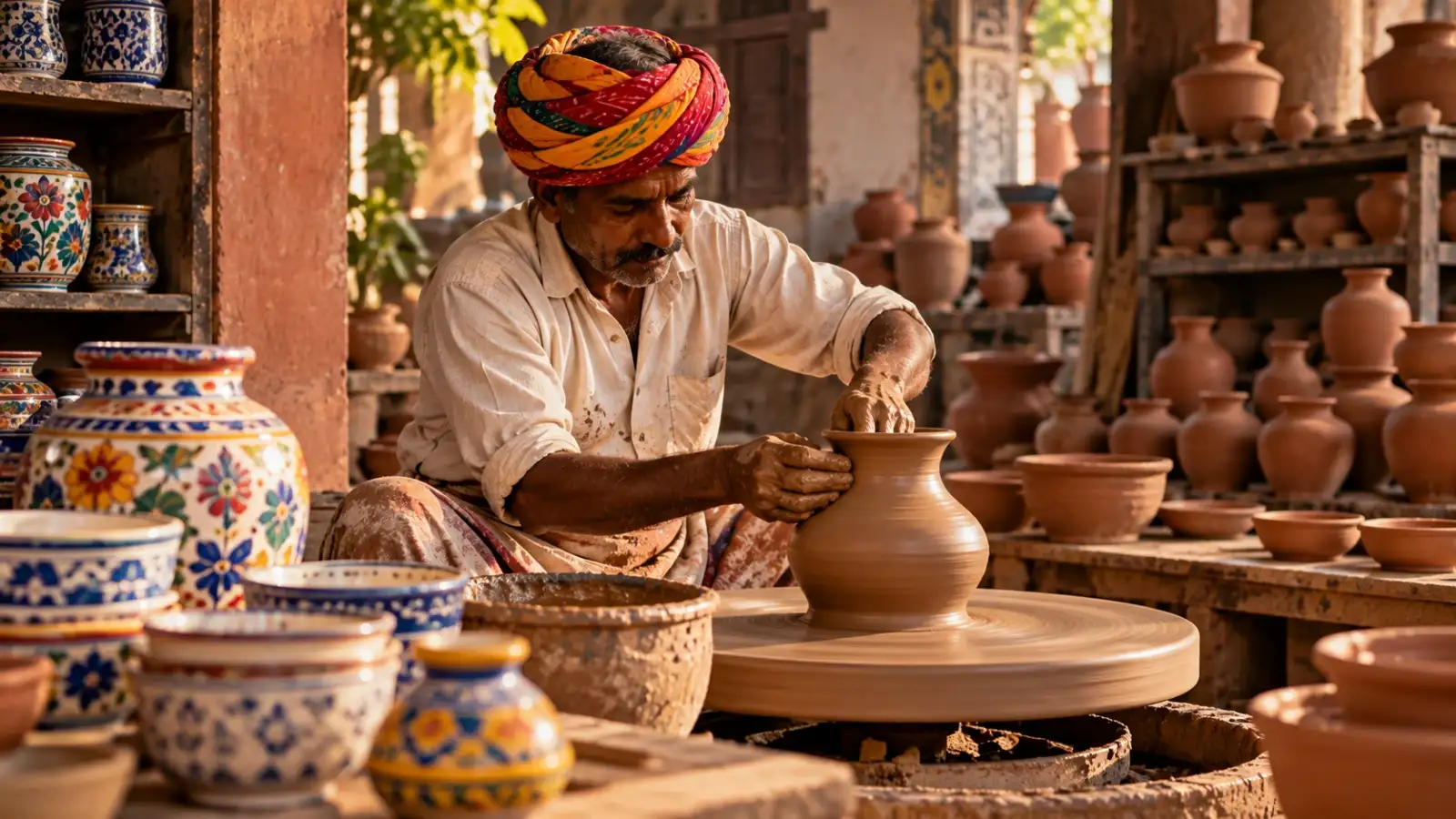
A visit can introduce travellers to the different stages of ceramic production, including shaping the clay, drying the pieces, applying glaze and firing them in a kiln. Depending on the workshop, visitors may be able to observe parts of the process and learn how designs are applied.
Khurja is a useful destination for anyone curious about the journey from raw clay to finished household crockery. Ask local businesses in advance whether they allow workshop visits, as access may vary.
Traditional metalworking may involve shaping, engraving, polishing and finishing surfaces. Watching these stages helps visitors understand the precision and labour required to create a finished piece.
Some workshops focus on specialised stages of production, while others handle several processes. If you want to see artisans at work, arrange a visit beforehand and follow safety instructions around tools, machinery and hot materials.
The process often begins with selecting and preparing the wood. Artisans then mark designs and use specialised tools to cut intricate patterns into the surface. The final piece may be sanded, polished or finished to highlight the grain and carving.
Visitors can explore local handicraft markets and ask whether nearby workshops welcome guests. Observing a carving demonstration can reveal how much patience and control are needed to create detailed patterns by hand.
Watching the process can help visitors understand how a plain piece of wood becomes a finished object through careful shaping, sanding and colouring. The town is particularly interesting for travellers who appreciate practical crafts as well as decorative products.
Look for local workshops and craft outlets that can explain the process. Ask before entering a production area, as not every workshop is set up for visitors.
The process involves preparing a wax model, forming a clay mould around it and using molten metal to create the final object. Each stage requires skill, and the finished pieces often have a distinctive textured appearance.
Sadeibarani is known for its traditional craft workshops, where visitors may have opportunities to interact with artisans and observe production. Confirm access and timings before travelling, particularly if you want to see the casting process itself.
Artisans use lathes, hand tools and other equipment to shape wooden components before applying decorative coatings. Observing the work can help visitors appreciate the precision involved in producing furniture that is both functional and visually distinctive.
Travellers can enquire about visiting local work centres and artisan homes. As these may be active production spaces rather than formal tourist attractions, arrange permission in advance and follow any safety instructions.
The setting is useful for travellers who want to see several types of craftsmanship without visiting multiple towns. Depending on the workshops and activities available, visitors may be able to watch demonstrations, speak with craftspeople and purchase handmade home accessories.
Check the current programme before your visit, since demonstrations and workshops can vary. This destination is particularly suitable for anyone interested in understanding the range of materials used in traditional Indian craft production.
Depending on the activities taking place, visitors may see potters working with clay or craftspeople demonstrating traditional techniques. The complex also provides an opportunity to learn about how everyday household objects reflect the materials, needs and traditions of different communities.
Shilpgram is a practical option for travellers who have limited time but want an introduction to several craft forms in one visit. Check official information for current opening hours, workshops and special events.
Although stone carving differs from pottery or woodworking, it offers a fascinating look at how a raw material is transformed through repeated cutting, shaping and finishing. Visitors may see artisans using traditional hand tools alongside modern equipment, depending on the workshop.
Explore local carving studios and ask whether demonstrations are available. Stone work can generate dust and flying fragments, so observe from a safe distance and follow the instructions of the people working there.
Depending on the workshop, the process may include shaping, engraving, polishing and finishing. These stages reveal how the appearance and texture of a product develop before it reaches a shop.
If you are hoping to observe production rather than simply shop, contact local businesses in advance. Some facilities may specialise in one stage of production, while others may not permit public visits. Buying directly from an artisan or a reliable local seller can also help you learn more about the item's origin and manufacturing process.
Ask what stages of production you are likely to see. A pottery workshop may demonstrate shaping but not kiln firing, while a metalworking facility may restrict access to areas where hot materials or machinery are used.
Respect the artisans' time, ask permission before taking photographs and avoid touching tools or unfinished products without permission. If you want to purchase something, ask about the materials, production method and care requirements.
Choose handmade products for their quality and usefulness rather than expecting every item to look identical. Small differences in colour, texture and shape can be part of the character of hand-produced objects.
Watching artisans make everyday household objects offers a different perspective on India's living craft traditions. From pottery in Khurja to wooden toys in Channapatna and metal casting in Sadeibarani, these destinations show how practical objects can reflect generations of knowledge and skill. Plan visits respectfully, confirm workshop access in advance and take time to understand the process behind each product. The experience can make even a simple bowl, lamp or wooden utensil feel connected to the people and place that produced it.
1. Khurja, Uttar Pradesh: Watch Pottery Take Shape
Khurja is widely known for its pottery industry, particularly glazed ceramics used in homes and dining spaces. Local producers make plates, bowls, cups, serving dishes, vases and other decorative or functional items in a variety of colours and patterns.A visit can introduce travellers to the different stages of ceramic production, including shaping the clay, drying the pieces, applying glaze and firing them in a kiln. Depending on the workshop, visitors may be able to observe parts of the process and learn how designs are applied.
Khurja is a useful destination for anyone curious about the journey from raw clay to finished household crockery. Ask local businesses in advance whether they allow workshop visits, as access may vary.
2. Moradabad, Uttar Pradesh: Discover How Metalware Is Made
Moradabad is famous for brassware and other metal handicrafts. Its products include serving trays, bowls, decorative lamps, containers and household accessories that combine practical use with ornamental detailing.Traditional metalworking may involve shaping, engraving, polishing and finishing surfaces. Watching these stages helps visitors understand the precision and labour required to create a finished piece.
Some workshops focus on specialised stages of production, while others handle several processes. If you want to see artisans at work, arrange a visit beforehand and follow safety instructions around tools, machinery and hot materials.
3. Saharanpur, Uttar Pradesh: Explore the Craft of Wood Carving
Saharanpur has a strong reputation for carved wooden furniture and handicrafts. Artisans transform wood into stools, tables, storage boxes, decorative panels and other objects for homes.The process often begins with selecting and preparing the wood. Artisans then mark designs and use specialised tools to cut intricate patterns into the surface. The final piece may be sanded, polished or finished to highlight the grain and carving.
Visitors can explore local handicraft markets and ask whether nearby workshops welcome guests. Observing a carving demonstration can reveal how much patience and control are needed to create detailed patterns by hand.
4. Channapatna, Karnataka: See Wooden Toys Being Made
Channapatna is known for its colourful lacquered wooden toys and small household objects. Artisans shape wood using specialised tools and apply smooth, vibrant finishes to create toys, containers, kitchen accessories and decorative items.Watching the process can help visitors understand how a plain piece of wood becomes a finished object through careful shaping, sanding and colouring. The town is particularly interesting for travellers who appreciate practical crafts as well as decorative products.
Look for local workshops and craft outlets that can explain the process. Ask before entering a production area, as not every workshop is set up for visitors.
5. Sadeibarani, Odisha: Discover Traditional Metal Casting
Sadeibarani, in Odisha's Dhenkanal district, is a notable centre for Dhokra bell-metal craft. Artisans use a traditional lost-wax casting technique to create objects such as lamps, bells, animal figures and decorative pieces.The process involves preparing a wax model, forming a clay mould around it and using molten metal to create the final object. Each stage requires skill, and the finished pieces often have a distinctive textured appearance.
Sadeibarani is known for its traditional craft workshops, where visitors may have opportunities to interact with artisans and observe production. Confirm access and timings before travelling, particularly if you want to see the casting process itself.
6. Sankheda, Gujarat: Explore Lacquered Wooden Furniture
Sankheda, near Vadodara, is known for its lacquered wooden furniture, including chairs, tables and other household furnishings. The craft combines woodworking with decorative finishing to give pieces their characteristic polished appearance.Artisans use lathes, hand tools and other equipment to shape wooden components before applying decorative coatings. Observing the work can help visitors appreciate the precision involved in producing furniture that is both functional and visually distinctive.
Travellers can enquire about visiting local work centres and artisan homes. As these may be active production spaces rather than formal tourist attractions, arrange permission in advance and follow any safety instructions.
7. Iringal, Kerala: Discover a Range of Handmade Household Crafts
Iringal, in Kozhikode district, is home to Sargaalaya, an arts and crafts village that brings together artisans working in different traditional disciplines. Visitors may find pottery, bamboo products, wood carving, weaving and other handmade crafts in one place.The setting is useful for travellers who want to see several types of craftsmanship without visiting multiple towns. Depending on the workshops and activities available, visitors may be able to watch demonstrations, speak with craftspeople and purchase handmade home accessories.
Check the current programme before your visit, since demonstrations and workshops can vary. This destination is particularly suitable for anyone interested in understanding the range of materials used in traditional Indian craft production.
8. Shilpgram, Udaipur, Rajasthan: Explore Crafts from Different Regions
Shilpgram, on the outskirts of Udaipur, is a rural arts and crafts complex designed to showcase the traditions of western India. Its displays and craft spaces feature regional architecture, pottery, textiles, wooden objects, metalware and other handmade products.Depending on the activities taking place, visitors may see potters working with clay or craftspeople demonstrating traditional techniques. The complex also provides an opportunity to learn about how everyday household objects reflect the materials, needs and traditions of different communities.
Shilpgram is a practical option for travellers who have limited time but want an introduction to several craft forms in one visit. Check official information for current opening hours, workshops and special events.
9. Mahabalipuram, Tamil Nadu: Watch Stone Carving in Progress
Mahabalipuram is widely recognised for its stone-carving tradition. Artisans work with stone to produce sculptures, decorative panels, small figures and objects that can be displayed in homes and gardens.Although stone carving differs from pottery or woodworking, it offers a fascinating look at how a raw material is transformed through repeated cutting, shaping and finishing. Visitors may see artisans using traditional hand tools alongside modern equipment, depending on the workshop.
Explore local carving studios and ask whether demonstrations are available. Stone work can generate dust and flying fragments, so observe from a safe distance and follow the instructions of the people working there.
10. Moradabad, Uttar Pradesh: Learn About Brass and Metal Household Items
Moradabad deserves another look for travellers particularly interested in functional metalware. The city produces brass and other metal objects, including bowls, trays, lamps, containers and decorative accessories used in homes.You may also like
- Tom Cruise and Nicole Kidman's children grew up around red carpets and cameras but chose a simple life; son Connor spends his time fishing, golfing, DJing, and daughter pursues makeup and fashion
- 10 Popular Festivals of Nepal You Can Witness
- Psychology says people who talk to themselves may be using a useful mental strategy; how self-talk can help organise thoughts, manage emotions and solve problems
- Vastu Plant Tips: From Tulsi to Shami—bring these 5 plants home before Dhanteras to boost positive energy and prosperity..
- Place salt, turmeric, and rice in these specific spots in your kitchen according to Vastu; ensure they never slip from your hands..
Depending on the workshop, the process may include shaping, engraving, polishing and finishing. These stages reveal how the appearance and texture of a product develop before it reaches a shop.
If you are hoping to observe production rather than simply shop, contact local businesses in advance. Some facilities may specialise in one stage of production, while others may not permit public visits. Buying directly from an artisan or a reliable local seller can also help you learn more about the item's origin and manufacturing process.
How to Plan a Visit to an Artisan Workshop
Before travelling, confirm whether the workshop is open to visitors and whether you need to arrange an appointment. Some artisans work from family homes or small production spaces, so public access should never be assumed.Ask what stages of production you are likely to see. A pottery workshop may demonstrate shaping but not kiln firing, while a metalworking facility may restrict access to areas where hot materials or machinery are used.
Respect the artisans' time, ask permission before taking photographs and avoid touching tools or unfinished products without permission. If you want to purchase something, ask about the materials, production method and care requirements.
Choose handmade products for their quality and usefulness rather than expecting every item to look identical. Small differences in colour, texture and shape can be part of the character of hand-produced objects.
Watching artisans make everyday household objects offers a different perspective on India's living craft traditions. From pottery in Khurja to wooden toys in Channapatna and metal casting in Sadeibarani, these destinations show how practical objects can reflect generations of knowledge and skill. Plan visits respectfully, confirm workshop access in advance and take time to understand the process behind each product. The experience can make even a simple bowl, lamp or wooden utensil feel connected to the people and place that produced it.






Loving Newspoint? Download the app now
