
5 Mustard Seed Benefits That Make This Tiny Spice Worth Knowing

The mustard seed is one of those ingredients so ordinary it becomes invisible. It crackles in hot oil for two seconds, colours the dish, and disappears from thought. What most people do not realise is that those two seconds are the least interesting thing about it.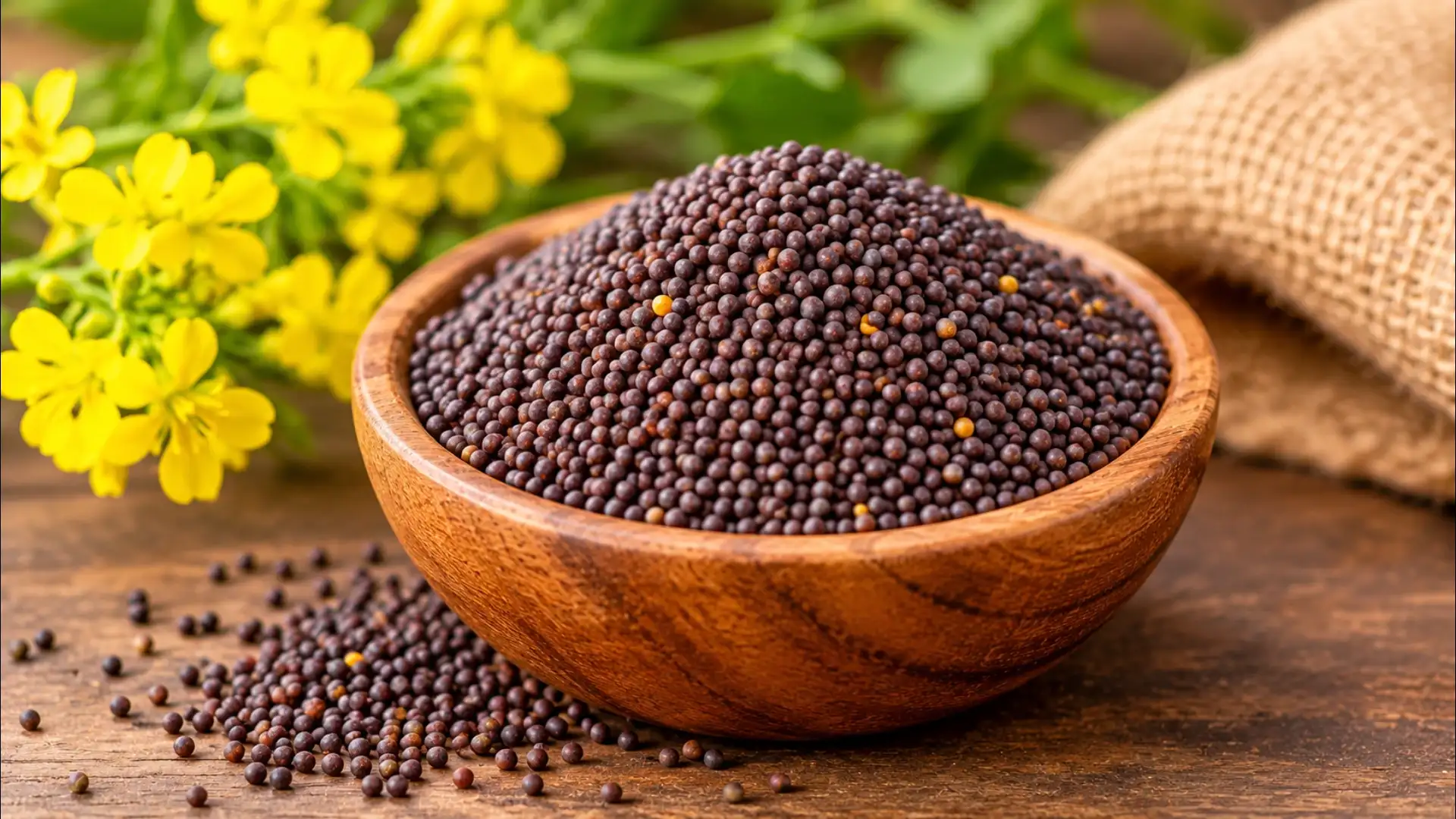
Mustard seeds, black, brown, and yellow, are all members of the Brassica family, the same plant group as cabbage, broccoli, and kale. That family connection matters, because it explains most of what makes the seed useful beyond flavour.
Traditional Ayurvedic texts describe mustard as having a heating quality, and the external application of mustard paste to sore muscles is a practice still common in many Indian households. The mechanism behind it, increased local circulation and mild counter-irritation, lines up with what the plant chemistry would predict.
Most people eating an ordinary Indian diet get mustard seeds in small quantities daily. That regularity, across a meal pattern, is how micronutrient contributions from spices actually add up, not in a single large dose but as a steady background presence.
Heating the seeds releases volatile compounds and, in the case of mustard, makes the resulting oil more bioavailable. Whether the cook knew the chemistry or not, the technique was doing something real.
The seeds themselves, eaten whole or ground, carry alpha-linolenic acid, the plant form of omega-3. The body converts it at low efficiency, but the contribution is real and consistent when the seed is a daily part of the diet.
The allyl isothiocyanates released when the seed is ground inhibit microbial growth, which is why a jar of homemade achar with a layer of mustard oil on top keeps far longer than one without it. The grandmother who made it did not know the compound name. She knew the outcome.
The mustard seed's reputation as a humble, background ingredient understates what it actually contributes. Its chemistry is not exotic, it is the same chemistry that makes the whole Brassica family worth eating. The difference is that mustard seeds have been delivering it quietly, in every tadka, for a very long time.
Mustard seeds, black, brown, and yellow, are all members of the Brassica family, the same plant group as cabbage, broccoli, and kale. That family connection matters, because it explains most of what makes the seed useful beyond flavour.
They Carry Compounds That Fight Inflammation
Mustard seeds contain glucosinolates, sulphur-containing compounds that break down when the seed is crushed or chewed into forms called isothiocyanates. These compounds are what give mustard its sharp, nose-clearing bite, and they are also what researchers studying the Brassica family have focused on for their anti-inflammatory properties.Traditional Ayurvedic texts describe mustard as having a heating quality, and the external application of mustard paste to sore muscles is a practice still common in many Indian households. The mechanism behind it, increased local circulation and mild counter-irritation, lines up with what the plant chemistry would predict.
A Meaningful Source of Selenium and Magnesium
One tablespoon of mustard seeds holds a useful amount of selenium, a mineral that supports thyroid function and plays a role in how the body manages oxidative stress. The same quantity carries magnesium, which is involved in hundreds of enzymatic reactions including muscle contraction and nerve signalling.Most people eating an ordinary Indian diet get mustard seeds in small quantities daily. That regularity, across a meal pattern, is how micronutrient contributions from spices actually add up, not in a single large dose but as a steady background presence.
Digestive Support Rooted in Traditional Use
Mustard seeds have been used as a digestive stimulant in both Ayurvedic and Unani traditions for a long time. They are considered to stimulate the production of digestive enzymes and bile, which helps the body process fats. The tadka, tempering whole spices in hot oil at the start of cooking, is not just a flavour technique.Heating the seeds releases volatile compounds and, in the case of mustard, makes the resulting oil more bioavailable. Whether the cook knew the chemistry or not, the technique was doing something real.
The Omega-3 Connection in Mustard Oil
When mustard seeds are cold-pressed into oil, the result is one of the few cooking oils with a meaningful ratio of omega-3 to omega-6 fatty acids. Most refined vegetable oils used in Indian cooking are heavily weighted toward omega-6. Mustard oil, used traditionally across Bengal, Bihar, Punjab, and Rajasthan, naturally corrects some of that imbalance.The seeds themselves, eaten whole or ground, carry alpha-linolenic acid, the plant form of omega-3. The body converts it at low efficiency, but the contribution is real and consistent when the seed is a daily part of the diet.
Antimicrobial Properties That Explain a Very Old Food Habit
Mustard seeds have documented antimicrobial activity against certain bacteria and fungi. This is not a new discovery, it is the reason mustard paste and mustard oil have been used as preservatives in pickles across South Asia for generations. \The allyl isothiocyanates released when the seed is ground inhibit microbial growth, which is why a jar of homemade achar with a layer of mustard oil on top keeps far longer than one without it. The grandmother who made it did not know the compound name. She knew the outcome.
The mustard seed's reputation as a humble, background ingredient understates what it actually contributes. Its chemistry is not exotic, it is the same chemistry that makes the whole Brassica family worth eating. The difference is that mustard seeds have been delivering it quietly, in every tadka, for a very long time.
Next Story