
Beyond the Movies: Interesting Facts About Popcorn You Didn't Know

It sits in a paper bag, it smells like every cinema lobby you have ever walked into, and most people give it no more thought than that. But popcorn is quietly one of the stranger foods humans eat, a grain that violently destroys itself to become edible, with a past that predates the movies by several millennia.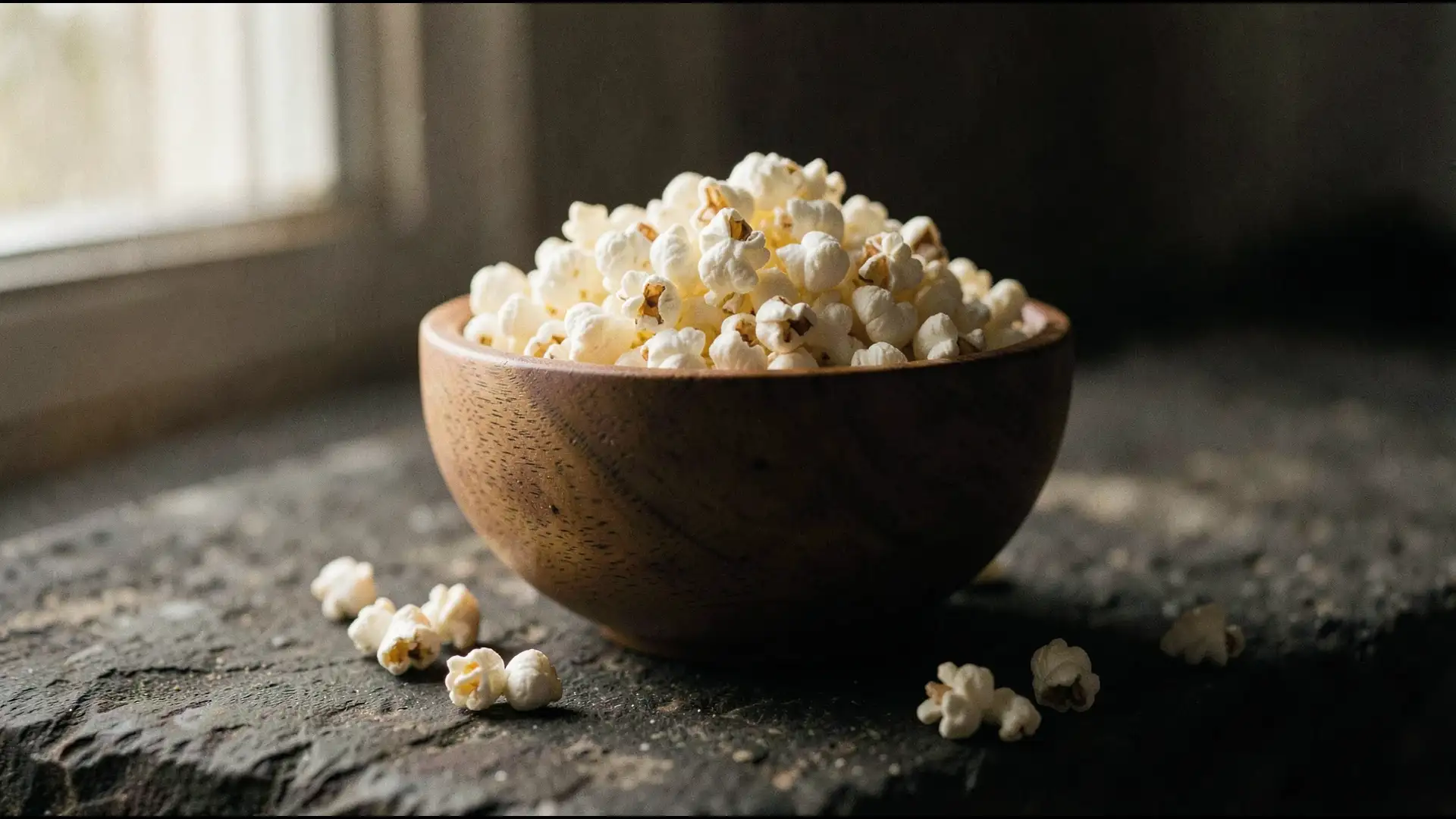
The Aztecs placed popcorn garlands on statues during festivals. It arrived in Europe only after Spanish explorers brought maize back from the Americas in the 16th century, and it took several more centuries before it became the commercial snack the world knows today.
Pressure builds until the hull shatters, and the starch and proteins inside, now superheated, puff outward and set into the familiar foam-like shape as they cool in the open air. Sweet corn, field corn, and other varieties have thinner, more porous hulls. The steam escapes before pressure can build, so nothing pops. The hard hull is not a flaw in popcorn; it is the entire mechanism.
Mushroom kernels are round and dense, far more durable, and these are what commercial coatings like caramel prefer, because a butterfly kernel crumbles under the weight of a thick glaze. The shape is not random. It depends on how quickly the kernel is heated. A fast, intense heat tends to produce butterfly shapes.
A slower, more even heat pushes toward mushroom. Industrial popcorn makers choose their kernel variety and heating method based on what they plan to do with the finished product.
Many manufacturers have moved to alternative flavouring compounds, but the sensory association is so strong that the new chemicals are designed to approximate the same smell profile. The scent that pulls you toward the concession stand is, in large part, a carefully constructed signal.
The sand acts as a heat transfer medium, surrounding each kernel completely and popping it without scorching. This method, still found at railway stations and melas across the country, produces a drier, slightly firmer popcorn than oil-popped varieties, and it requires no machinery beyond a large iron pan and a steady fire.
The multiplex version and the sand-roasted version are the same snack produced by the same physics, separated by a few centuries of commerce.
The kernel's hard shell, the trapped water, the precise temperature, the shape of the starch foam, each detail connects to the next. What looks like a simple snack is a small chain of cause and effect that humans stumbled onto thousands of years ago and have been refining, industrialising, and flavouring ever since. The next time you hear that first pop, you will know exactly what just happened.
Popcorn Is One of the Oldest Snacks on Earth
Archaeologists have found popcorn remains in caves in New Mexico that are roughly 5,600 years old. Ancient Peruvian tombs have yielded popcorn kernels so well preserved they could still pop. Long before it became a cinema staple, indigenous peoples across the Americas were eating it, wearing it as decoration, and using it in religious ceremonies.The Aztecs placed popcorn garlands on statues during festivals. It arrived in Europe only after Spanish explorers brought maize back from the Americas in the 16th century, and it took several more centuries before it became the commercial snack the world knows today.
Why Only Popcorn Pops, and Other Corn Does Not
Not every variety of maize can pop. Popcorn, known botanically as Zea mays everta, has a hull that is uniquely hard and almost completely moisture-proof. Inside each kernel, roughly 14 to 20 percent of its weight is water, trapped in a small pocket of starch. When heat reaches around 180 degrees Celsius, that water turns to steam faster than it can escape.Pressure builds until the hull shatters, and the starch and proteins inside, now superheated, puff outward and set into the familiar foam-like shape as they cool in the open air. Sweet corn, field corn, and other varieties have thinner, more porous hulls. The steam escapes before pressure can build, so nothing pops. The hard hull is not a flaw in popcorn; it is the entire mechanism.
The Shape Tells You Something About the Heat
Popcorn pops into two distinct shapes: butterfly, also called snowflake, and mushroom. Butterfly kernels are irregular, with jagged wings that trap butter and seasoning well, these are what most home poppers produce.Mushroom kernels are round and dense, far more durable, and these are what commercial coatings like caramel prefer, because a butterfly kernel crumbles under the weight of a thick glaze. The shape is not random. It depends on how quickly the kernel is heated. A fast, intense heat tends to produce butterfly shapes.
A slower, more even heat pushes toward mushroom. Industrial popcorn makers choose their kernel variety and heating method based on what they plan to do with the finished product.
The Smell Is Engineered, Not Natural
Plain air-popped popcorn has a mild, almost neutral smell. The powerful aroma that fills a cinema lobby comes from diacetyl and related compounds, chemicals that develop when butter or butter-flavoured oils are heated. For decades, a synthetic version of diacetyl was used in artificial butter flavouring, and it became so associated with the cinema experience that the brain now reads that smell as popcorn even before seeing any.Many manufacturers have moved to alternative flavouring compounds, but the sensory association is so strong that the new chemicals are designed to approximate the same smell profile. The scent that pulls you toward the concession stand is, in large part, a carefully constructed signal.
India Has Its Own Popcorn Tradition
Long before multiplex chains arrived, popcorn had a street life in India. In many cities, vendors roasted corn in hot sand, a technique that applies even, dry heat without oil, and sold it in newspaper cones.The sand acts as a heat transfer medium, surrounding each kernel completely and popping it without scorching. This method, still found at railway stations and melas across the country, produces a drier, slightly firmer popcorn than oil-popped varieties, and it requires no machinery beyond a large iron pan and a steady fire.
The multiplex version and the sand-roasted version are the same snack produced by the same physics, separated by a few centuries of commerce.
The kernel's hard shell, the trapped water, the precise temperature, the shape of the starch foam, each detail connects to the next. What looks like a simple snack is a small chain of cause and effect that humans stumbled onto thousands of years ago and have been refining, industrialising, and flavouring ever since. The next time you hear that first pop, you will know exactly what just happened.
Next Story