
Kashmiri Wazwan: The Feast That Takes Three Days to Make

When a Wazwan arrives at the table, it comes in a trami, a large copper plate shared by four guests, piled with rice and ringed with meat in an order that is never accidental. The meal can run to thirty-six courses. Most guests will see fewer, but even a modest Wazwan follows a sequence, a grammar of courses that the cook learned from his father and his father's father before him.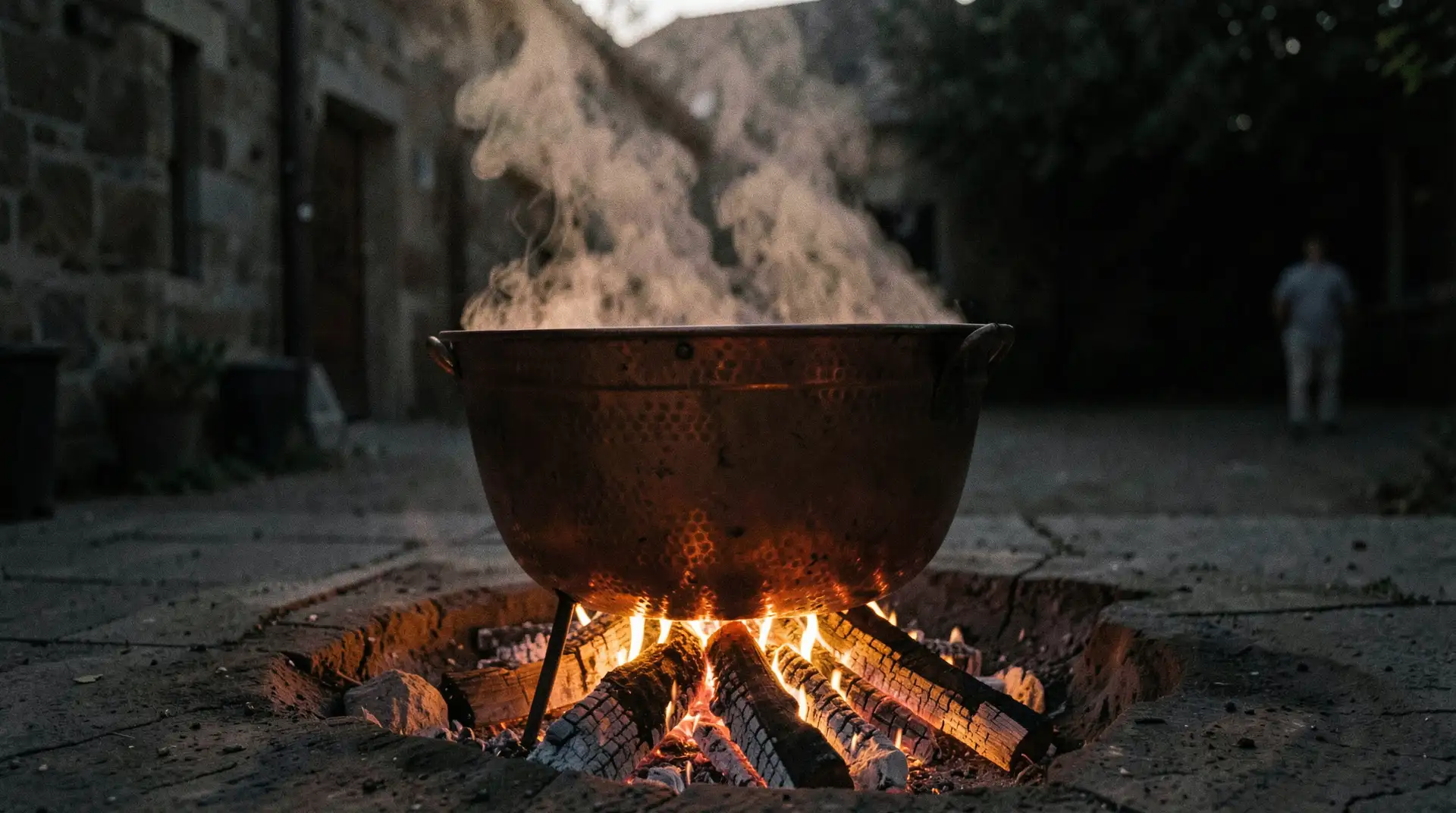
The Wazwan endures not because it is preserved in amber but because the families who make it have kept the knowledge alive in the only way it can be kept, by making it, again and again, for the people who call them.
Who the Wazas Are
The Wazwan is inseparable from the Waza, the hereditary master chef whose craft is passed down within families, not taught in culinary schools. The word itself shares a root with the Persian for cook. A Waza serves an apprenticeship inside his own household, learning to read fire and fat by standing beside an elder for years before he touches the main pot alone. The brotherhood is Muslim and Kashmiri, and the knowledge they hold, which cut of meat goes into which dish, how long the rista meatball must be worked by hand before it holds its shape in the broth, belongs to an oral tradition that has never been fully written down. When a family in the Valley hosts a wedding or a major celebration, they do not hire a caterer. They call a Waza.The Night Before the Feast
Preparation begins the evening before the meal is served. The Wazas arrive with their own large copper cauldrons called degs, their own wood, and their own tools. Cooking happens outdoors, over open wood fires, through the night. The scale is deliberate: a Wazwan for a wedding may feed hundreds, and the dishes must arrive at the table in sequence, each one ready at its appointed moment. Mutton, almost always mutton, rarely anything else, is butchered and sorted by cut. Different cuts go to different dishes. The rogan josh gets bone-in pieces braised slowly in oil, dried Kashmiri chillies, and whole spices. The yakhni is cooked in a yogurt broth flavoured with fennel and dried ginger. The gushtaba, the dish that closes the meal, is a large meatball pounded to a paste so fine it dissolves against the tongue, simmered in a yogurt gravy. Each requires a different hand and a different fire.You may also like
- He left a ₹1 crore job in South Korea to prepare for UPSC and secured AIR 1; then Kanishak Kataria thanked his girlfriend in his victory speech
- 'Hanging upside down, with the world below you': Japan's Chiba monorail that feels nothing less than a rollercoaster
- Smell Good After Shower: Why do some people smell good after showering? Try these hacks too.
- How much effort does Kohli put in to stay fit on the field? Learn about his diet routine.
- Far from crowded hill stations, India's 'Last Inhabited Village' sits at 11,320 feet, has a 500-year-old temple and offers a glimpse of Kinnauri culture; here's how to reach it
The Order of the Courses
The sequence is not random, and the Waza controls it. The meal opens with rice and moves through the meat dishes in a specific progression, from the lighter and more delicate to the richer and heavier. Seekh kebabs and tabak maaz, ribs fried until the bone is almost edible, come early. Rista, a smaller meatball in a red gravy, follows. Rogan josh arrives mid-meal. The gushtaba comes last, a signal that the feast is complete. To serve the gushtaba early would be to misread the grammar of the meal. Guests understand this. When the gushtaba appears, they know they are at the end. The sequencing is also practical: the lighter dishes open the appetite, and the rich yogurt gravy of the gushtaba settles it.What Makes It Different from Other Subcontinental Feasts
Several things separate the Wazwan from other grand Indian culinary traditions. The first is the almost total reliance on mutton. A traditional Wazwan has no chicken, no fish course, no vegetable dishes in the main sequence. The second is the absence of onion in most of the gravies, flavour comes instead from dried Kashmiri chillies, which give colour without the heat of southern chillies, and from whole spices, fennel seed, dried ginger, and asafoetida. The third is the copper. The deg is not decorative. Copper conducts heat evenly and, the Wazas maintain, changes the flavour of a long braise in ways an aluminium pot cannot replicate. Whether the science fully supports that claim, the practice is unchanged. The fourth is the communal plate. The trami is shared, and the act of sharing it with strangers at a wedding is part of what the meal means. A Wazwan eaten alone is not quite a Wazwan.What Survives and What Is Changing
The Waza families are fewer than they were a generation ago. Younger men from those households sometimes choose other work, and the knowledge that does not get passed on does not get recovered. Some dishes that once appeared in a full thirty-six-course sequence are now rarely made because the technique required is too labour-intensive for the number of Wazas still practising it. At the same time, the Wazwan has not been absorbed into a generic hospitality industry. It remains tied to its cooks, its copper, and its occasion. A hotel can serve a version of it, but the Waza who cooked through the night in a family's courtyard is doing something categorically different. The trami carries that history in its weight.The Wazwan endures not because it is preserved in amber but because the families who make it have kept the knowledge alive in the only way it can be kept, by making it, again and again, for the people who call them.






Loving Newspoint? Download the app now
