
Paranthe Wali Gali: The Chandni Chowk Lane Famous for Fried Parathas

Delhi has thousands of lanes, but only one that people travel across the city to eat in. Paranthe Wali Gali sits inside the old walled city, off the main artery of Chandni Chowk, and it does exactly one thing, fry parathas in kadhai ghee and hand them over with a row of small accompaniments, pickle, curd, and a thin sabzi. The shops are narrow, the seating is tight, and the smell of hot ghee reaches you before the lane does.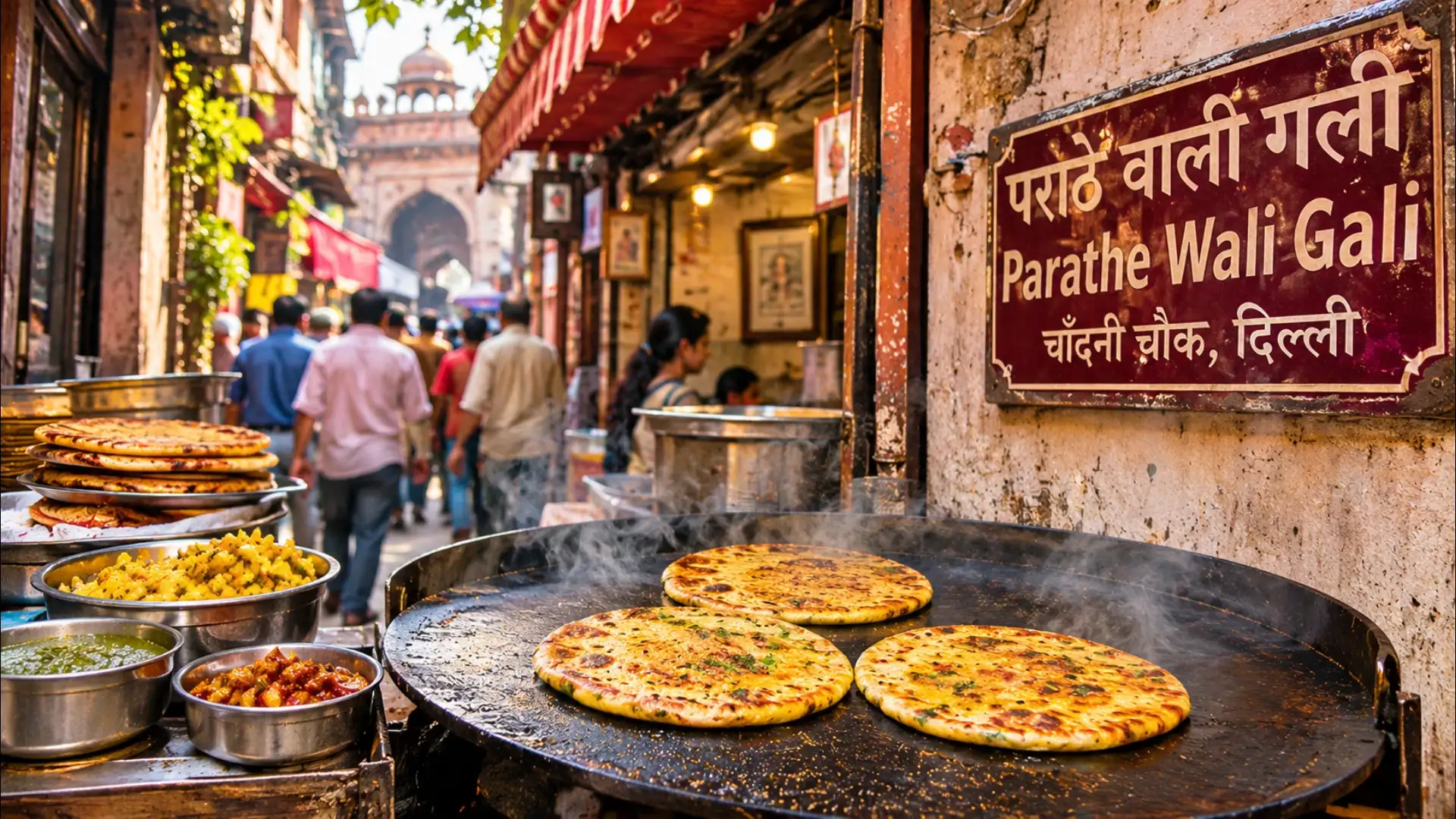
A paratha fried in ghee is not a complicated object, but Paranthe Wali Gali has never needed complexity to hold its place in the city. The lane survives because it solved a real problem once, a hot, filling meal in a busy market, and kept solving it the same way. That consistency, across more than a century of a city that has changed almost everything else about itself, is what a gali becomes famous for.
How the Lane Came to Be
The shops in Paranthe Wali Gali trace their origins to the nineteenth century, when the area around the Fatehpuri Masjid was already a busy commercial hub. Traders, labourers, and shop owners working the markets of Chandni Chowk needed a quick, filling meal that required no plates, no waiting, and no ceremony. Parathas stuffed with lentil paste or spiced potato fit that need exactly. The earliest shops are said to have been set up by families who came from what is now Uttar Pradesh, carrying with them a tradition of cooking parathas in generous amounts of ghee rather than dry-roasting them. Over generations, those families stayed, and the lane acquired a name that described precisely what it sold.What Makes the Parathas Here Different
The parathas at these shops are not the thin, layered ones a home kitchen typically makes. They are thicker, stuffed before cooking, and fried, not shallow-fried, but cooked in a wide iron kadhai with enough ghee to submerge the base. The dough is unleavened wheat, rolled to a medium thickness, filled with one of a long list of stuffings, then sealed and pressed flat before it goes into the pan. The ghee is kept hot enough that the paratha puffs and crisps at the edges while the inside steams through. What comes out is simultaneously crisp on the outside and soft within, which is a texture that a dry tawa cannot produce. The stuffings are where the shops distinguish themselves. Aloo and mooli are the anchors, but the menus run into stranger territory: khoya, dry fruits, banana, mint, and combinations that sound unlikely until you taste them. Each shop guards its spice ratios, and regulars will tell you, with some conviction, that the shops are not interchangeable.You may also like
- Vitamin C Serums Explained: Why Some Formulas Are Harder to Get Right
- Treating Hair Loss Every Week? Why Your Efforts May Not Be Working
- Hair Loss You Shouldn't Treat at Home: Signs That Need a Dermatologist
- Why Does Hair Fall Out Three Months After a Stressful Event?
- Why Does Your Body Store Fat Differently? The Hidden Role of Genetics
The Families Behind the Shops
Most of the operating shops in the lane today are run by descendants of the original families. The businesses have passed through four and five generations in some cases, with each generation inheriting not just the shop but the recipes, the suppliers, and the particular way the ghee is managed through a long service day. This continuity is part of what gives the lane its character. The cooks are not following a written recipe card, they are replicating a muscle memory handed down across decades. New items have been added over the years to meet changing tastes, but the core, wheat dough, spiced stuffing, ghee, iron kadhai, has not moved. The shops open in the morning and close when the day's supply runs out, which is a rhythm that has not changed either.The Lane as a Place in the City's Memory
Paranthe Wali Gali appears in enough accounts of old Delhi that it has become part of the city's self-description. Writers, travellers, and food chroniclers have recorded it across different eras, each finding the same narrow lane, the same ghee smell, and the same unhurried way the cooks work. For Delhiites who grew up in families with roots in the walled city, the gali carries a specific kind of nostalgia, a place their parents or grandparents walked to, which they now walk to, and which looks much as it did. For visitors, it functions as a window into the version of Delhi that existed before the city expanded outward in every direction. The lane is not a reconstruction of something old. It is the old thing, still operating.A paratha fried in ghee is not a complicated object, but Paranthe Wali Gali has never needed complexity to hold its place in the city. The lane survives because it solved a real problem once, a hot, filling meal in a busy market, and kept solving it the same way. That consistency, across more than a century of a city that has changed almost everything else about itself, is what a gali becomes famous for.






Loving Newspoint? Download the app now
