
Indori Poha: Why Jeeravan, Sev and Steam Make It Unmistakable

Walk through any morning market in Indore and you will smell jeeravan before you see the poha. It is a sharp, fennel-forward warmth, nothing like the turmeric-and-mustard profile most of India associates with flattened rice. That smell is the first reason Indori poha is its own thing, not a regional variation of a common dish.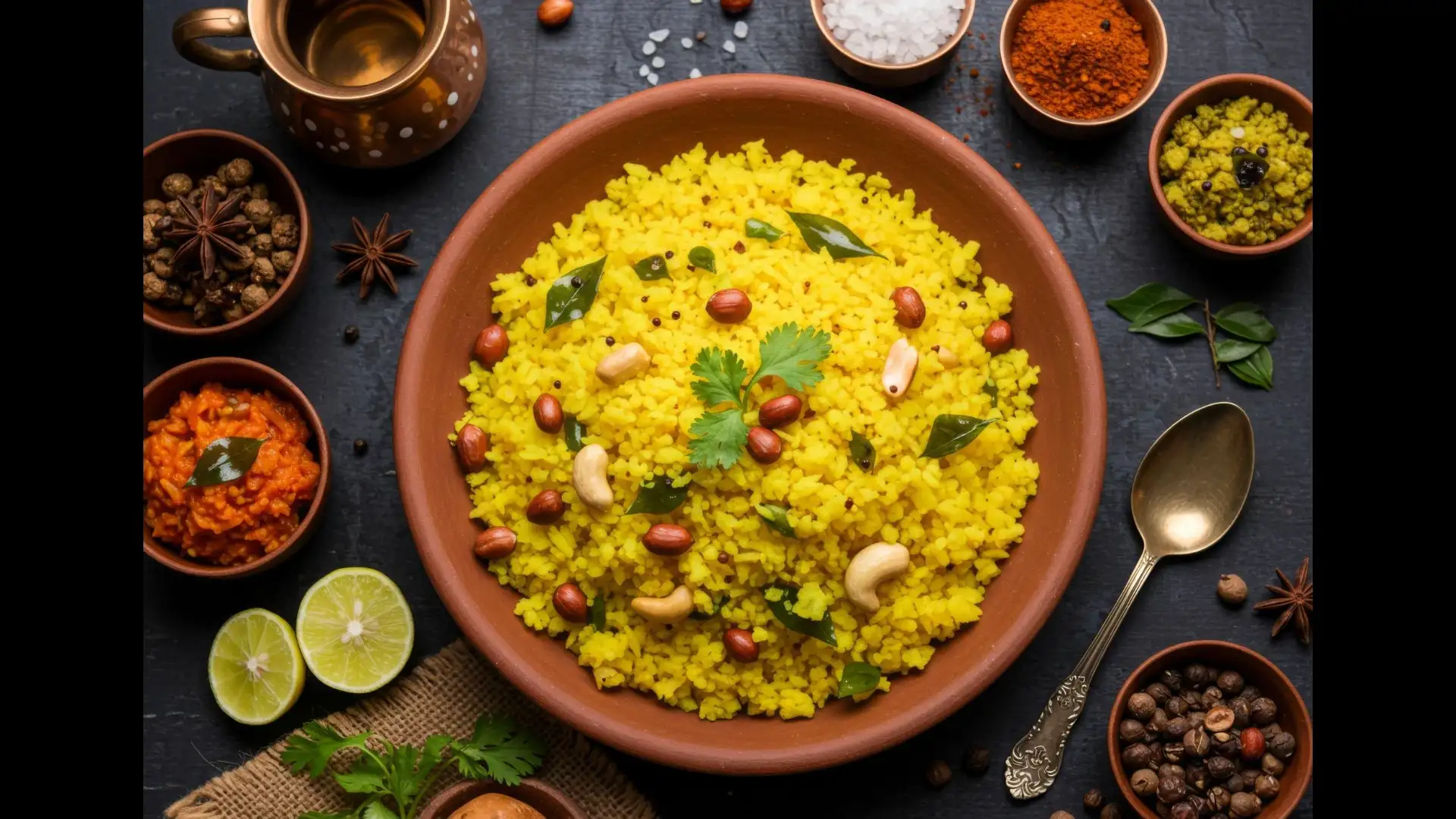
What it is not is garam masala. Garam masala is warm and rounded; jeeravan is bright, slightly sour, and has a sharpness that hits the back of the palate.
Applied to poha that is still hot, it blooms immediately. Applied to poha that has cooled, it sits flat. The temperature of the grain at the moment of seasoning matters.
The wash is quick and deliberate: cold water, a brief soak, and then the grain is drained while it still has some resistance. It should bend without crumbling. Over-soaked poha absorbs the tempering oil unevenly and loses the slight bite that the final steam is meant to preserve.
The tempering itself is spare: mustard seeds, curry leaves, green chilli, and finely diced onion cooked just past translucent. Nothing that would compete with jeeravan.
The centre of each strand stays crisp. That contrast between soft poha and the partially softened sev is what the dish is built around. Coarse sev, or sev added too early, collapses into the grain and disappears. The timing is the technique.
The grain is already soft. The steam is doing something more specific: it equalises the moisture across every grain so that the ones at the bottom of the pan, which touched the oil directly, and the ones at the top, which only caught heat from below, arrive at the same texture.
Without this step, the poha is uneven. The bottom layer is oily and slightly fried; the top layer is dry. The lid makes them the same thing. It is a small detail that takes no extra effort, and it is the step most home cooks skip when they make poha anywhere else in the country.
These are not insurmountable problems, but they mean that a plate of Indori poha made with substitutes is a reasonable approximation, not the same dish.
What cannot be substituted is the habit of eating it standing up, in the open, with a squeeze of lemon and a spoonful of raw onion on the side. That context is not nostalgia. It is part of why the dish works: it is designed to be eaten fast, while everything is at the right temperature.
What Jeeravan Actually Is
Jeeravan is a dry spice blend sold by weight at kirana stores across Madhya Pradesh, and it is the backbone of this dish. The exact formula varies by maker, but the consistent notes are dried mango powder, fennel, black salt, red chilli, and a quantity of cumin that gives it its name.What it is not is garam masala. Garam masala is warm and rounded; jeeravan is bright, slightly sour, and has a sharpness that hits the back of the palate.
Applied to poha that is still hot, it blooms immediately. Applied to poha that has cooled, it sits flat. The temperature of the grain at the moment of seasoning matters.
The Grain Itself and How It Is Washed
Indori poha uses medium-thick flattened rice, not the thin variety that turns to paste at the first touch of water, and not the thick kind that stays chewy unless soaked for several minutes.The wash is quick and deliberate: cold water, a brief soak, and then the grain is drained while it still has some resistance. It should bend without crumbling. Over-soaked poha absorbs the tempering oil unevenly and loses the slight bite that the final steam is meant to preserve.
The tempering itself is spare: mustard seeds, curry leaves, green chilli, and finely diced onion cooked just past translucent. Nothing that would compete with jeeravan.
The Role of Sev
The sev on Indori poha is not garnish. It is a textural layer with a specific job. Fine sev, the kind sold as nylon sev in Madhya Pradesh, is applied generously and immediately before serving, so it softens only at the edges where it meets the warm grain.The centre of each strand stays crisp. That contrast between soft poha and the partially softened sev is what the dish is built around. Coarse sev, or sev added too early, collapses into the grain and disappears. The timing is the technique.
You may also like
- Meet Dr Sivaranjani Santosh: the Hyderabad paediatrician who turned a social media appeal to solve a mother's impossible Rs 12–13 lakh monthly bill and changed it into hope for 7 children with a rare disorder
- American Proverb of the Day: A wise man learns by the experience of others; an ordinary man learns by his......"
- Has the PLI scheme funding been held up or distributed? Only 18.51% of the amount has been released..
- Mini cars, maximum thrill- RC car racing brings a new weekend thrill to Punekars
- EPFO Pension: Now, private employees can get a monthly pension after retirement, just like a government employee? But how?
The Steam Finish
Once the washed poha meets the tempering in the pan, the heat is lowered, a lid goes on, and the dish sits for two to three minutes. This is not cooking in the conventional sense.The grain is already soft. The steam is doing something more specific: it equalises the moisture across every grain so that the ones at the bottom of the pan, which touched the oil directly, and the ones at the top, which only caught heat from below, arrive at the same texture.
Without this step, the poha is uneven. The bottom layer is oily and slightly fried; the top layer is dry. The lid makes them the same thing. It is a small detail that takes no extra effort, and it is the step most home cooks skip when they make poha anywhere else in the country.
Why It Does Not Travel Well
Jeeravan is available outside Indore, but the blend sold in other cities is often reformulated for a broader palate, with the dried mango pulled back and the chilli pushed forward. The sev available in most markets outside Madhya Pradesh is coarser.These are not insurmountable problems, but they mean that a plate of Indori poha made with substitutes is a reasonable approximation, not the same dish.
What cannot be substituted is the habit of eating it standing up, in the open, with a squeeze of lemon and a spoonful of raw onion on the side. That context is not nostalgia. It is part of why the dish works: it is designed to be eaten fast, while everything is at the right temperature.






Loving Newspoint? Download the app now
