
Why Cotton Feels Cooler Than Polyester in an Indian Summer

Step outside in a polyester shirt on a Delhi afternoon in May and your back tells you everything within ten minutes. The fabric clings, the heat builds, and no breeze helps. Switch to a cotton kurta the next day and the same sun feels survivable. The difference is not imagination, it is fibre structure, moisture physics, and the way each fabric handles the one thing your body does constantly in heat: sweat.
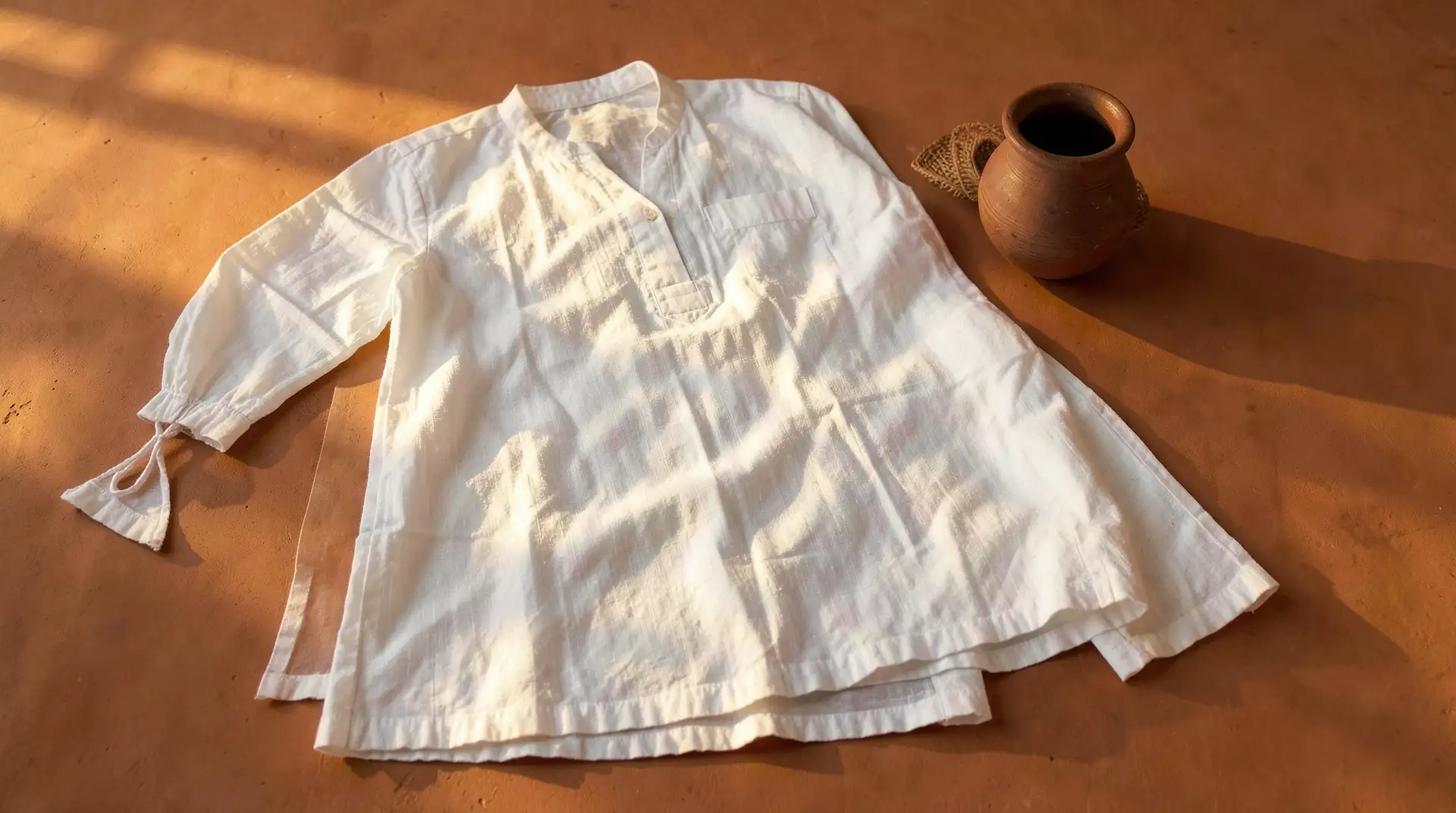
Cotton's advantage in an Indian summer is not a marketing claim, it is evaporation doing its job. The fibre absorbs moisture, the weave lets air through, and the sweat your body produces actually cools you instead of pooling against your skin. Traditional clothing arrived at cotton not by accident but because the physics of the fabric matched the demands of the climate. The polyester shirt may look the same on a hanger. On a May afternoon, the difference is written on your back.
How Cotton Is Built
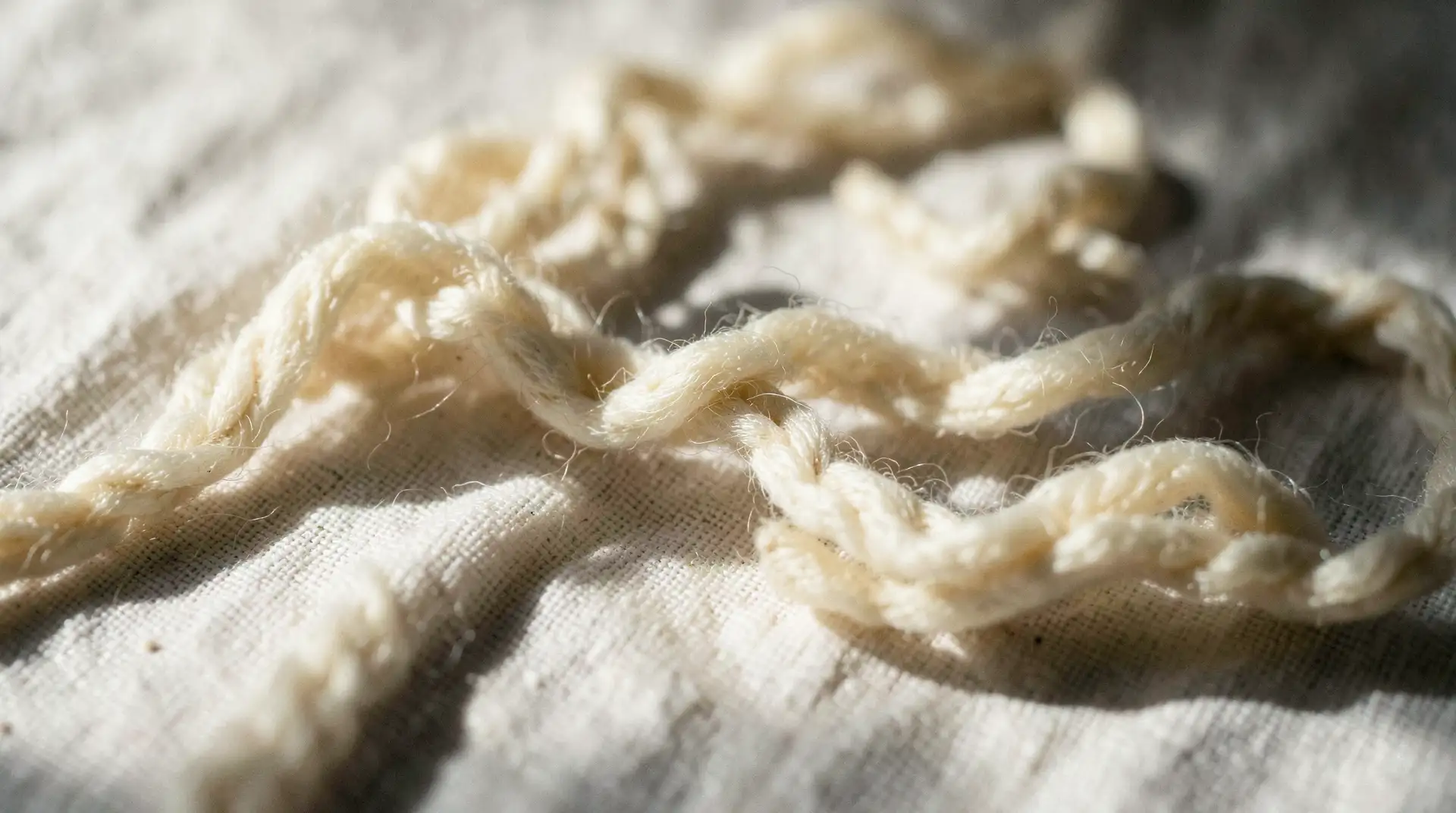
Cotton fibres come from the seed pod of the cotton plant. Each fibre is a hollow, twisted tube of cellulose. That hollow core and the natural crimp in the fibre create tiny air pockets across the fabric. Air is a poor conductor of heat, so those pockets slow the transfer of warmth from your skin to the outside and from the hot air outside back to your skin. The weave adds another layer: cotton threads are thicker and less uniform than synthetic ones, so a cotton cloth has more open space between threads, letting air move through.What Happens When You Sweat
Sweat is the body's cooling system. It works by evaporation: when sweat turns from liquid to vapour, it pulls heat away from the skin. For this to work, the moisture has to move away from your body and evaporate. Cotton is hydrophilic, it absorbs moisture readily, drawing sweat away from the skin and into the fabric, where it spreads across a wider surface and evaporates faster. As it evaporates, it carries heat with it. You feel cooler because you actually are cooler.You may also like
- The government will now provide pensions to laborers; under this scheme, they will receive a monthly pension of ₹3,000.
- National Education Day 2026: How did Maulana Azad transform India's education system, and which of his initiatives continue to this day?
- Maatrubhumi dialogues: Salman Khan delivers a strong message on humanity and patriotism
- BIMSTEC health: India pledges stronger regional cooperation, but how will it be implemented?
- Your Helmet May Look Brand New, But Its Protection Could Be Expired! Know When You Should Replace It
Why Polyester Traps Heat
Polyester is a petroleum-derived plastic fibre, smooth and non-porous. It does not absorb moisture. Sweat sits on the surface of the skin or pools between the fabric and the body, unable to spread and unable to evaporate efficiently. The smooth fibres also pack tighter in a weave, leaving less room for air to move. The result is a warm, damp layer trapped against the skin, the opposite of what the body needs. Some performance sportswear uses engineered polyester weaves that wick moisture through capillary action, but standard polyester shirting has none of that engineering.The Role of Colour and Weave
Fabric type is the bigger factor, but weave and colour matter too. A loosely woven cotton, a khadi or a muslin, breathes more than a tightly woven cotton poplin, because the gaps between threads are larger. Lighter colours absorb less radiant heat from the sun than dark ones; a white cotton kurta reflects more sunlight than a navy one. This is why traditional Indian summer clothing, the white kurta, the light cotton dhoti, the unbleached khadi, converged on the same answers over centuries of trial and lived experience in exactly the kind of heat that makes polyester unbearable.When Polyester Has Its Place
Polyester is not a bad fabric, it is a fabric used in the wrong context. It resists wrinkles, holds dye well, dries quickly after washing, and lasts longer under repeated machine washing than cotton. In an air-conditioned office where you never break a sweat, a polyester blend shirt performs fine. The problem is that Indian summers rarely stay air-conditioned all day. The moment you step outside, the commute, the market, the walk from the parking spot, the fabric that looked fine indoors becomes a liability. Cotton's slower drying time and tendency to wrinkle are real trade-offs. They are the price of staying comfortable in the heat.Cotton's advantage in an Indian summer is not a marketing claim, it is evaporation doing its job. The fibre absorbs moisture, the weave lets air through, and the sweat your body produces actually cools you instead of pooling against your skin. Traditional clothing arrived at cotton not by accident but because the physics of the fabric matched the demands of the climate. The polyester shirt may look the same on a hanger. On a May afternoon, the difference is written on your back.






Loving Newspoint? Download the app now
