
Why Jaipur Is Painted Pink: The Real Story Behind the Color

Walk through the old walled city of Jaipur and every wall, every arch, every haveli shopfront carries the same dusty terracotta-pink. It looks ancient, as if the city grew this colour from the earth. The truth is stranger, a large part of it came from a single royal command, issued for a guest who stayed only a few days.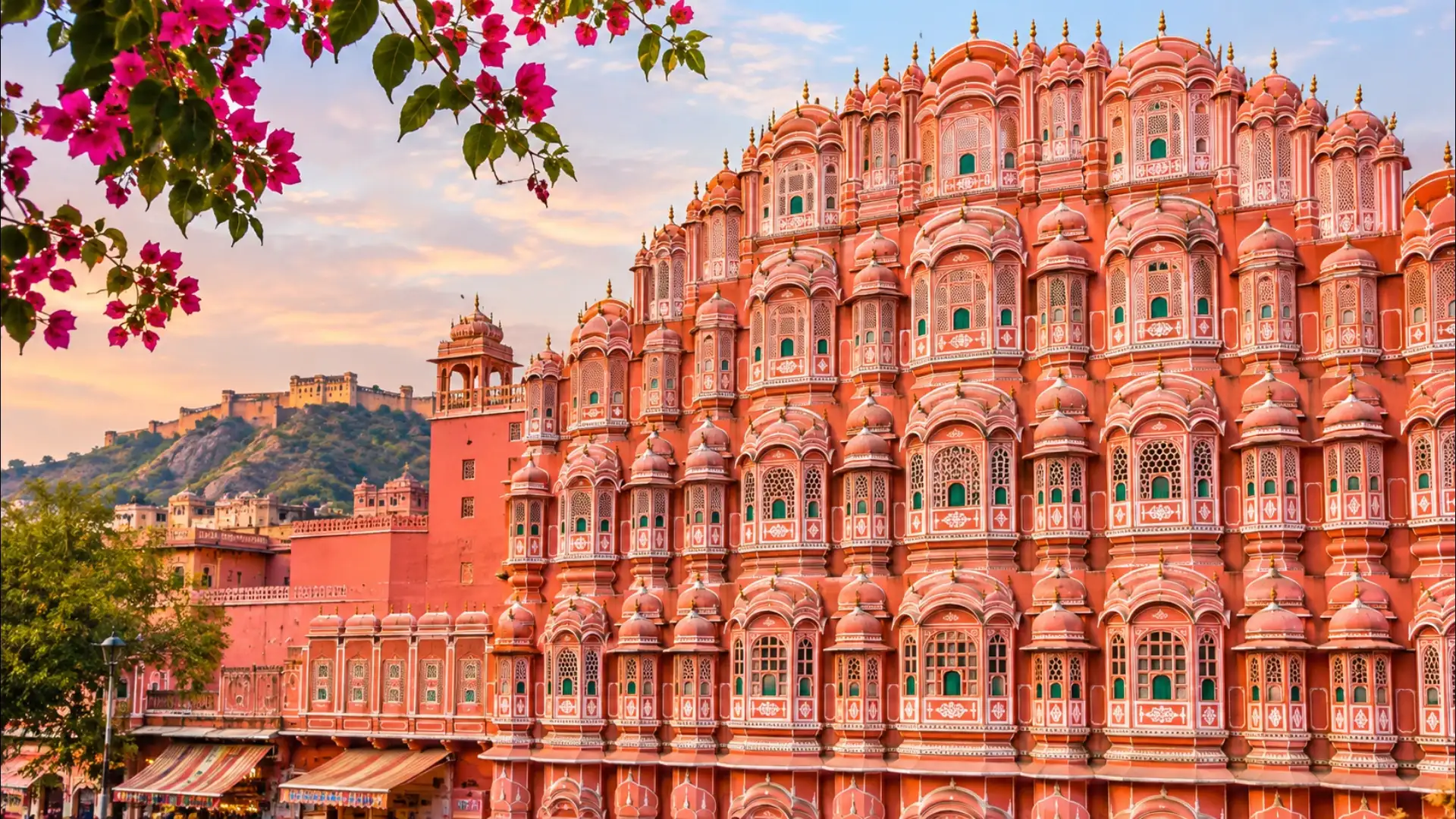
A City Built to a Plan
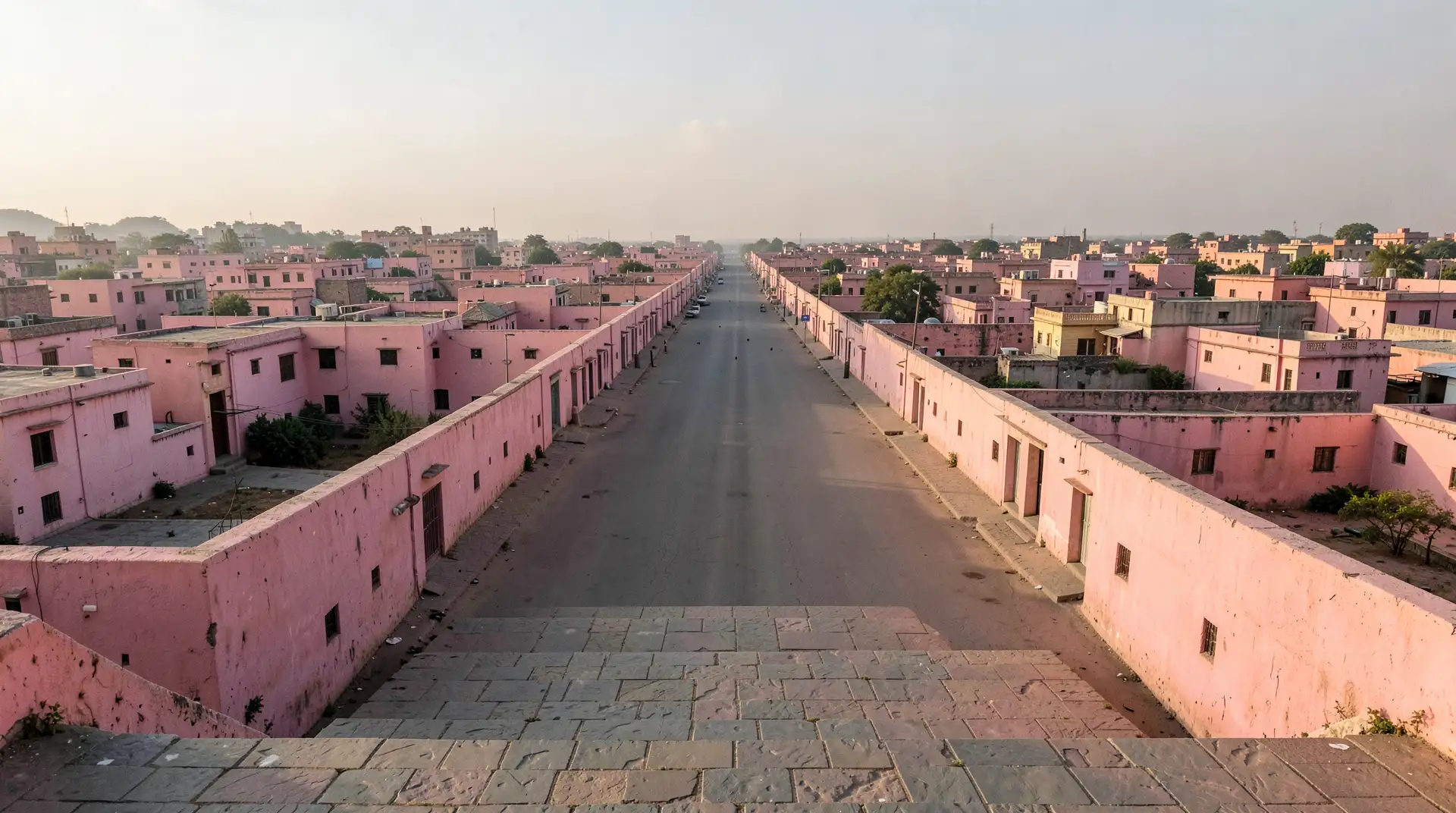
Jaipur was founded in 1727 by Maharaja Sawai Jai Singh II, who moved his capital from the hilltop fort of Amber to the plains below. What made Jaipur unusual for its time was that it was designed before it was built. Jai Singh commissioned the scholar Vidyadhar Bhattacharya to lay the city out on a grid following Vastu Shastra principles, dividing it into nine rectangular sectors. Wide straight roads, uniform building heights, and a consistent street-facing facade were written into the plan from the start. That uniformity made what came later much easier to enforce.The Royal Visit That Changed Everything
In 1876, Maharaja Sawai Ram Singh II was preparing to receive Albert Edward, Prince of Wales, who was touring India as the representative of Queen Victoria. Welcoming a royal guest in Rajput tradition meant making the city itself an act of hospitality. Ram Singh ordered the buildings of the old city painted in a terracotta pink, a colour associated in Rajput culture with warmth and welcome. The entire walled city was painted before the Prince arrived. When the visit ended, the colour stayed. Successive generations repainted their walls to match, and the tradition held.You may also like
- Why Do Babies Sneeze So Often?
- Hair Loss Shampoos Under Scrutiny as Experts Highlight the Importance of Scalp Health
- Scene Box Office Collection Day 1: Suriya's Film Opens at Rs 19.15 Crore, Beats Karuppu and Vishwanath & Sons
- Why is the night of Kali Chaudas specifically chosen for occult practices (tantra-mantra)? Learn about 5 beliefs..
- Diwali AI photo prompts 2026: Create stunning festive portraits, greeting cards and more
The Sandstone Underneath
Pink was not an entirely foreign choice for Jaipur. The region around the city is rich in Dholpur sandstone, a warm pinkish-red stone used in many of the city's older structures. The Hawa Mahal, the City Palace, and the Jantar Mantar observatory all carry this stone's natural warmth. The paint chosen in 1876 was close enough to the stone's own tone that the city read as a single continuous surface rather than a painted-over one. The colour and the material had always been moving toward each other.Pink as Law
The tradition eventually became enforceable. The Jaipur Municipal Corporation designated the old walled city a heritage zone, and the pink colour of building facades within it is now a regulated requirement. Property owners in the walled city cannot repaint their exteriors in another colour without permission. What began as a gesture of hospitality for one royal visit is now a legal condition of owning property in one of India's most visited urban heritage areas. Walk down Johari Bazaar or Tripolia Bazaar today and every shopfront, however modern its contents, sits inside a pink frame that has not changed in over a century.What the Colour Actually Is
The shade is not a single precise pink. Walk the old city carefully and you will find it ranging from a pale dusty rose to a deep terracotta, depending on how recently a wall was repainted, how much sun it catches, and what lime or pigment mixture the owner used. The overall impression is uniform because the variation stays within a narrow warm band. Photographers know the light changes it entirely, at noon it bleaches toward sand, at dusk it deepens toward brick, and in the hour after rain it turns briefly vivid. The city looks different every few hours, but it always looks like itself.





Loving Newspoint? Download the app now
