
Why Keeping Keys, Wallet and Phone in One Spot Ends Morning Panic

Most people lose around ten minutes a day searching for things they use every day. The maddening part is that the objects never really go missing, they just land somewhere different each time, because there was never a rule about where they belong.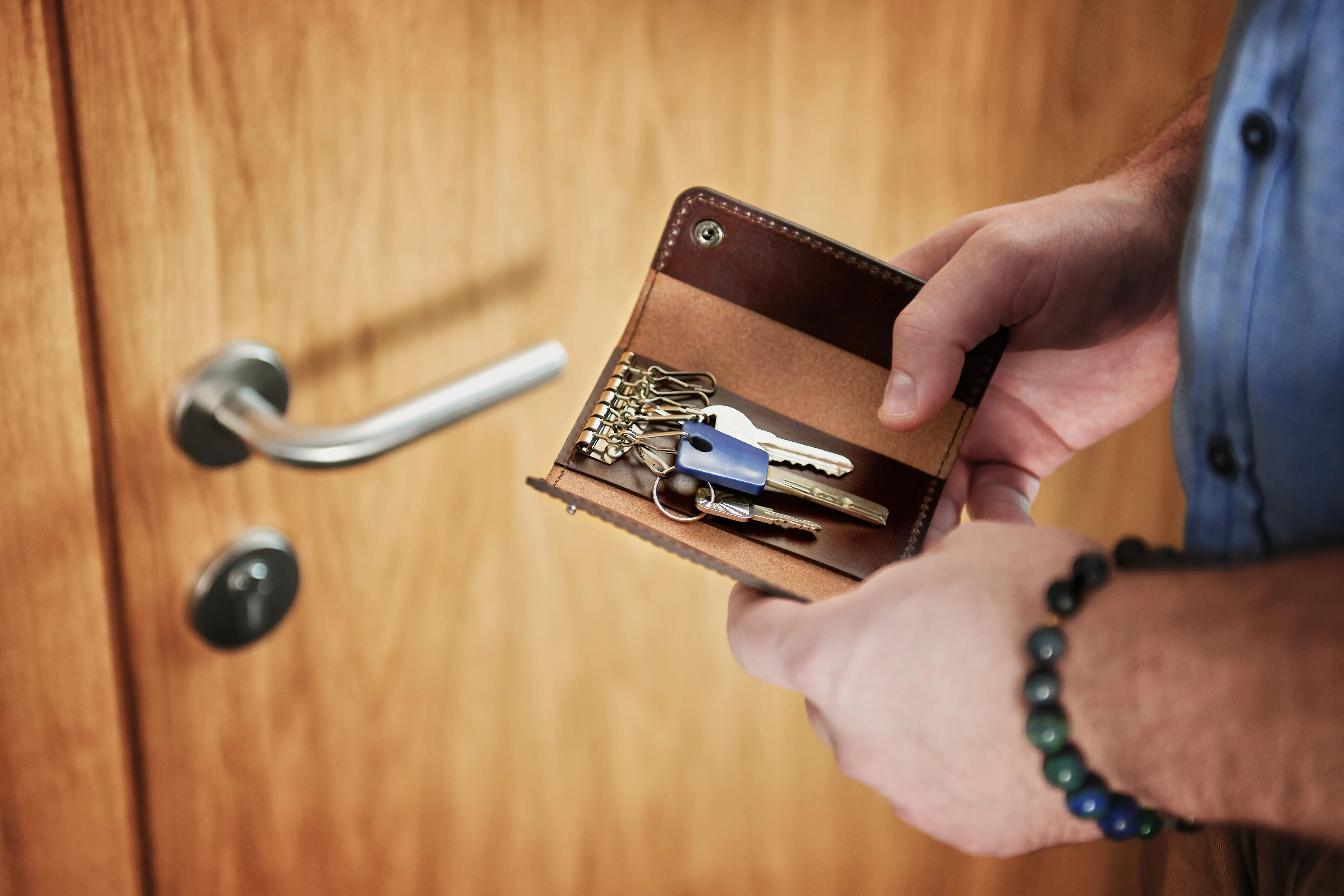
The Brain Prefers Habits Over Decisions
Every time you put your keys down without thinking, you are making a tiny decision: here, for now. The next morning, your brain has no record of that decision because it was never filed as a habit, it was filed as noise. Habits form when the same action follows the same cue in the same context, repeatedly. A dedicated spot for your essentials turns a random act into a ritual the brain can retrieve on autopilot. Neurologically, this is the difference between a path worn into grass by a thousand footsteps and a fresh route cut each morning through thick undergrowth.Why the Panic Feels Worse Than It Is
The search itself is rarely longer than two or three minutes. What makes it feel catastrophic is that it happens at the worst possible moment, when you are already mentally rehearsing the day ahead, calculating travel time, and running slightly late. The brain under mild time pressure releases a small spike of cortisol, which narrows attention and makes the missing object feel genuinely threatening. This is why you check the same pocket three times. It is not forgetfulness; it is stress narrowing your visual field. Remove the uncertainty about where things are, and the cortisol spike never arrives.You may also like
- Meet Manvi Rawat and Anshika Gaur, two Uttarakhand schoolgirls who went from being mocked for cleaning litter to building a 40-plus-member student environment group
- How many students—and how many women—are at AMU? How does it compare to other universities?
- Why Some Wrinkles Stay Even After Botox
- Air Pollution Is Damaging Your Skin Too! Experts Reveal How Poor AQI Can Cause Premature Ageing
- Fight spiders: Transform your home with effective, chemical-free methods that keep spiders at bay
What Makes a Spot Actually Work
Not every surface qualifies. A good landing spot has three properties: it sits on the natural path between the door and the rest of the home, it is visible from standing height, and it holds only the things that leave the house with you. A small tray or bowl near the front door works well for most homes. A hook for keys, a shallow dish for the wallet and a flat surface for the phone is enough. The object is not to organise the entire home, it is to give three specific things an address they always return to. The moment you walk in, the items go there. No exceptions, because exceptions are where the habit breaks.The Habit Spreads on Its Own
Something predictable happens once the exit routine becomes automatic: the same logic starts applying to other recurring searches. Spectacles. Earphones. The charger that is always somewhere. The brain, having learned that a fixed address for one thing removes friction, begins assigning addresses to others without being told. This is not discipline, it is the brain optimising its own load. Cognitive scientists call this chunking: small decisions get bundled into a single automatic sequence, freeing attention for things that actually need it. The morning stops being a series of small panics and becomes a sequence the body runs while the mind is already somewhere else.One Spot Is Enough to Start
The instinct is to redesign the whole home, buy organisers, label shelves. That instinct usually stalls before anything changes. The simpler path is to pick one surface near the front door, clear it of everything except keys, wallet and phone, and defend that rule for three weeks. The habit takes hold faster than most people expect, because the reward, leaving without panic, arrives immediately and every single day. Small, daily, reliable rewards are exactly the conditions under which habits become permanent.





Loving Newspoint? Download the app now
