
Which Is the Monsoon Capital of India? The Answer Isn't Cherrapunji

When the monsoon arrives, India undergoes a breathtaking transformation. Dry landscapes become lush, waterfalls gush with renewed force, and hill stations are wrapped in mist. It's no surprise that the rainy season is considered one of the best times to experience the country's natural beauty and unique travel destinations. And we all would have studied that the wettest place in India is Cherrapunji but do you know which is the monsoon capital of India ?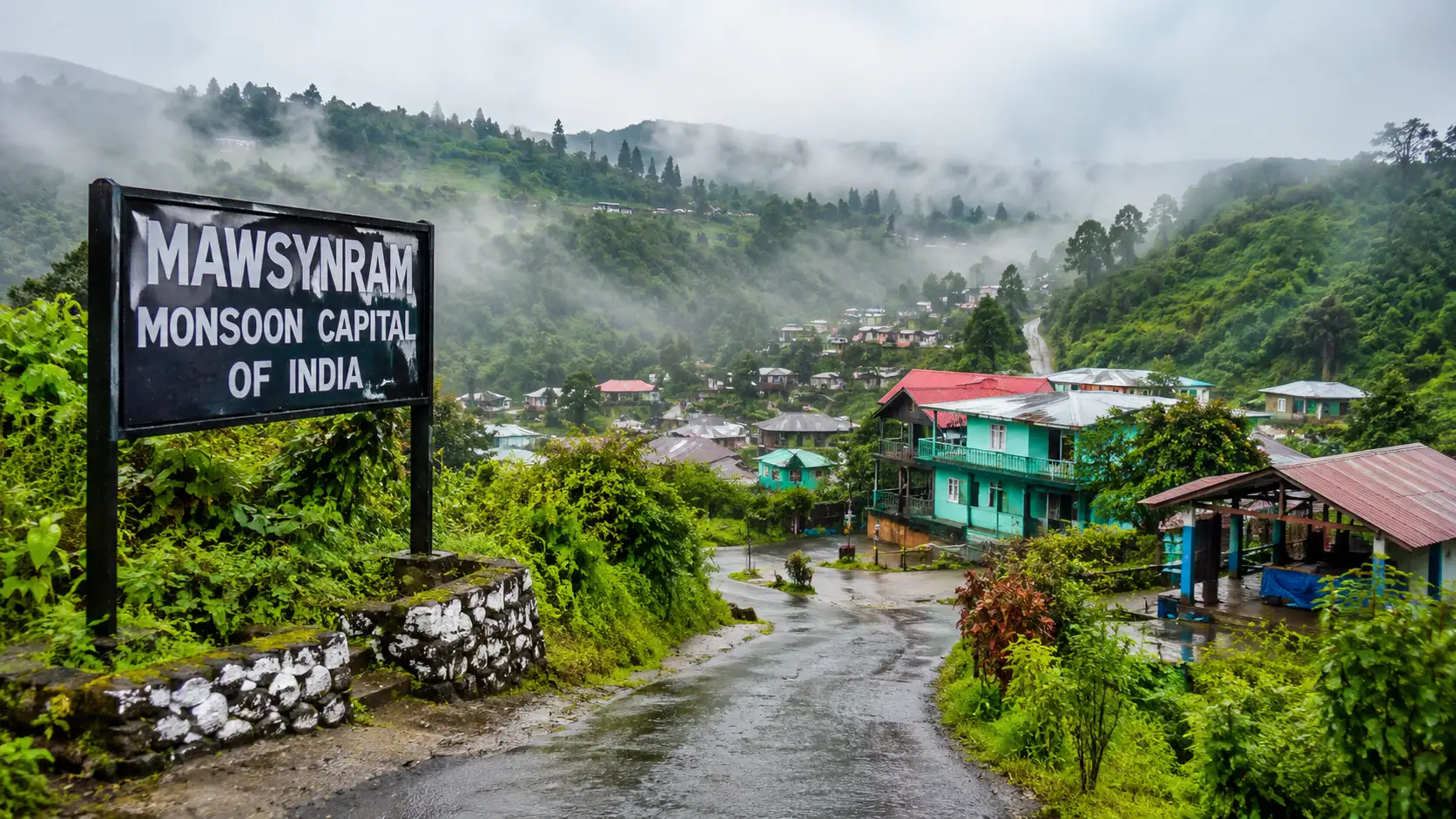
Mawsynram is widely known as the Monsoon Capital of India. Located in Meghalaya's East Khasi Hills district, the village is recognised as the wettest place on Earth based on its exceptionally high average annual rainfall.
This is mainly due to the unique geography and meteorological features.
Just about 15 kilometres from Mawsynram lies Cherrapunji, also known as Sohra. Cherrapunji was once recognised as the wettest place on Earth and still holds records for the highest rainfall received in a single month and a single year. Today, while Mawsynram is known for recording the highest average annual rainfall, both destinations rank among Meghalaya's most popular monsoon attractions and are often explored together. The two places offer visitors a chance to experience some of India's most dramatic rainy-season scenery, complete with waterfalls, caves and mist-covered valleys.
Mawsynram is more than just a place that holds a rainfall record, it is a destination where nature showcases the true magic of the monsoon. From mist-covered hills and roaring waterfalls to ancient caves and living root bridges, every corner reflects Meghalaya's unmatched beauty during the rainy season. Whether you're a nature lover, adventure enthusiast, or someone seeking a unique travel experience, a visit to India's Monsoon Capital promises unforgettable memories and a chance to witness the monsoon in its most spectacular form.
Let’s find out
Mawsynram is widely known as the Monsoon Capital of India. Located in Meghalaya's East Khasi Hills district, the village is recognised as the wettest place on Earth based on its exceptionally high average annual rainfall.
Why does it receive maximum rainfall?
This is mainly due to the unique geography and meteorological features.
You may also like
- There's a train in China that runs through a residential building apartment and it is one of the world's most incredible travel experiences
- "By the time a child turns 18, parents have already spent 93% of the total time they'll ever have together," says educator- and the simple calculation is leaving people emotional
- Psychology says one painful comment can stay with you for years while dozens of kind words fade away
- Chinese proverb of the day: Why "It takes more than one cold day for…" reminds us that lasting results take time
- Psychology says people who talk to their pets like they are humans have these 7 unique psychological strengths
- Mawsynram is located at the edge of the Shillong Plateau in the Khasi hills acting as a direct physical barrier to winds.
- The southwest monsoon winds travel across the Bay of Bengal, gathering immense moisture before hitting the hills.
- As the clouds are forced to rise rapidly over the steep hills, the air cools and condenses, resulting in continuous, heavy downpours.
Cherrapunji shares a historic connection
Just about 15 kilometres from Mawsynram lies Cherrapunji, also known as Sohra. Cherrapunji was once recognised as the wettest place on Earth and still holds records for the highest rainfall received in a single month and a single year. Today, while Mawsynram is known for recording the highest average annual rainfall, both destinations rank among Meghalaya's most popular monsoon attractions and are often explored together. The two places offer visitors a chance to experience some of India's most dramatic rainy-season scenery, complete with waterfalls, caves and mist-covered valleys.
How to get there ?
- By Air: Shillong Airport is the nearest airport, while Lokpriya Gopinath Bordoloi International Airport in Guwahati offers better connectivity.
- By Road: Mawsynram is about 60 km from Shillong and can be reached by taxi or bus.
- By Rail: Guwahati Railway Station is the nearest major railhead, followed by a road journey to the village.
Some places are worth visiting, and here goes the list
- The fascinating Mawjymbuin Cave with its naturally formed stalagmite
- The majestic Nohkalikai Falls
- The stunning Seven Sisters Falls
- The iconic living root bridges of the Khasi Hills
Mawsynram is more than just a place that holds a rainfall record, it is a destination where nature showcases the true magic of the monsoon. From mist-covered hills and roaring waterfalls to ancient caves and living root bridges, every corner reflects Meghalaya's unmatched beauty during the rainy season. Whether you're a nature lover, adventure enthusiast, or someone seeking a unique travel experience, a visit to India's Monsoon Capital promises unforgettable memories and a chance to witness the monsoon in its most spectacular form.






Loving Newspoint? Download the app now
