
Exploring The Coastal Bliss: Unveiling The Top 5 Must-Visit Destinations In Kanyakumari

Nestled at the southernmost tip of the Indian subcontinent, the coastal city of Kanyakumari stands as a testament to the rich tapestry of culture and heritage that defines the region. Revered for its breathtaking confluence of the Bay of Bengal, the Arabian Sea, and the Indian Ocean, Kanyakumari holds a unique geographical significance. This enchanting city is steeped in history, its roots intertwined with ancient tales and legends that have shaped the vibrant traditions and customs observed by its inhabitants for centuries.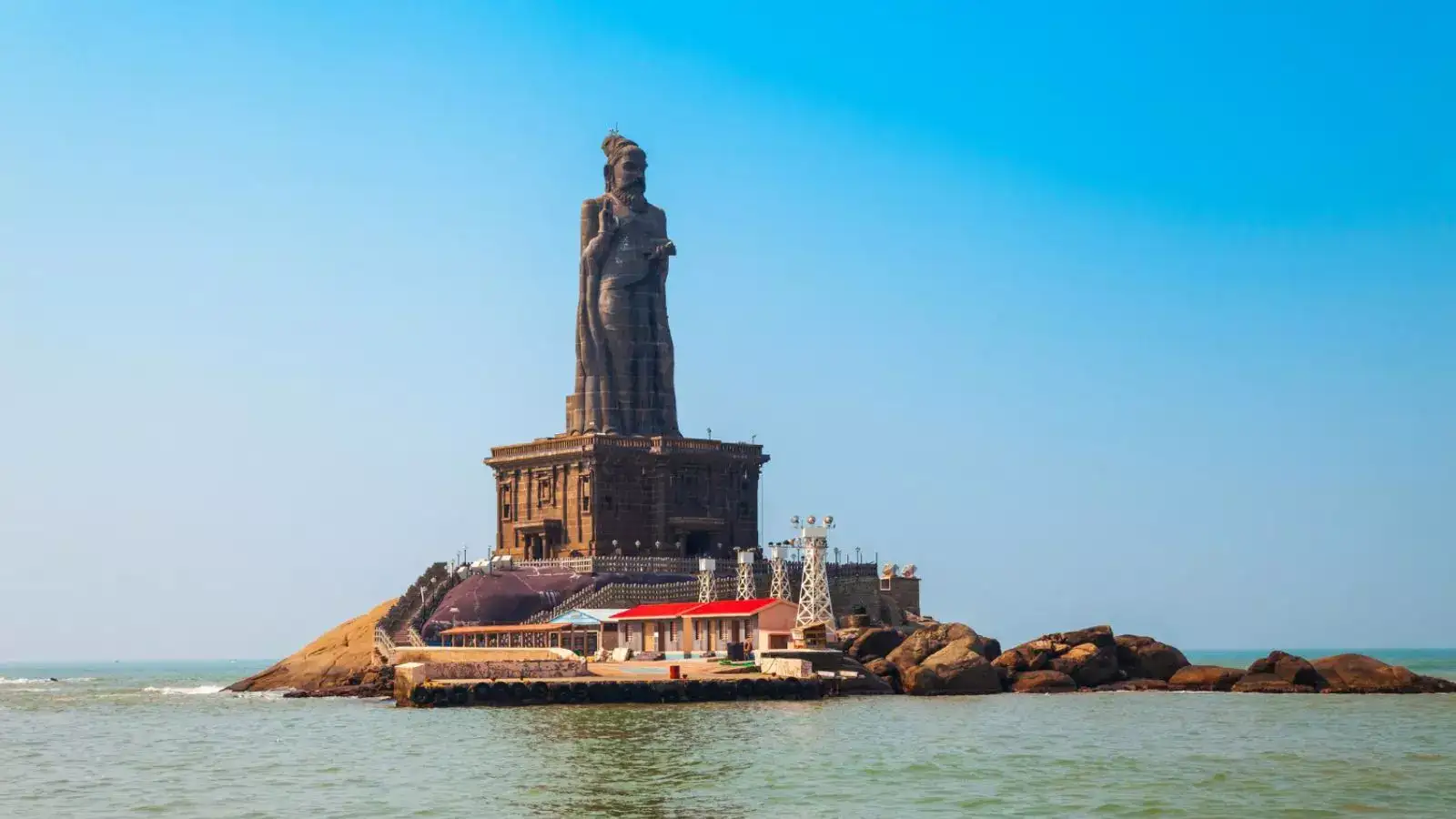
Kanyakumari is not merely a geographical marvel; it is a cultural mosaic that reflects the amalgamation of diverse influences from across the Indian subcontinent. The city's cultural heritage is beautifully expressed through its art, dance, music, and religious practices. Pilgrims and tourists alike are drawn to the iconic Vivekananda Rock Memorial , perched on a rocky island, which pays homage to the revered philosopher Swami Vivekananda . The city's temples, such as the ancient Kanyakumari Bhagavathi Amman Temple, stand as architectural marvels and serve as sacred hubs for spiritual seekers and devotees.
The resplendent sunrise and sunset views from Kanyakumari's shores are not just natural wonders; they are daily rituals that encapsulate the spiritual ethos of the city. As the vibrant hues paint the sky, visitors find themselves immersed in a cultural journey that transcends time and beckons exploration. Let’s delve into the heart of Kanyakumari, uncovering the layers of its culture and heritage that continue to captivate the hearts of those who embark on this southern sojourn.
1. Kumari Amman Temple
The Kumari Amman Temple holds immense cultural significance in Kanyakumari, situated majestically on the coastline overlooking the beach. This grand temple attracts thousands of visitors, forming long queues eager to experience its sacred atmosphere. It's essential to note, however, that entry into the Kumari Amman Temple is restricted to Hindus, and non-Hindu visitors are not allowed, even for sightseeing. This restriction preserves the religious sanctity of the temple and adds an air of exclusivity to the spiritual experience it offers.
2. Gandhi Mandapam
Amidst its picturesque beaches and grand churches, Kanyakumari takes pride in hosting a significant memorial dedicated to the Father of the Nation, Mahatma Gandhi. This tribute, constructed in honour of the revered leader, stands at the exact location where one of the urns containing his ashes was placed for public homage. Following Gandhi's demise, his ashes were divided into 12 urns and dispersed across the nation, allowing people to express their final respects to this iconic figure. Kanyakumari holds the distinction of being one of the chosen locations for this solemn purpose.
Within the confines of Gandhi Mandapam, visitors can behold a diverse collection of photographs capturing various moments in Gandhi's life, including images featuring the revered leader alongside other prominent figures. The responsibility for the upkeep of this memorial was transferred to the administrative control of the Public (Information and Public Relations) Department in 1978, a shift from the oversight of the Public Works Department of the Government of Tamil Nadu. Situated in proximity to the Kumari Amman Temple, the Gandhi Memorial stands as a cherished tourist destination in Kanyakumari, drawing admirers of patriotic sentiments and followers of Gandhian philosophy.
3. Vivekananda Rock Memorial
Perched on a small island off the coast of Kanyakumari, the breathtaking Vivekananda Rock Memorial provides a stunning panorama of the Indian Ocean. Positioned on one of two adjacent rocks extending into the Lakshadweep Sea, the memorial encompasses the 'Shripada Mandapam' and the 'Vivekananda Mandapam.' Accessible via regular ferries, the memorial is situated approximately 500 metres east of Vanathurai on the Kanyakumari mainland.
Constructed in 1970, the memorial stands on the island where Vivekananda is said to have achieved enlightenment. The Shripada Mandapam houses a study hall and a museum, offering a comprehensive exploration of Vivekananda's life and contributions. According to legends, Goddess Kumari performed austerities on this rock. Adjacent to the memorial is the 'Dhyana Mandapam,' serving as a meditation hall for visitors seeking moments of contemplation. The architectural style is distinctive, incorporating elements from various temple styles across India, surrounded by the Laccadive Sea.
4. Thiruvalluvar Statue
Honouring the renowned philosopher and poet Thiruvalluvar, a striking statue stands proudly on a small island near Kanyakumari. Thiruvalluvar, celebrated for his literary masterpiece, Thirukkural, witnessed the commencement of statue construction in 1990, culminating in its completion in 1999.
Soaring to a towering height of 133 feet, the statue is elevated on a commanding 38-foot pedestal, symbolising the 38 chapters of virtue in Thirukkural. This monument is rich in symbolism and cultural significance, offering a captivating and essential visit. Crafted by V. Ganapati Sthapati, the statue was unveiled on January 1, 2000, becoming an iconic landmark. Nestled amidst the waters, a brief ferry ride effortlessly transports visitors to this architectural marvel. The statue's surroundings include a temple, providing a serene space for meditation and reflection.
5. Triveni Sangam
Situated at the southernmost tip of the Indian mainland, Kanyakumari is embraced by the Arabian Sea, the Indian Ocean, and the Western Ghats. Renowned for its tranquillity, Kanyakumari is an essential destination in India, also identified as Cape Comorin, offering a blend of pilgrimage significance and an idyllic beach resort experience.
The term 'Sangam,' rooted in Sanskrit, translates to union, while 'Triveni' signifies the convergence of three water bodies. Thus, the Triveni Sangam represents the meeting point of the Indian Ocean, the Arabian Sea, and the Bay of Bengal. Discernible differences in their hues allow visitors to distinguish between these distinct bodies of water.
Kanyakumari is not merely a geographical marvel; it is a cultural mosaic that reflects the amalgamation of diverse influences from across the Indian subcontinent. The city's cultural heritage is beautifully expressed through its art, dance, music, and religious practices. Pilgrims and tourists alike are drawn to the iconic Vivekananda Rock Memorial , perched on a rocky island, which pays homage to the revered philosopher Swami Vivekananda . The city's temples, such as the ancient Kanyakumari Bhagavathi Amman Temple, stand as architectural marvels and serve as sacred hubs for spiritual seekers and devotees.
The resplendent sunrise and sunset views from Kanyakumari's shores are not just natural wonders; they are daily rituals that encapsulate the spiritual ethos of the city. As the vibrant hues paint the sky, visitors find themselves immersed in a cultural journey that transcends time and beckons exploration. Let’s delve into the heart of Kanyakumari, uncovering the layers of its culture and heritage that continue to captivate the hearts of those who embark on this southern sojourn.
1. Kumari Amman Temple
The Kumari Amman Temple holds immense cultural significance in Kanyakumari, situated majestically on the coastline overlooking the beach. This grand temple attracts thousands of visitors, forming long queues eager to experience its sacred atmosphere. It's essential to note, however, that entry into the Kumari Amman Temple is restricted to Hindus, and non-Hindu visitors are not allowed, even for sightseeing. This restriction preserves the religious sanctity of the temple and adds an air of exclusivity to the spiritual experience it offers.
You may also like
- Meet Kiran Ahirwar, the 'Drone Didi' from Guna, Madhya Pradesh who became a Lakhpati Didi and is inspiring village women; “Mujhe gaon ki mahila nahi, plane ki pilot dikh rahi thi”
- New Rule: If you want to avail the LPG subsidy, complete this important task before October 1st..
- Psychology says teenagers who stop sharing everything with parents aren't necessarily losing their bond: Understanding growing independence
- Thaimaman Scheme: 'Vijay Government' to put gold rings on 1.28 lakh children on September 28..
- Pitru Paksha 2026: September 26 or 27? Know the Correct Shraddha Dates
2. Gandhi Mandapam
Amidst its picturesque beaches and grand churches, Kanyakumari takes pride in hosting a significant memorial dedicated to the Father of the Nation, Mahatma Gandhi. This tribute, constructed in honour of the revered leader, stands at the exact location where one of the urns containing his ashes was placed for public homage. Following Gandhi's demise, his ashes were divided into 12 urns and dispersed across the nation, allowing people to express their final respects to this iconic figure. Kanyakumari holds the distinction of being one of the chosen locations for this solemn purpose.
Within the confines of Gandhi Mandapam, visitors can behold a diverse collection of photographs capturing various moments in Gandhi's life, including images featuring the revered leader alongside other prominent figures. The responsibility for the upkeep of this memorial was transferred to the administrative control of the Public (Information and Public Relations) Department in 1978, a shift from the oversight of the Public Works Department of the Government of Tamil Nadu. Situated in proximity to the Kumari Amman Temple, the Gandhi Memorial stands as a cherished tourist destination in Kanyakumari, drawing admirers of patriotic sentiments and followers of Gandhian philosophy.
3. Vivekananda Rock Memorial
Perched on a small island off the coast of Kanyakumari, the breathtaking Vivekananda Rock Memorial provides a stunning panorama of the Indian Ocean. Positioned on one of two adjacent rocks extending into the Lakshadweep Sea, the memorial encompasses the 'Shripada Mandapam' and the 'Vivekananda Mandapam.' Accessible via regular ferries, the memorial is situated approximately 500 metres east of Vanathurai on the Kanyakumari mainland.
Constructed in 1970, the memorial stands on the island where Vivekananda is said to have achieved enlightenment. The Shripada Mandapam houses a study hall and a museum, offering a comprehensive exploration of Vivekananda's life and contributions. According to legends, Goddess Kumari performed austerities on this rock. Adjacent to the memorial is the 'Dhyana Mandapam,' serving as a meditation hall for visitors seeking moments of contemplation. The architectural style is distinctive, incorporating elements from various temple styles across India, surrounded by the Laccadive Sea.
4. Thiruvalluvar Statue
Honouring the renowned philosopher and poet Thiruvalluvar, a striking statue stands proudly on a small island near Kanyakumari. Thiruvalluvar, celebrated for his literary masterpiece, Thirukkural, witnessed the commencement of statue construction in 1990, culminating in its completion in 1999.
Soaring to a towering height of 133 feet, the statue is elevated on a commanding 38-foot pedestal, symbolising the 38 chapters of virtue in Thirukkural. This monument is rich in symbolism and cultural significance, offering a captivating and essential visit. Crafted by V. Ganapati Sthapati, the statue was unveiled on January 1, 2000, becoming an iconic landmark. Nestled amidst the waters, a brief ferry ride effortlessly transports visitors to this architectural marvel. The statue's surroundings include a temple, providing a serene space for meditation and reflection.
5. Triveni Sangam
Situated at the southernmost tip of the Indian mainland, Kanyakumari is embraced by the Arabian Sea, the Indian Ocean, and the Western Ghats. Renowned for its tranquillity, Kanyakumari is an essential destination in India, also identified as Cape Comorin, offering a blend of pilgrimage significance and an idyllic beach resort experience.
The term 'Sangam,' rooted in Sanskrit, translates to union, while 'Triveni' signifies the convergence of three water bodies. Thus, the Triveni Sangam represents the meeting point of the Indian Ocean, the Arabian Sea, and the Bay of Bengal. Discernible differences in their hues allow visitors to distinguish between these distinct bodies of water.






Loving Newspoint? Download the app now
