
10 Festivals That Transform Entire Cities Into Giant Celebrations

A great festival does more than fill a stadium or bring people together at a single venue. In some parts of the world, the festival becomes almost impossible to separate from the city itself. Streets turn into performance spaces, public squares become gathering points, neighbourhoods organise their own events and ordinary routines are temporarily replaced by music, costumes, food, parades and rituals.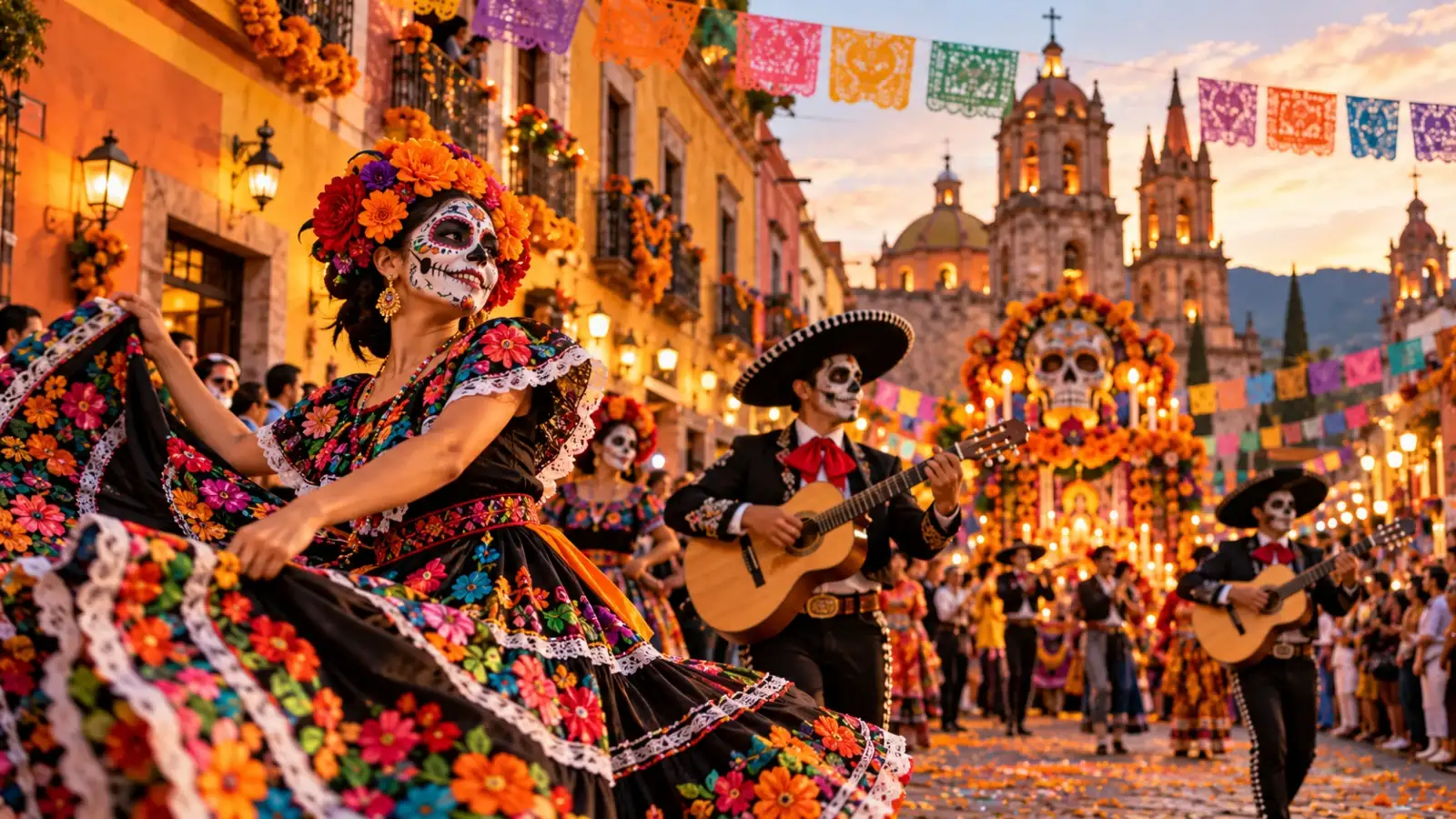
These celebrations can last for several days or stretch across much longer periods, with preparations beginning well before the main event. Some have religious origins, others grew from local traditions, harvests or seasonal celebrations, while modern versions have developed into enormous cultural events attracting visitors from around the world.
What makes them especially memorable is the way local people participate. The festival is not simply something to watch from the sidelines. It can become part of the identity of the city, with families, community groups, performers, businesses and neighbourhood organisations all contributing to the atmosphere.
From Rio de Janeiro's samba streets to the masked lanes of Venice and the colourful celebrations of Mexico, these are festivals that can make an entire city feel transformed.
Brazil's official tourism platform describes Rio as the epicentre of one of the country's most iconic Carnival celebrations. It notes that the city's street Carnival attracts enormous crowds, while the Sambadrome provides the formal stage for samba school parades.
The experience extends far beyond the main parade. Blocos, or street parties, take place in neighbourhoods throughout the city, allowing different communities to develop their own styles, music and traditions.
Carnival also has a long cultural history. UNESCO notes that Carnival traditions around the world frequently combine costumes, masks, parades and street celebrations, with local communities adapting the tradition to their own histories and cultures.
In Rio, that transformation is particularly visible. Music comes out of formal venues and into streets, squares and neighbourhoods, turning the city into a constantly moving celebration.
The celebration takes place on 1 and 2 November, with traditions varying considerably from one region to another. Mexico's official tourism platform highlights decorated altars, candles, marigold flowers, photographs, food and visits to cemeteries as important elements of the celebration.
Cities and towns can become visually transformed as homes, public spaces, museums and cultural institutions create elaborate displays. Processions, performances and exhibitions add to the atmosphere, while families maintain their own private traditions.
Places such as Mexico City, Oaxaca, Pátzcuaro and other communities have developed distinctive local expressions of Día de los Muertos. Mexico's tourism authority specifically notes that the festival takes different forms across the country.
The result is an experience where the boundary between a cultural celebration and everyday city life becomes less obvious. Streets are filled with colour, but the meaning behind the decorations remains closely connected with family, memory and heritage.
Italy's official tourism website describes Venice Carnival as a tradition with roots stretching back centuries and highlights the role of masks in the historic celebration.
The setting is a major part of the experience. A costumed figure walking beside a Venetian canal or standing in St Mark's Square can look like a scene from another century, while street performers and musicians add movement to the historic surroundings.
Unlike a festival confined to one large venue, Venice Carnival is scattered throughout the city. Visitors can encounter costumes and performances while simply walking between landmarks.
The result is a celebration where Venice itself becomes the stage. The city's architecture, canals and narrow streets provide the backdrop, while masks and costumes temporarily create a different version of everyday life.
The event has roots stretching back to 1810 and has developed into one of the world's most recognised public festivals. Recent festival references describe the event as a major annual gathering featuring beer tents, a funfair, costume traditions and parades.
Although the main festival grounds are concentrated in one location, its influence can be felt throughout Munich. Traditional clothing becomes common, restaurants adapt their menus and visitors move between the festival grounds and different neighbourhoods across the city.
For travellers, Oktoberfest therefore offers more than a visit to a giant fairground. It provides a concentrated introduction to Bavarian food, music, clothing and social traditions, all within the atmosphere of one of Germany's largest cities.
Bangkok's official tourism portal maintains a dedicated calendar of festivals and events across the city and describes Songkran as one of the capital's major annual celebrations.
The modern water celebrations have grown into a major public spectacle, but Songkran has deeper cultural meaning. Water is traditionally associated with cleansing and renewal, making the festival more significant than simply a giant city-wide water fight.
During the celebration period, Bangkok can feel completely different from its normal routine. Streets fill with groups of people, music and festival activities, while traditional ceremonies continue alongside the more playful public celebrations.
It is a good example of how a traditional festival can evolve while retaining its cultural significance.
Spain's official tourism material lists La Tomatina among the country's major traditional celebrations and states that the event takes place on the last Wednesday of August. The tomato battle itself lasts about an hour, although celebrations continue afterwards.
The transformation is remarkably visual. Streets that normally serve as ordinary parts of a small Spanish town become the setting for thousands of participants covered in tomato pulp.
The festival is deliberately playful and unusual, but it also demonstrates how a local tradition can develop an international following. Visitors arrive from different countries specifically to experience an event that could hardly be further removed from a conventional sightseeing trip.
Buñol's identity becomes temporarily linked with the festival, making the town itself an essential part of the experience.
The celebration is strongly connected with the city's neighbourhood organisations and social clubs, often known as krewes. Different groups organise their own parades and traditions, meaning the festival is distributed across the city rather than concentrated in one event.
This community structure is part of what makes New Orleans Mardi Gras distinctive. The city does not simply host one parade. Multiple celebrations unfold across different neighbourhoods, each with its own identity.
The result is an atmosphere in which music, costumes, floats and public gatherings become part of everyday city life for the duration of the celebration.
The city itself becomes part of the experience. Historic streets fill with performers and audiences, temporary venues appear and events take place in theatres, halls, courtyards and other spaces.
This creates an unusual relationship between tourism and everyday life. Someone walking through central Edinburgh can encounter a performance, street artist or cultural event without having planned to attend one.
The historic architecture adds another dimension. Medieval streets and old buildings become backdrops for contemporary performances, creating a contrast between Edinburgh's heritage and its modern cultural identity.
Spain's official tourism website describes Fallas as a major March celebration in which enormous papier-mâché-style figures are eventually set alight.
The scale of the installations changes the appearance of Valencia. Streets and neighbourhoods contain giant sculptures that can tower above pedestrians, while fireworks, music, parades and traditional events add to the atmosphere.
The festival culminates in the burning of the fallas, creating a dramatic ending to weeks of preparation.
What makes Las Fallas particularly fascinating is the combination of craftsmanship and destruction. Artists spend months creating enormous works that are ultimately designed to disappear in flames, turning the act of burning into part of the artistic tradition.
The celebration is particularly known for its elaborate costumes, dances and processions. Performers move through the city in carefully choreographed groups, transforming public streets into enormous performance spaces.
One of the most striking aspects is the variety of characters represented through masks and costumes. The visual spectacle is impressive, but the festival's deeper significance comes from the cultural traditions and beliefs carried through the performances.
Oruro demonstrates that a city-wide festival can function simultaneously as a celebration, a performance and a way of preserving cultural memory.
Streets become stages. Public squares become meeting points. Restaurants, shops and homes participate in the atmosphere. Local residents may prepare costumes, build floats, organise performances or maintain traditions that have been passed down through generations.
That is why festivals such as Rio Carnival , Venice Carnival and Día de los Muertos feel so different from attending a concert or visiting a theme park. Their boundaries are less obvious. You can leave an official event and still find yourself surrounded by music, costumes, food or celebrations.
UNESCO's overview of Carnival traditions around the world similarly highlights the importance of parades, costumes and street parties, while noting that different regions have developed their own local expressions.
For travellers, these celebrations offer an opportunity to experience a destination at its most energetic. But they also require respect. Crowds can be enormous, transport arrangements can change and local communities may have traditions that carry meanings far deeper than their colourful appearance suggests.
The best city festivals are therefore more than spectacles for visitors. They are moments when a city's history, culture, music, food and community life become visible in the streets all at once.
These celebrations can last for several days or stretch across much longer periods, with preparations beginning well before the main event. Some have religious origins, others grew from local traditions, harvests or seasonal celebrations, while modern versions have developed into enormous cultural events attracting visitors from around the world.
What makes them especially memorable is the way local people participate. The festival is not simply something to watch from the sidelines. It can become part of the identity of the city, with families, community groups, performers, businesses and neighbourhood organisations all contributing to the atmosphere.
From Rio de Janeiro's samba streets to the masked lanes of Venice and the colourful celebrations of Mexico, these are festivals that can make an entire city feel transformed.
Rio de Janeiro Carnival Turns the City Into a Giant Stage
Few celebrations demonstrate the relationship between a city and its festival more dramatically than Carnival in Rio de Janeiro. During Carnival season, samba performances, street parties and parades spread across different parts of the city, while the Sambadrome hosts the famous samba school competitions.Brazil's official tourism platform describes Rio as the epicentre of one of the country's most iconic Carnival celebrations. It notes that the city's street Carnival attracts enormous crowds, while the Sambadrome provides the formal stage for samba school parades.
The experience extends far beyond the main parade. Blocos, or street parties, take place in neighbourhoods throughout the city, allowing different communities to develop their own styles, music and traditions.
Carnival also has a long cultural history. UNESCO notes that Carnival traditions around the world frequently combine costumes, masks, parades and street celebrations, with local communities adapting the tradition to their own histories and cultures.
In Rio, that transformation is particularly visible. Music comes out of formal venues and into streets, squares and neighbourhoods, turning the city into a constantly moving celebration.
Día de los Muertos Gives Mexican Cities a Completely Different Atmosphere
Mexico's Día de los Muertos is not simply a colourful public festival. It is a deeply rooted tradition centred on remembering and honouring deceased family members and friends.The celebration takes place on 1 and 2 November, with traditions varying considerably from one region to another. Mexico's official tourism platform highlights decorated altars, candles, marigold flowers, photographs, food and visits to cemeteries as important elements of the celebration.
Cities and towns can become visually transformed as homes, public spaces, museums and cultural institutions create elaborate displays. Processions, performances and exhibitions add to the atmosphere, while families maintain their own private traditions.
Places such as Mexico City, Oaxaca, Pátzcuaro and other communities have developed distinctive local expressions of Día de los Muertos. Mexico's tourism authority specifically notes that the festival takes different forms across the country.
The result is an experience where the boundary between a cultural celebration and everyday city life becomes less obvious. Streets are filled with colour, but the meaning behind the decorations remains closely connected with family, memory and heritage.
Venice Carnival Makes Historic Streets Feel Like a Theatre
Venice already looks unlike most cities, but Carnival changes its atmosphere completely. Masks and elaborate costumes appear throughout the historic centre, while squares, bridges, canals and narrow lanes become part of the celebration.Italy's official tourism website describes Venice Carnival as a tradition with roots stretching back centuries and highlights the role of masks in the historic celebration.
The setting is a major part of the experience. A costumed figure walking beside a Venetian canal or standing in St Mark's Square can look like a scene from another century, while street performers and musicians add movement to the historic surroundings.
Unlike a festival confined to one large venue, Venice Carnival is scattered throughout the city. Visitors can encounter costumes and performances while simply walking between landmarks.
The result is a celebration where Venice itself becomes the stage. The city's architecture, canals and narrow streets provide the backdrop, while masks and costumes temporarily create a different version of everyday life.
Oktoberfest Turns Munich Into a Celebration of Bavarian Culture
Oktoberfest may be famous internationally for beer, but the festival is also a major celebration of Bavarian culture. Held at Munich's Theresienwiese, it combines large festival tents with traditional clothing, music, food, amusement rides and community events.The event has roots stretching back to 1810 and has developed into one of the world's most recognised public festivals. Recent festival references describe the event as a major annual gathering featuring beer tents, a funfair, costume traditions and parades.
Although the main festival grounds are concentrated in one location, its influence can be felt throughout Munich. Traditional clothing becomes common, restaurants adapt their menus and visitors move between the festival grounds and different neighbourhoods across the city.
For travellers, Oktoberfest therefore offers more than a visit to a giant fairground. It provides a concentrated introduction to Bavarian food, music, clothing and social traditions, all within the atmosphere of one of Germany's largest cities.
Songkran Turns Bangkok's Streets Into a Massive Water Celebration
Songkran, the Thai New Year celebration, is one of the most recognisable festivals associated with Bangkok. Water plays a central role in the modern public celebration, with streets becoming gathering places for people taking part in the festivities.Bangkok's official tourism portal maintains a dedicated calendar of festivals and events across the city and describes Songkran as one of the capital's major annual celebrations.
The modern water celebrations have grown into a major public spectacle, but Songkran has deeper cultural meaning. Water is traditionally associated with cleansing and renewal, making the festival more significant than simply a giant city-wide water fight.
During the celebration period, Bangkok can feel completely different from its normal routine. Streets fill with groups of people, music and festival activities, while traditional ceremonies continue alongside the more playful public celebrations.
It is a good example of how a traditional festival can evolve while retaining its cultural significance.
La Tomatina Turns a Spanish Town Red
Every August, the small Spanish town of Buñol becomes the setting for one of the world's most unusual festivals. La Tomatina involves participants throwing tomatoes at one another in a massive organised food fight.Spain's official tourism material lists La Tomatina among the country's major traditional celebrations and states that the event takes place on the last Wednesday of August. The tomato battle itself lasts about an hour, although celebrations continue afterwards.
The transformation is remarkably visual. Streets that normally serve as ordinary parts of a small Spanish town become the setting for thousands of participants covered in tomato pulp.
The festival is deliberately playful and unusual, but it also demonstrates how a local tradition can develop an international following. Visitors arrive from different countries specifically to experience an event that could hardly be further removed from a conventional sightseeing trip.
Buñol's identity becomes temporarily linked with the festival, making the town itself an essential part of the experience.
New Orleans Mardi Gras Brings Music and Parades Into the Streets
New Orleans has a reputation for music throughout the year, but Mardi Gras creates an especially dramatic transformation. Parades move through different parts of the city, marching bands fill the streets and elaborate floats become part of the public landscape.The celebration is strongly connected with the city's neighbourhood organisations and social clubs, often known as krewes. Different groups organise their own parades and traditions, meaning the festival is distributed across the city rather than concentrated in one event.
This community structure is part of what makes New Orleans Mardi Gras distinctive. The city does not simply host one parade. Multiple celebrations unfold across different neighbourhoods, each with its own identity.
The result is an atmosphere in which music, costumes, floats and public gatherings become part of everyday city life for the duration of the celebration.
Edinburgh Festival Season Turns Scotland's Capital Into a Cultural Hub
Edinburgh's festival season demonstrates that a city-wide celebration does not have to be based around one traditional festival. During the summer, multiple major arts festivals bring theatre, comedy, music, literature and performance to venues and public spaces across the Scottish capital.The city itself becomes part of the experience. Historic streets fill with performers and audiences, temporary venues appear and events take place in theatres, halls, courtyards and other spaces.
This creates an unusual relationship between tourism and everyday life. Someone walking through central Edinburgh can encounter a performance, street artist or cultural event without having planned to attend one.
The historic architecture adds another dimension. Medieval streets and old buildings become backdrops for contemporary performances, creating a contrast between Edinburgh's heritage and its modern cultural identity.
Fallas Transforms Valencia With Giant Sculptures and Fire
Valencia's Las Fallas is one of Spain's most visually dramatic festivals. Enormous artistic structures known as fallas are constructed throughout the city, often depicting satirical or humorous figures and scenes.Spain's official tourism website describes Fallas as a major March celebration in which enormous papier-mâché-style figures are eventually set alight.
The scale of the installations changes the appearance of Valencia. Streets and neighbourhoods contain giant sculptures that can tower above pedestrians, while fireworks, music, parades and traditional events add to the atmosphere.
The festival culminates in the burning of the fallas, creating a dramatic ending to weeks of preparation.
What makes Las Fallas particularly fascinating is the combination of craftsmanship and destruction. Artists spend months creating enormous works that are ultimately designed to disappear in flames, turning the act of burning into part of the artistic tradition.
Carnival of Oruro Turns Bolivia Into a Moving Cultural Spectacle
Oruro's Carnival in Bolivia is deeply connected with Andean traditions and Catholic influences. UNESCO recognises the Carnival of Oruro as intangible cultural heritage and describes it as a major example of cultural traditions combining different historical influences.The celebration is particularly known for its elaborate costumes, dances and processions. Performers move through the city in carefully choreographed groups, transforming public streets into enormous performance spaces.
One of the most striking aspects is the variety of characters represented through masks and costumes. The visual spectacle is impressive, but the festival's deeper significance comes from the cultural traditions and beliefs carried through the performances.
You may also like
- 'You put underdeveloped brains together': Psychiatrist on why parents should rethink sending children away to college
- King George III built this London observatory to watch the stars; 250 years later, it is a $24 million private home
- Is It Safe to Lift Heavy Objects During Pregnancy?
- AI mural inspired by Banksy sparks backlash in Bristol: Artists spot wrong landmarks and a bizarre version of the famous Mild Mild West as debate over AI art grows
- 4 Hacks to keep your kitchen free from flies and bugs
Oruro demonstrates that a city-wide festival can function simultaneously as a celebration, a performance and a way of preserving cultural memory.
Why Some Festivals Can Transform an Entire City
The most memorable city festivals have something in common. They are not simply events that happen inside a city. They involve the city itself.Streets become stages. Public squares become meeting points. Restaurants, shops and homes participate in the atmosphere. Local residents may prepare costumes, build floats, organise performances or maintain traditions that have been passed down through generations.
That is why festivals such as Rio Carnival , Venice Carnival and Día de los Muertos feel so different from attending a concert or visiting a theme park. Their boundaries are less obvious. You can leave an official event and still find yourself surrounded by music, costumes, food or celebrations.
UNESCO's overview of Carnival traditions around the world similarly highlights the importance of parades, costumes and street parties, while noting that different regions have developed their own local expressions.
For travellers, these celebrations offer an opportunity to experience a destination at its most energetic. But they also require respect. Crowds can be enormous, transport arrangements can change and local communities may have traditions that carry meanings far deeper than their colourful appearance suggests.
The best city festivals are therefore more than spectacles for visitors. They are moments when a city's history, culture, music, food and community life become visible in the streets all at once.






Loving Newspoint? Download the app now
