
The Atacama Desert That Bursts Into Bloom: Chile’s Stunning Flowering Desert

The Chilean flowering desert is a unique phenomenon due to the wide variety of floral species that can be seen. Over two hundred types!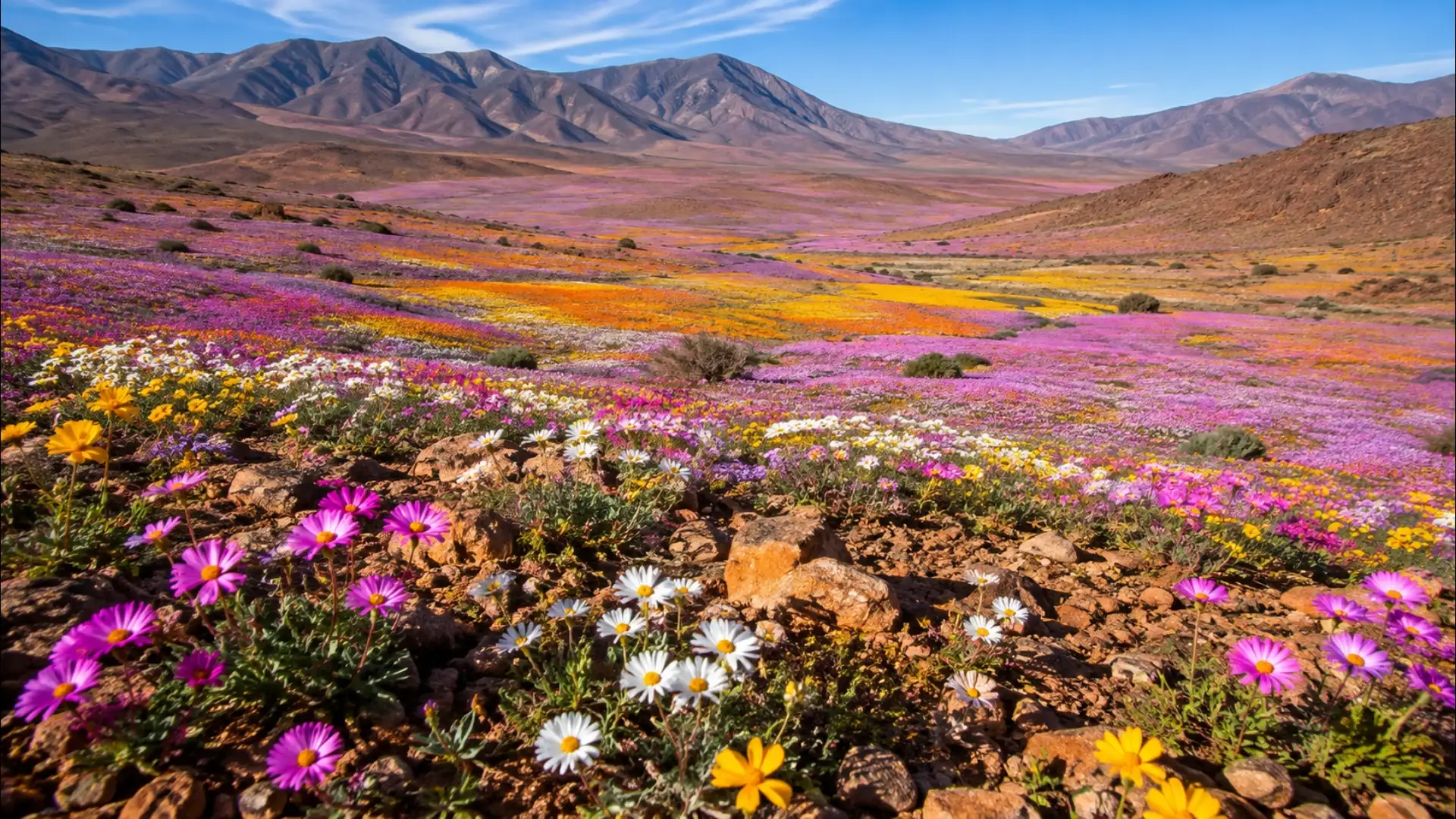
As strange as it may seem, the Atacama Desert , known as the driest in the world, can be filled with more than two hundred types of flowers in spring, which change the landscape and fill its hillsides, dunes, and mountains with colors.
Yellow, purple, pink, white and red. These are just some of the pigments that can be seen during the natural phenomenon known as flowering desert.
Depending on the intensity of the winter rains, it can be seen between the Coquimbo and Atacama regions, during the first two weeks of September and the first weeks of October. Right in the middle of spring in the Southern Hemisphere!
The phenomenon can also be appreciated in the most enclosed areas. We recommend visiting the Desierto Florido National Park in the Atacama Region, thirty kilometers south of the city of Copiapó. This protected area extends for more than 57,000 hectares and is full of life in the middle of the desert.
Please remember that stepping on or picking up flowers is forbidden, as they are part of the food chain in the Atacama Desert. They serve as food for animals, such as the guanaco and other birds, which are responsible for distributing seeds so that the phenomenon continues for the next few years.
As for places to see it, this phenomenon will be in focus in the southern part of the Atacama Region. Must-see spots are: Chañaral de Aceituno cove in the Province of Huasco, the Llanos de Challe National Park, and Totoral in the Province of Copiapó.
For this phenomenon to dazzle in northern Chile, between 15 and 30 millimeters of rain must fall, mainly between June and July. But wetting the soil is not enough, accumulating necessary cold hours is key to wake the seeds which are asleep under the driest ground in the world.
As strange as it may seem, the Atacama Desert , known as the driest in the world, can be filled with more than two hundred types of flowers in spring, which change the landscape and fill its hillsides, dunes, and mountains with colors.
Yellow, purple, pink, white and red. These are just some of the pigments that can be seen during the natural phenomenon known as flowering desert.
Depending on the intensity of the winter rains, it can be seen between the Coquimbo and Atacama regions, during the first two weeks of September and the first weeks of October. Right in the middle of spring in the Southern Hemisphere!
The phenomenon can also be appreciated in the most enclosed areas. We recommend visiting the Desierto Florido National Park in the Atacama Region, thirty kilometers south of the city of Copiapó. This protected area extends for more than 57,000 hectares and is full of life in the middle of the desert.
You may also like
- 5 common bra fit myths we've all believed at some point
- Passenger carrying 'Monkey Skull' in bag detained at Delhi airport by CISF; wildlife case now under investigation
- NHAI: A ₹5,000 fine for a one-minute delay—understand the minute-by-minute penalty structure on national highways.
- Shraddha Kapoor just gave the classic angrakha a stunning makeover: See her ₹33,800 festive look
- Why this family decided to leave America for a small European country: 'We sold our house, both of our cars, and everything we owned'
Please remember that stepping on or picking up flowers is forbidden, as they are part of the food chain in the Atacama Desert. They serve as food for animals, such as the guanaco and other birds, which are responsible for distributing seeds so that the phenomenon continues for the next few years.
When will the flowering desert happen in Chile?
Blooming will begin in the third week of September and will extend until November, as long as the right conditions for temperature and humidity are maintained. According to estimates by the authorities, the true peak will take place during the first weeks of October.As for places to see it, this phenomenon will be in focus in the southern part of the Atacama Region. Must-see spots are: Chañaral de Aceituno cove in the Province of Huasco, the Llanos de Challe National Park, and Totoral in the Province of Copiapó.
Does the flowering desert happen every year?
The flowering desert is not any miracle! It is a natural spectacle that is only activated with a precise combination of rain and cold.For this phenomenon to dazzle in northern Chile, between 15 and 30 millimeters of rain must fall, mainly between June and July. But wetting the soil is not enough, accumulating necessary cold hours is key to wake the seeds which are asleep under the driest ground in the world.






Loving Newspoint? Download the app now
