
Forgotten Regional Indian Breakfasts That Belong on Your Table

In urban homes across India, modern morning routines have quietly transformed. Processed white bread, packaged cereals, and instant porridge pouches now dominate kitchen counters, prized for their speed and convenience. Yet, long before manufactured food products took over our dining tables, mornings began with a breathtaking variety of regional culinary creations. From nutrient-dense millet flatbreads in dry rural belts to gentle fermented rice bowls in coastal states, traditional regional dishes provided balanced nourishment tailored to local climates. Rediscovering the forgotten Indian breakfasts that deserve a comeback offers more than pure nostalgic comfort. It reintroduces sustainable, seasonal eating habits that nourish both body and soul.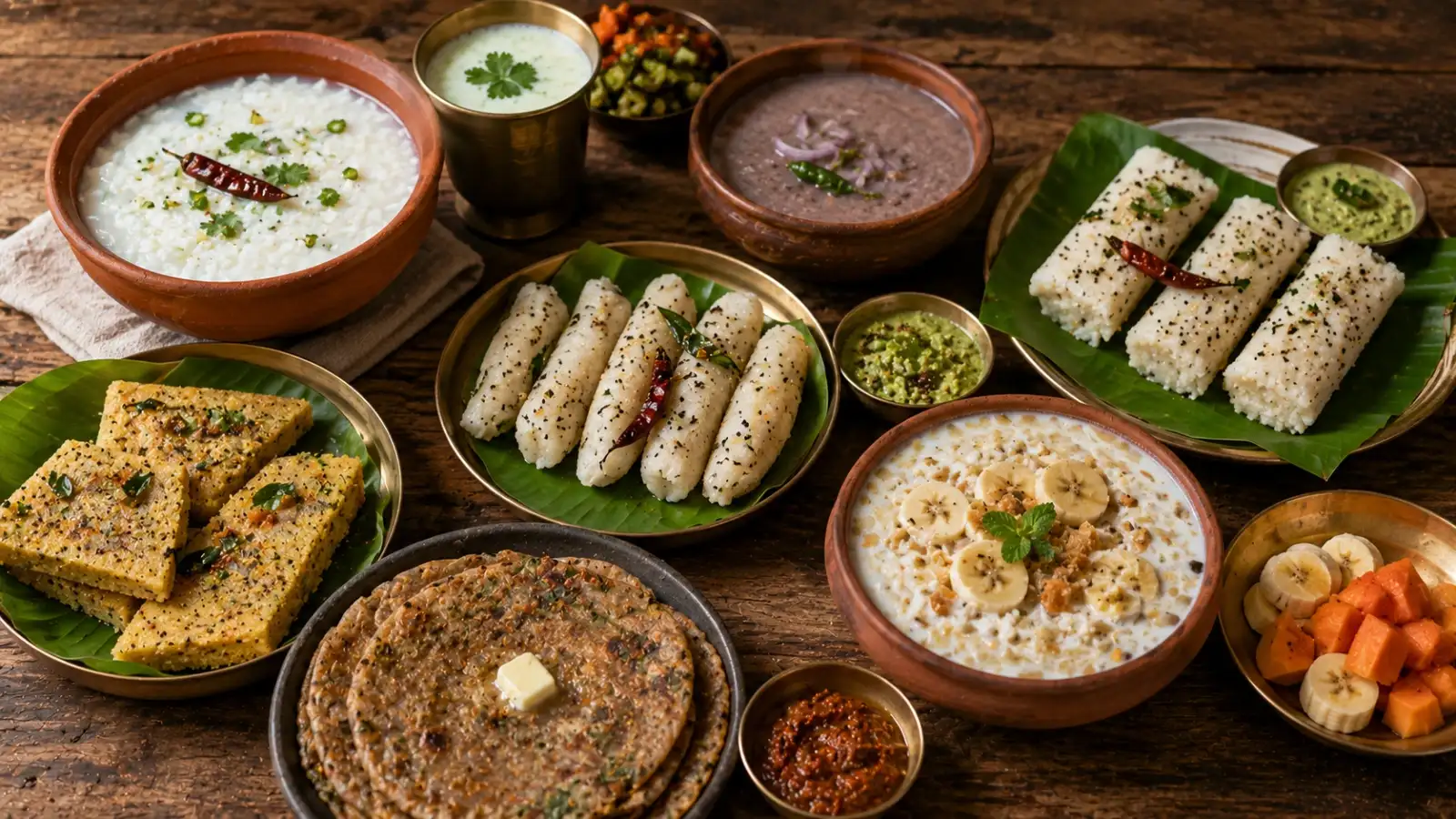
This cooling probiotic elixir delivered instant hydration, improved digestion, and sustained energy for field workers facing gruelling summer heat. Similarly, in Tamil Nadu, the ancient finger millet porridge known as kezhvaragu koozh was fermented overnight in earthenware pots. Rich in calcium, iron, and beneficial bacteria, this gut-friendly liquid breakfast provided incredible natural nourishment without requiring complicated cooking equipment or excessive amounts of fat.
In Gujarat, handvo represented a masterclass in slow cooking and batter preparation. Made from a coarsely ground batter of fermented lentils, rice, and shredded bottle gourd, this vegetable-rich savoury cake was baked slowly in a cast-iron pan until crisp on the outside and tender within. Packed with plant-based protein and essential fibre, these steamed and baked dishes kept families full for hours while remaining light on the stomach.
Further east, in Assam and Bihar, breakfasts like jolpan and dahi chura celebrated raw harvest abundance without requiring any cooking at all. Native flattened or puffed rice was simply soaked in fresh yoghurt or milk, sweetened with unrefined jaggery, and topped with seasonal fruits such as ripe bananas. These ancestral recipes proved that wholesome, delicious food does not require ultra-processed ingredients. Embracing the forgotten Indian breakfasts that deserve a comeback reminds us that true morning nourishment lies in our rich culinary roots.
Fermented Morning Elixirs and Probiotic Porridges
Long before gut health supplements became popular wellness trends, traditional Indian households relied on natural overnight fermentation to prepare morning meals. In states like Odisha and Bengal, leftover cooked rice was submerged in clean water overnight and allowed to ferment gently until dawn. Known as pakhala bhata or poanta bhat, this simple dish was seasoned with raw mustard oil, chopped green chillies, fresh curd, and roasted vegetables.This cooling probiotic elixir delivered instant hydration, improved digestion, and sustained energy for field workers facing gruelling summer heat. Similarly, in Tamil Nadu, the ancient finger millet porridge known as kezhvaragu koozh was fermented overnight in earthenware pots. Rich in calcium, iron, and beneficial bacteria, this gut-friendly liquid breakfast provided incredible natural nourishment without requiring complicated cooking equipment or excessive amounts of fat.
You may also like
- 5 common bra fit myths we've all believed at some point
- Passenger carrying 'Monkey Skull' in bag detained at Delhi airport by CISF; wildlife case now under investigation
- NHAI: A ₹5,000 fine for a one-minute delay—understand the minute-by-minute penalty structure on national highways.
- Shraddha Kapoor just gave the classic angrakha a stunning makeover: See her ₹33,800 festive look
- Why this family decided to leave America for a small European country: 'We sold our house, both of our cars, and everything we owned'
Savoury Steamed Dumplings and Whole-Grain Bakes
Another remarkable aspect of traditional regional cooking was the clever use of steam and local pulses. Before instant refined wheat batters gained dominance, kitchens across central and western India crafted nutrient-dense steamed meals. In Chhattisgarh, rice flour was kneaded with aromatic spices, sesame seeds, and curry leaves to create phara, which was steamed into delicate savoury sticks before receiving a light oil tempering.In Gujarat, handvo represented a masterclass in slow cooking and batter preparation. Made from a coarsely ground batter of fermented lentils, rice, and shredded bottle gourd, this vegetable-rich savoury cake was baked slowly in a cast-iron pan until crisp on the outside and tender within. Packed with plant-based protein and essential fibre, these steamed and baked dishes kept families full for hours while remaining light on the stomach.
Ancient Millet Breads and Raw Harvest Bowls
In drier agricultural zones where rice cultivation was limited, native millets formed the cornerstone of daily sustenance. In Maharashtra and Karnataka, morning meals often featured thalipeeth or ragi rotti. These rustic flatbreads were prepared by hand-pressing spiced millet flours mixed with chopped onions, fresh herbs, and roasted legume powders directly onto a hot griddle.Further east, in Assam and Bihar, breakfasts like jolpan and dahi chura celebrated raw harvest abundance without requiring any cooking at all. Native flattened or puffed rice was simply soaked in fresh yoghurt or milk, sweetened with unrefined jaggery, and topped with seasonal fruits such as ripe bananas. These ancestral recipes proved that wholesome, delicious food does not require ultra-processed ingredients. Embracing the forgotten Indian breakfasts that deserve a comeback reminds us that true morning nourishment lies in our rich culinary roots.






Loving Newspoint? Download the app now
