
Forgotten Indian Grains That Once Dominated Traditional Kitchens

Walk into a modern supermarket and the grain aisle can look surprisingly predictable. Rice, wheat and a handful of familiar alternatives dominate most shelves. Yet India's traditional food systems once depended on a much wider range of grains. Small millets such as kodo, little, foxtail, barnyard and browntop millet were important in dryland and hill agriculture. They were adapted to local conditions and appeared in countless regional foods. Over time, changing farming systems, food preferences and the rise of major cereal crops pushed many of them towards the margins. Their recent revival is therefore not simply a health trend. It is also a rediscovery of agricultural diversity .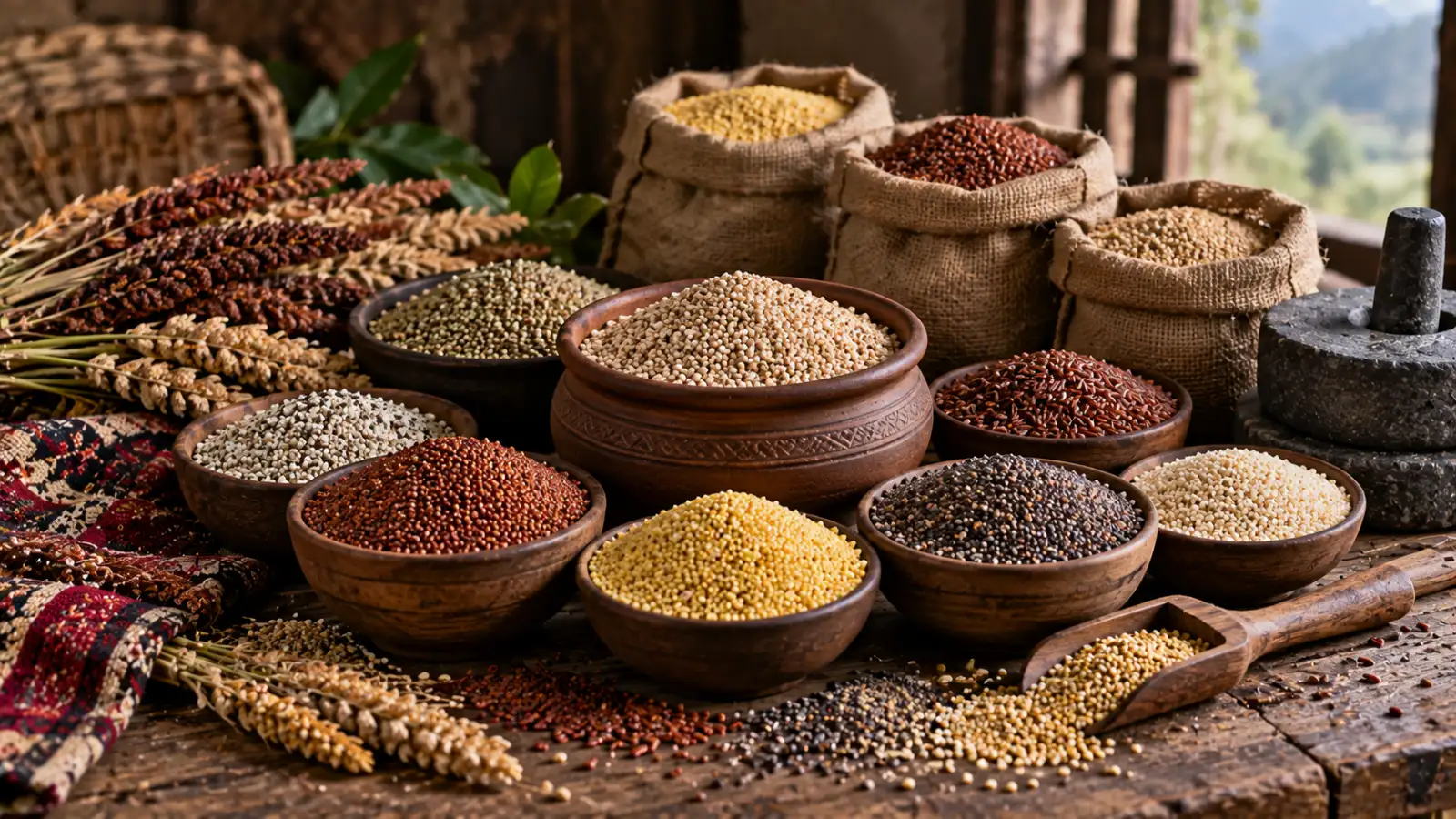
ICAR describes a group of small millets that includes little millet, kodo millet, foxtail millet, barnyard millet, proso millet and browntop millet, alongside better-known pearl and finger millets.
Each has different growing characteristics and culinary uses.
Some were particularly suited to rain-fed agriculture, where farmers could not depend on extensive irrigation.
Small millets became important in dryland and hill farming systems and supported food security among communities with limited agricultural resources.
This agricultural diversity mattered because a failed crop did not necessarily mean the entire local food system collapsed.
Different grains matured at different times and responded differently to rainfall and soil conditions.
As production systems became more focused on major staples, local grains lost ground. Urban consumers also increasingly associated refined rice and wheat with convenience and modernity.
The result was a gradual narrowing of the grain diversity visible on everyday plates.
They can now appear as porridge, dosa, roti, upma, baked foods and other preparations.
Research into Indian millets also highlights their cultural importance, showing that these grains were embedded in regional food traditions rather than simply being modern “superfoods”.
Agricultural diversity can support farmers dealing with changing rainfall patterns, soil conditions and water availability. It can also protect culinary traditions that might otherwise disappear.
A bowl of millet is therefore more than a fashionable alternative to rice.
It can represent an agricultural history in which Indian communities adapted their diets to the land instead of expecting the land to produce the same crops everywhere.
India's Grain Basket Was Much Wider
Millets are not one single crop.ICAR describes a group of small millets that includes little millet, kodo millet, foxtail millet, barnyard millet, proso millet and browntop millet, alongside better-known pearl and finger millets.
Each has different growing characteristics and culinary uses.
Some were particularly suited to rain-fed agriculture, where farmers could not depend on extensive irrigation.
These Crops Helped Farmers Work With Difficult Land
Traditional grains often survived in environments where demanding crops were harder to grow.Small millets became important in dryland and hill farming systems and supported food security among communities with limited agricultural resources.
This agricultural diversity mattered because a failed crop did not necessarily mean the entire local food system collapsed.
Different grains matured at different times and responded differently to rainfall and soil conditions.
You may also like
- “I was crying at the middle of the road”: He lost his ₹2 lakh MacBook on a rainy Bengaluru road, then an e-rickshaw driver restored his faith in karma
- PCOS vs PCOD: Understanding the Crucial Differences Every Woman Must Know for Better Hormonal Health
- Waking Up Suddenly in the Middle of the Night? Experts Warn It Could Be a Sign of Insomnia or Sleep Apnea
- Invest just ₹10,000 per month starting at age 40; understand the monthly pension you will receive through this calculation..
- Salary vs. Savings Account: What is the difference between the two, and which account offers 8 major benefits?
Modern Diets Reduced Their Visibility
The decline of many traditional grains was connected to broader changes in Indian agriculture and food habits.As production systems became more focused on major staples, local grains lost ground. Urban consumers also increasingly associated refined rice and wheat with convenience and modernity.
The result was a gradual narrowing of the grain diversity visible on everyday plates.
The Millet Revival Is Changing That
The renewed interest in millets has brought some forgotten grains back into restaurants, supermarkets and home kitchens.They can now appear as porridge, dosa, roti, upma, baked foods and other preparations.
Research into Indian millets also highlights their cultural importance, showing that these grains were embedded in regional food traditions rather than simply being modern “superfoods”.
Why Grain Diversity Matters
The revival of traditional grains has implications beyond nutrition.Agricultural diversity can support farmers dealing with changing rainfall patterns, soil conditions and water availability. It can also protect culinary traditions that might otherwise disappear.
A bowl of millet is therefore more than a fashionable alternative to rice.
It can represent an agricultural history in which Indian communities adapted their diets to the land instead of expecting the land to produce the same crops everywhere.






Loving Newspoint? Download the app now
