
From Idli to Injera: Why Cultures Around the World Created Similar Foods

Across continents and centuries, people have developed surprisingly similar foods despite having no direct connection with one another. From India’s soft, steamed idli to Ethiopia’s spongy injera , these dishes may look and taste different, but they share a fascinating idea: turning simple grains or pulses into nutritious, easy-to-eat staples. Their similarities reveal how geography, available ingredients, climate and human ingenuity often lead different societies toward comparable culinary solutions.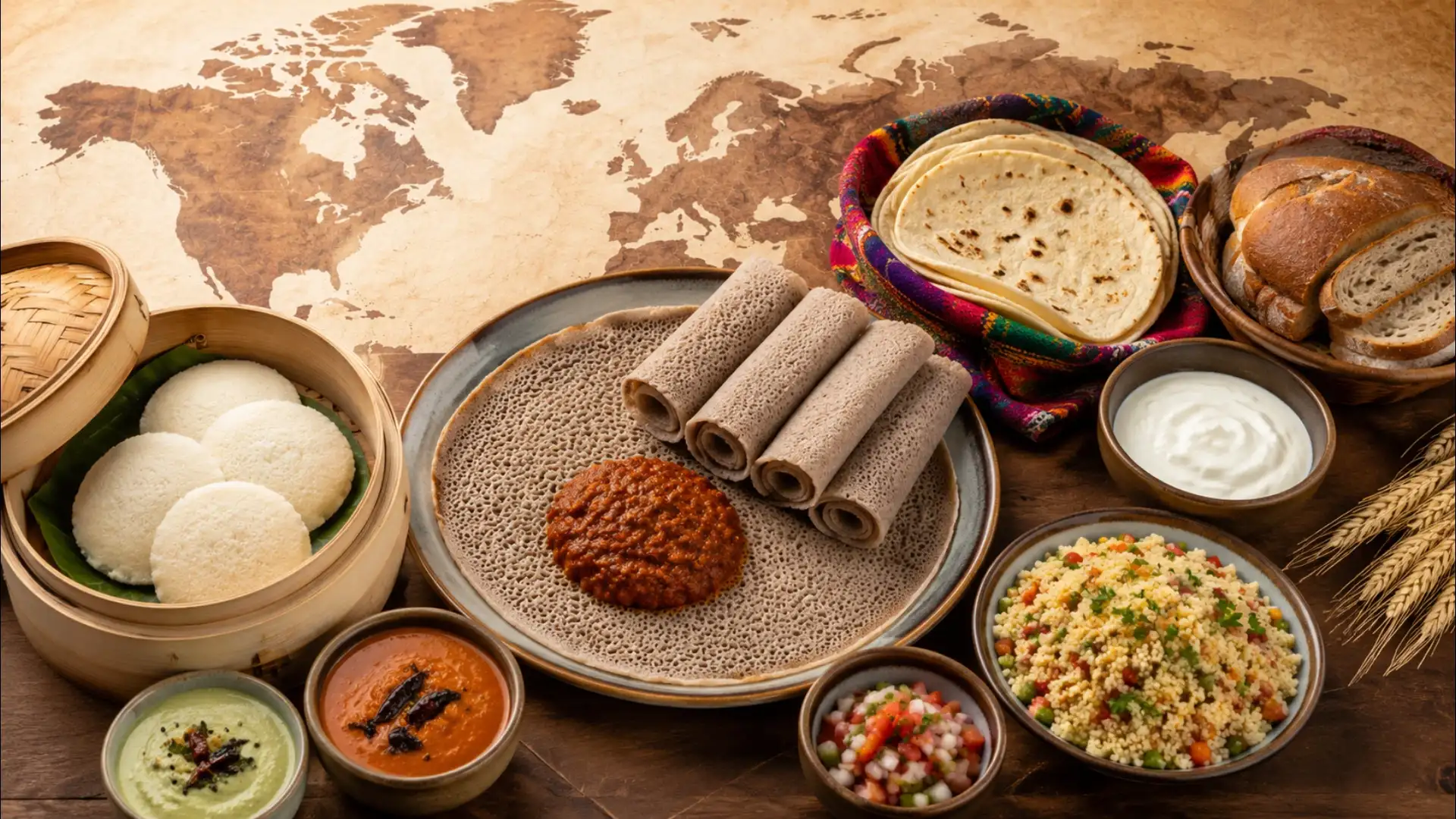
Although their shapes and textures differ, both foods rely on fermentation. This process naturally changes the ingredients, improving their texture and developing distinctive flavours. Fermentation can also make certain nutrients easier for the body to absorb while helping preserve food.
Similar principles can be seen elsewhere. Sourdough breads, dosa, dhokla, tortillas and various fermented grain foods developed independently in different parts of the world because fermentation and cooking offered practical ways to transform basic crops into satisfying meals.
In the Horn of Africa, teff became central to Ethiopian cuisine because it thrives in local conditions and can be cultivated across diverse elevations. Over generations, communities developed techniques for fermenting and cooking it, eventually making injera a defining part of Ethiopian food culture.
Elsewhere, maize became the foundation of tortillas in Mesoamerica, while wheat and rye shaped many European breads. Different environments produced different raw materials, but people repeatedly discovered ways to turn those materials into versatile staple foods.
Fermentation offered several advantages. It could improve flavour, alter texture and sometimes extend the useful life of ingredients. In foods such as idli and injera, fermentation also produces the characteristic softness and slight tang that distinguish them from ordinary grain preparations.
This is an example of independent culinary innovation : different societies solving similar problems using techniques available in their surroundings.
Idli and injera therefore represent more than traditional foods. They demonstrate how human creativity can converge on similar solutions even when cultures develop independently. Their stories show that while cuisines are deeply shaped by local identity, the basic problems of eating, preserving and preparing food are universal.
From fermented grain batters to flatbreads and steamed cakes, the world's cuisines are filled with these culinary parallels. They remind us that food can be both a marker of cultural difference and evidence of how remarkably similar human ingenuity can be.
Simple Ingredients, Clever Techniques
Idli is traditionally made by fermenting a batter of rice and black gram, followed by steaming it into soft, round cakes. Injera, meanwhile, is made primarily from teff flour, a tiny grain native to Ethiopia and Eritrea. The batter is fermented and then cooked into a large, thin, spongy flatbread.Although their shapes and textures differ, both foods rely on fermentation. This process naturally changes the ingredients, improving their texture and developing distinctive flavours. Fermentation can also make certain nutrients easier for the body to absorb while helping preserve food.
Similar principles can be seen elsewhere. Sourdough breads, dosa, dhokla, tortillas and various fermented grain foods developed independently in different parts of the world because fermentation and cooking offered practical ways to transform basic crops into satisfying meals.
Geography Shaped the Ingredients
The availability of local crops played a major role in determining what people ate. In South Asia, rice and lentils became important staples because the region's climate and agricultural systems supported their cultivation. Combining grains with pulses also created a more nutritionally balanced meal.In the Horn of Africa, teff became central to Ethiopian cuisine because it thrives in local conditions and can be cultivated across diverse elevations. Over generations, communities developed techniques for fermenting and cooking it, eventually making injera a defining part of Ethiopian food culture.
Elsewhere, maize became the foundation of tortillas in Mesoamerica, while wheat and rye shaped many European breads. Different environments produced different raw materials, but people repeatedly discovered ways to turn those materials into versatile staple foods.
Fermentation Was a Natural Food Technology
Long before modern food science, communities understood through experience that fermentation could transform ingredients. Microorganisms naturally present in the environment could alter grains, vegetables, milk and other foods.Fermentation offered several advantages. It could improve flavour, alter texture and sometimes extend the useful life of ingredients. In foods such as idli and injera, fermentation also produces the characteristic softness and slight tang that distinguish them from ordinary grain preparations.
This is an example of independent culinary innovation : different societies solving similar problems using techniques available in their surroundings.
Why Similar Foods Keep Appearing
Human beings everywhere have faced common challenges: how to store food, make staple crops more digestible, feed families efficiently and create meals from inexpensive local ingredients. As a result, similar culinary ideas have emerged repeatedly.Idli and injera therefore represent more than traditional foods. They demonstrate how human creativity can converge on similar solutions even when cultures develop independently. Their stories show that while cuisines are deeply shaped by local identity, the basic problems of eating, preserving and preparing food are universal.
From fermented grain batters to flatbreads and steamed cakes, the world's cuisines are filled with these culinary parallels. They remind us that food can be both a marker of cultural difference and evidence of how remarkably similar human ingenuity can be.
Next Story