
From Tacos To Rotis: How Different Cultures Turned Dough Into Everyday Food

Across the world, some of the most familiar foods begin with a remarkably simple combination: flour, water and a little technique. From Mexican tacos and Indian rotis to Middle Eastern flatbreads and European loaves, cultures have transformed dough into everyday staples. Although these foods look and taste different, they reflect a shared human need to create filling, affordable and versatile meals from locally available ingredients.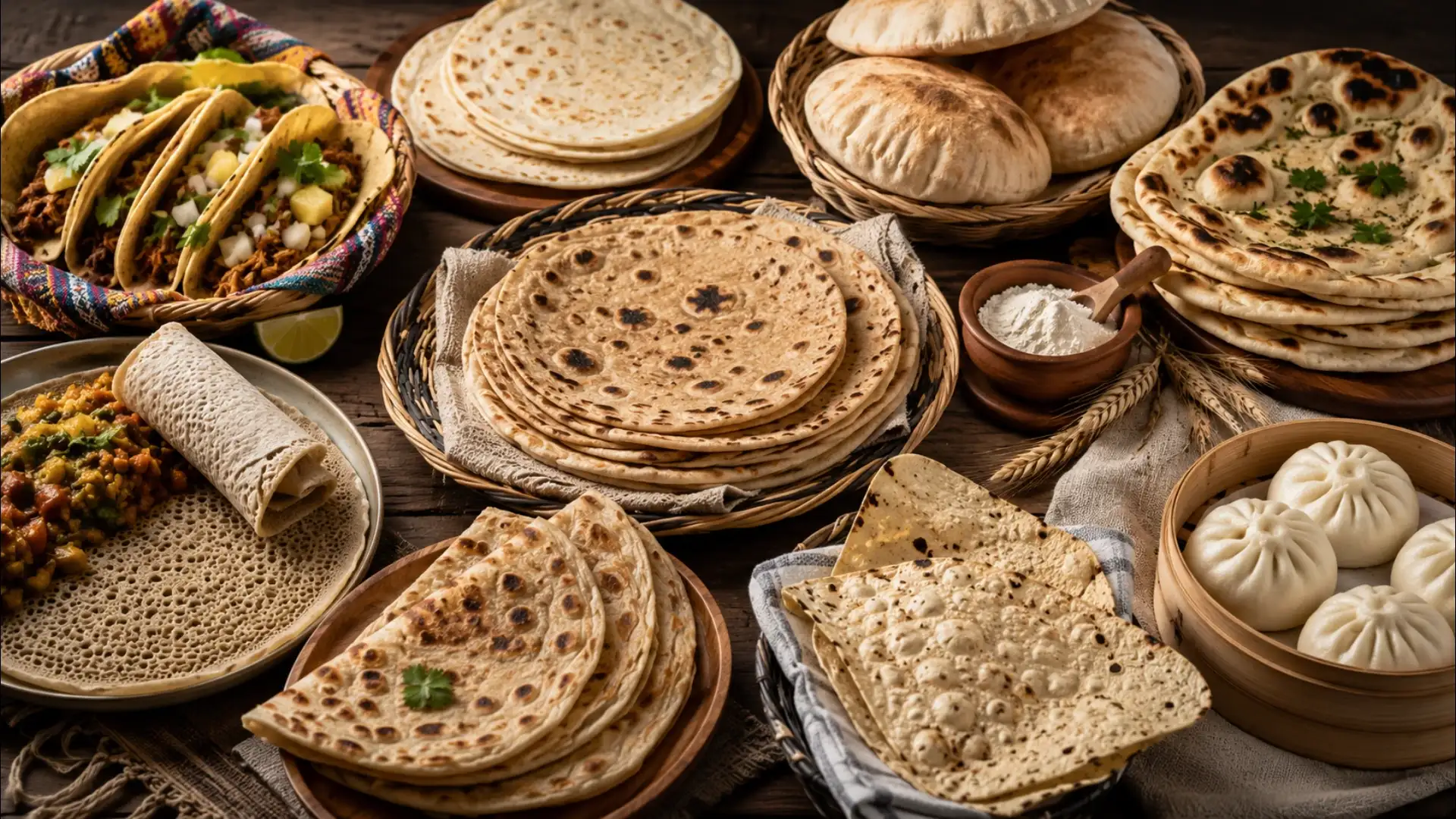
In India, wheat flour is commonly turned into rotis and chapatis, which are cooked directly on a hot surface. Their simplicity makes them suitable for everyday meals, where they are paired with vegetables, lentils, meat and dairy-based dishes.
In Mexico, maize has played a central role for thousands of years. Corn dough, known as
, is used to make tortillas, which form the foundation of tacos and many other dishes. The traditional process of nixtamalisation, in which maize is treated with an alkaline solution, also improves its nutritional properties and makes the grain easier to process.
In the Middle East, breads such as pita are traditionally baked at high temperatures, causing steam to form a pocket inside the dough. In parts of Central Asia, naan and related breads are cooked in extremely hot ovens, producing distinctive textures and flavours.
Ethiopia offers another fascinating variation with injera, a soft, spongy fermented flatbread made primarily from teff. It is not merely served alongside food; it often functions as both a plate and an eating utensil, demonstrating how bread can become deeply integrated into dining customs.
French baguettes, Italian pizza, Turkish pide, Chinese bao and Indian parathas all demonstrate how basic dough can evolve into highly distinctive culinary traditions. Local ingredients, fermentation methods, cooking equipment and cultural preferences give each food its own character.
Even within a single country, regional variations can reveal differences in agriculture and history. The same basic ingredients may produce dozens of distinct breads depending on where and how they are prepared.
What began as an everyday necessity eventually became cuisine, tradition and cultural expression. Today, these foods remind us that while cooking techniques differ across continents, the basic human desire to turn simple ingredients into satisfying meals is remarkably universal.
The Universal Appeal of Dough
Dough became an important part of many food traditions because grains could be stored for long periods and transformed into convenient meals. Wheat, maize, rice and other cereals provided the raw materials, while different climates, cooking methods and agricultural practices shaped the final product.In India, wheat flour is commonly turned into rotis and chapatis, which are cooked directly on a hot surface. Their simplicity makes them suitable for everyday meals, where they are paired with vegetables, lentils, meat and dairy-based dishes.
In Mexico, maize has played a central role for thousands of years. Corn dough, known as
, is used to make tortillas, which form the foundation of tacos and many other dishes. The traditional process of nixtamalisation, in which maize is treated with an alkaline solution, also improves its nutritional properties and makes the grain easier to process.
Flatbreads Across Continents
Flatbreads are among the clearest examples of how separate cultures developed similar solutions to everyday cooking.In the Middle East, breads such as pita are traditionally baked at high temperatures, causing steam to form a pocket inside the dough. In parts of Central Asia, naan and related breads are cooked in extremely hot ovens, producing distinctive textures and flavours.
Ethiopia offers another fascinating variation with injera, a soft, spongy fermented flatbread made primarily from teff. It is not merely served alongside food; it often functions as both a plate and an eating utensil, demonstrating how bread can become deeply integrated into dining customs.
When Dough Became a Cultural Identity
Bread and dough-based foods are more than convenient sources of carbohydrates. Over generations, they became connected to identity, family traditions and celebrations.French baguettes, Italian pizza, Turkish pide, Chinese bao and Indian parathas all demonstrate how basic dough can evolve into highly distinctive culinary traditions. Local ingredients, fermentation methods, cooking equipment and cultural preferences give each food its own character.
Even within a single country, regional variations can reveal differences in agriculture and history. The same basic ingredients may produce dozens of distinct breads depending on where and how they are prepared.
One Idea, Countless Interpretations
The similarities between tacos, rotis, tortillas and other dough-based foods do not necessarily mean that one culture copied another. Instead, they demonstrate a form of culinary convergence. When communities had access to grains and needed practical ways to prepare them, transforming flour or meal into dough was a logical solution.What began as an everyday necessity eventually became cuisine, tradition and cultural expression. Today, these foods remind us that while cooking techniques differ across continents, the basic human desire to turn simple ingredients into satisfying meals is remarkably universal.
Next Story