
General Sherman Tree: World’s Largest Living Tree Over 2,200 Years Old in Sequoia National Park

The General Sherman Tree , widely known as the world’s largest tree , is one of nature’s most astonishing wonders. Standing proudly inside Sequoia National Park, this giant sequoia is estimated to be more than 2,200 years old and is so massive that its weight is comparable to nearly 15 blue whales. Far from just a tree, the General Sherman Tree is a living symbol of strength, survival, and natural history.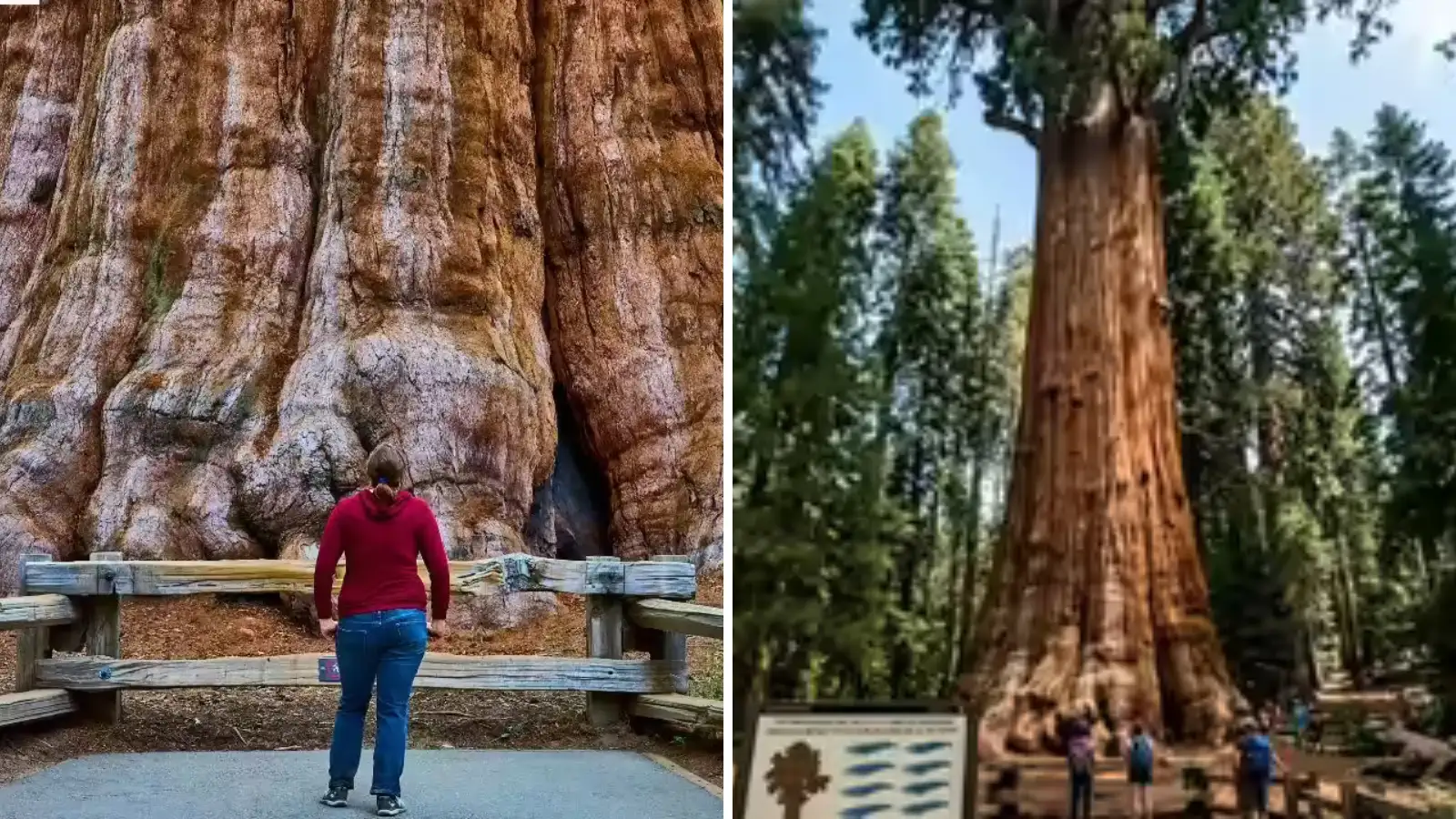
What Makes the General Sherman Tree So Special?
The General Sherman Tree is a giant sequoia (Sequoiadendron giganteum) and holds the record for being the largest tree in the world by volume. Unlike other record-holding trees that are either taller or older, this one stands out purely because of its incredible bulk.
It is located in the famous Giant Forest area of Sequoia National Park, where several of the world’s largest trees grow together in a protected environment.
Massive Size and Incredible Dimensions
The scale of the General Sherman Tree is difficult to imagine. Here are some of its key measurements:
To put this into perspective, its trunk is so wide that it could easily match the size of a small house, and its total volume makes it unmatched by any other known single-stem tree.
A Living Giant That Is Over 2,000 Years Old
The General Sherman Tree is believed to be between 2,100 and 2,700 years old, making it one of the oldest living organisms on Earth.
What’s even more fascinating is that it continues to grow every year. Despite its age, the tree adds more wood annually than almost any other tree species, proving that ancient life can still be full of energy and growth.
Weight That Defies Imagination
The sheer weight of the General Sherman Tree is another reason it stands out globally.
This makes it not only massive in size but also one of the heaviest known living single organisms on the planet.
Not the Tallest, But the Largest
Interestingly, the General Sherman Tree is not the tallest tree in the world. That record belongs to Hyperion, a coast redwood.
However, when it comes to total volume and overall mass, nothing comes close to the General Sherman Tree. It remains the undisputed champion of bulk and size among all living trees.
Protected Natural Wonder in California
The General Sherman Tree is located in the Giant Forest region of Sequoia National Park, California. It was officially recognized as the largest tree in the world in 1931 and has since become one of the park’s biggest attractions.
The tree is named after Civil War General William Tecumseh Sherman, and it is carefully protected as part of ongoing conservation efforts to preserve giant sequoias for future generations.
A Brief Historical Twist: The “Karl Marx Tree”
The history of the General Sherman Tree also has an interesting twist. In the late 1880s, a utopian group called the Kaweah Colony briefly controlled the land.
During that period, they renamed it the “Karl Marx Tree”, rejecting its original association with General Sherman. However, after the colony disbanded and the land became a national park, the original name was restored, and it has remained General Sherman Tree ever since.
The General Sherman Tree is more than just a natural landmark - it is a living timeline of Earth’s history. With its immense size, ancient age, and continuing growth, it stands as a powerful reminder of nature’s ability to endure and evolve over thousands of years.
A visit to this giant is not just sightseeing - it’s witnessing one of the greatest natural wonders on Earth.
What Makes the General Sherman Tree So Special?
The General Sherman Tree is a giant sequoia (Sequoiadendron giganteum) and holds the record for being the largest tree in the world by volume. Unlike other record-holding trees that are either taller or older, this one stands out purely because of its incredible bulk.
It is located in the famous Giant Forest area of Sequoia National Park, where several of the world’s largest trees grow together in a protected environment.
Massive Size and Incredible Dimensions
The scale of the General Sherman Tree is difficult to imagine. Here are some of its key measurements:
- Height: Around 275 feet (83.8 meters)
- Base circumference: About 102.6 feet (31.1 meters)
- Diameter at base: Nearly 36.5 feet (11.1 meters)
- Trunk volume: Approximately 52,500 cubic feet (1,487 cubic meters)
To put this into perspective, its trunk is so wide that it could easily match the size of a small house, and its total volume makes it unmatched by any other known single-stem tree.
A Living Giant That Is Over 2,000 Years Old
The General Sherman Tree is believed to be between 2,100 and 2,700 years old, making it one of the oldest living organisms on Earth.
What’s even more fascinating is that it continues to grow every year. Despite its age, the tree adds more wood annually than almost any other tree species, proving that ancient life can still be full of energy and growth.
Weight That Defies Imagination
The sheer weight of the General Sherman Tree is another reason it stands out globally.
- Estimated weight: 2.7 million pounds (around 1,900,000 kg)
- Equivalent to: Roughly 1,400 tons
- Comparison: About the same weight as 15 adult blue whales
This makes it not only massive in size but also one of the heaviest known living single organisms on the planet.
Not the Tallest, But the Largest
Interestingly, the General Sherman Tree is not the tallest tree in the world. That record belongs to Hyperion, a coast redwood.
However, when it comes to total volume and overall mass, nothing comes close to the General Sherman Tree. It remains the undisputed champion of bulk and size among all living trees.
Protected Natural Wonder in California
The General Sherman Tree is located in the Giant Forest region of Sequoia National Park, California. It was officially recognized as the largest tree in the world in 1931 and has since become one of the park’s biggest attractions.
The tree is named after Civil War General William Tecumseh Sherman, and it is carefully protected as part of ongoing conservation efforts to preserve giant sequoias for future generations.
A Brief Historical Twist: The “Karl Marx Tree”
The history of the General Sherman Tree also has an interesting twist. In the late 1880s, a utopian group called the Kaweah Colony briefly controlled the land.
During that period, they renamed it the “Karl Marx Tree”, rejecting its original association with General Sherman. However, after the colony disbanded and the land became a national park, the original name was restored, and it has remained General Sherman Tree ever since.
The General Sherman Tree is more than just a natural landmark - it is a living timeline of Earth’s history. With its immense size, ancient age, and continuing growth, it stands as a powerful reminder of nature’s ability to endure and evolve over thousands of years.
A visit to this giant is not just sightseeing - it’s witnessing one of the greatest natural wonders on Earth.
Next Story