
Grizzly Bear vs Black Bear vs Polar Bear: Which bear is the deadliest hunter


Grizzly bears, black bears and polar bears are among the most recognisable bear species in the world, yet they differ greatly in size, habitat, diet and behaviour. While all three belong to the bear family , each has evolved to thrive in a unique environment. Black bears are highly adaptable omnivores found across much of North America, grizzly bears are powerful brown bear relatives known for their muscular build and digging ability, and polar bears are specialised Arctic hunters that rely heavily on sea ice and seals for survival. Comparing these species highlights how evolution has shaped them to meet different ecological challenges. From physical features and feeding habits to conservation status and potential fighting ability, each bear possesses strengths that make it remarkable in its own right.
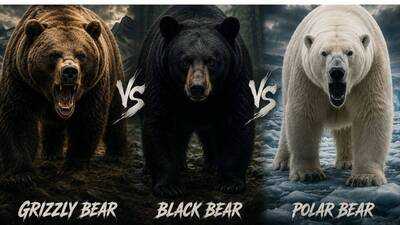
Grizzly Bear vs Black Bear vs Polar Bear : Strength, speed and survival compared
How these bears differ in appearance, behaviour, and adaptations
Size and weight
Among the three species, the polar bear is by far the largest. Adult males can weigh more than 1,700 pounds, making them the largest land carnivore on Earth. Grizzly bears generally weigh between 400 and 700 pounds, while large black bears may exceed 600 pounds but are usually much smaller. This enormous size advantage gives polar bears unmatched physical power.
Physical features
Black bears have a straight facial profile, longer ears and relatively short claws that help them climb trees. Grizzly bears are recognized by their prominent shoulder hump and long front claws used for digging. Polar bears possess massive paws, thick insulating fat and partially webbed feet, adaptations that help them swim long distances and survive Arctic conditions.
Habitat
Black bears occupy a wide variety of habitats, from coniferous forests to mountainous regions. Grizzlies prefer forests, alpine meadows and river systems where food is abundant. Polar bears are closely tied to Arctic sea ice, using it as a platform for hunting seals. Their dependence on ice makes them far more specialised than the other two species.
Diet
Black bears are opportunistic omnivores that eat fruits, vegetation, insects and animal matter. Grizzlies are also omnivores but consume larger mammals more frequently and are powerful scavengers. Polar bears differ dramatically, relying almost entirely on meat, especially seals. Their diet places them at the top of the Arctic food chain.
Behaviour
All three species are generally solitary outside breeding periods and family groups. Black bears often avoid confrontation and may escape by climbing trees. Grizzlies tend to be more territorial and aggressive when defending food or cubs. Polar bears roam vast Arctic landscapes and are highly adapted hunters, capable of travelling and swimming over great distances in search of prey.
Grizzly Bear vs Black Bear vs Polar Bear : Strength, speed and survival compared
How these bears differ in appearance, behaviour, and adaptations
Size and weight
Among the three species, the polar bear is by far the largest. Adult males can weigh more than 1,700 pounds, making them the largest land carnivore on Earth. Grizzly bears generally weigh between 400 and 700 pounds, while large black bears may exceed 600 pounds but are usually much smaller. This enormous size advantage gives polar bears unmatched physical power.
Physical features
Black bears have a straight facial profile, longer ears and relatively short claws that help them climb trees. Grizzly bears are recognized by their prominent shoulder hump and long front claws used for digging. Polar bears possess massive paws, thick insulating fat and partially webbed feet, adaptations that help them swim long distances and survive Arctic conditions.
Habitat
Black bears occupy a wide variety of habitats, from coniferous forests to mountainous regions. Grizzlies prefer forests, alpine meadows and river systems where food is abundant. Polar bears are closely tied to Arctic sea ice, using it as a platform for hunting seals. Their dependence on ice makes them far more specialised than the other two species.
Diet
Black bears are opportunistic omnivores that eat fruits, vegetation, insects and animal matter. Grizzlies are also omnivores but consume larger mammals more frequently and are powerful scavengers. Polar bears differ dramatically, relying almost entirely on meat, especially seals. Their diet places them at the top of the Arctic food chain.
Behaviour
All three species are generally solitary outside breeding periods and family groups. Black bears often avoid confrontation and may escape by climbing trees. Grizzlies tend to be more territorial and aggressive when defending food or cubs. Polar bears roam vast Arctic landscapes and are highly adapted hunters, capable of travelling and swimming over great distances in search of prey.
Next Story