
He never received the recognition he deserved: KN Shaji on John Abraham


Writer KN Shaji , who was part of the Odessa collective that travelled from village to village raising funds for John Abraham's Amma Aryan (1987), which was recently restored and screened at the Cannes Film Festival , reflected on the late filmmaker's legacy at an event organised by the Cochin Film Society .
An uncompromising artiste
Shaji first met John while interviewing him and remembers being struck by the director's conviction. “I will never make commercial films. I only want to make the films I wish to make,” John had maintained.
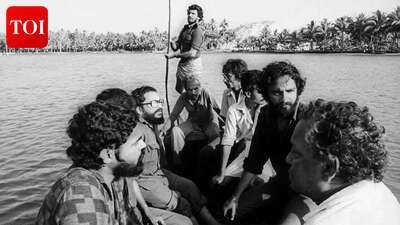
“That was John's unwavering position,” recalled Shaji. “Many artistes compromise with power, governments or institutions. John Abraham stood with ordinary people and brought their lives to the screen. It has been 39 years since his passing, yet people continue to celebrate him and revisit his work.”
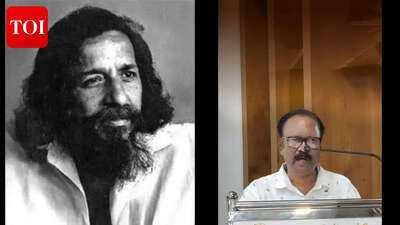
'Cinema belonged to the people'
Describing John as “the father of people's cinema”, Shaji said Amma Ariyan was itself a reflection of that philosophy.
The film was produced through public contributions collected by a group of youngsters associated with the Odessa movement and was screened not in conventional theatres, but in public spaces.
“Through Amma Ariyan, John showed that cinema could belong to the people. He challenged the commercial model and took films directly to audiences,” Shaji said.
According to him, John never received the recognition he deserved during his lifetime. “When the film was considered for the Kerala State Film Awards , several jury members were his friends. Yet it was rejected, with some arguing that it lacked discipline,” he revealed.
John, however, took the setback in his stride.
“When he heard about the rejection, he simply said, 'That's OK.' He believed the audience would ultimately decide the film's fate.”
The making of a maverick
Shaji recalled that John graduated from the Film and Television Institute of India, Pune, with a gold medal before making Vidyarthikale Ithile Ithile (1972).
“At the time, many people in Chennai felt John was undisciplined and incapable of completing a film. Producer Minnal told me he trusted John because he wanted to make a good film. That trust made the film possible,” said Shaji.
John himself, he added, was never entirely satisfied with the final result.
The story behind Agraharathil Kazhuthai
Shaji reserved special admiration for Agraharathil Kazhuthai (1977), the Tamil film widely regarded as one of John's finest works. “It is a classic,” Shaji remarked.
The film took six years to complete after running into financial difficulties. According to Shaji, producer Charles initially invested ₹5000 before funds dried up, forcing John's family to step in and support the project.
He also recalled one of the filmmaker's most famous anecdotes. “John once travelled on a bus carrying a donkey's skull that he needed for the film. It caused quite a commotion among the passengers. But that was John. He would go to any length for authenticity,” he shared.
An uncompromising artiste
Shaji first met John while interviewing him and remembers being struck by the director's conviction. “I will never make commercial films. I only want to make the films I wish to make,” John had maintained.
“That was John's unwavering position,” recalled Shaji. “Many artistes compromise with power, governments or institutions. John Abraham stood with ordinary people and brought their lives to the screen. It has been 39 years since his passing, yet people continue to celebrate him and revisit his work.”
'Cinema belonged to the people'
Describing John as “the father of people's cinema”, Shaji said Amma Ariyan was itself a reflection of that philosophy.
The film was produced through public contributions collected by a group of youngsters associated with the Odessa movement and was screened not in conventional theatres, but in public spaces.
“Through Amma Ariyan, John showed that cinema could belong to the people. He challenged the commercial model and took films directly to audiences,” Shaji said.
According to him, John never received the recognition he deserved during his lifetime. “When the film was considered for the Kerala State Film Awards , several jury members were his friends. Yet it was rejected, with some arguing that it lacked discipline,” he revealed.
John, however, took the setback in his stride.
“When he heard about the rejection, he simply said, 'That's OK.' He believed the audience would ultimately decide the film's fate.”
The making of a maverick
Shaji recalled that John graduated from the Film and Television Institute of India, Pune, with a gold medal before making Vidyarthikale Ithile Ithile (1972).
“At the time, many people in Chennai felt John was undisciplined and incapable of completing a film. Producer Minnal told me he trusted John because he wanted to make a good film. That trust made the film possible,” said Shaji.
John himself, he added, was never entirely satisfied with the final result.
The story behind Agraharathil Kazhuthai
Shaji reserved special admiration for Agraharathil Kazhuthai (1977), the Tamil film widely regarded as one of John's finest works. “It is a classic,” Shaji remarked.
The film took six years to complete after running into financial difficulties. According to Shaji, producer Charles initially invested ₹5000 before funds dried up, forcing John's family to step in and support the project.
He also recalled one of the filmmaker's most famous anecdotes. “John once travelled on a bus carrying a donkey's skull that he needed for the film. It caused quite a commotion among the passengers. But that was John. He would go to any length for authenticity,” he shared.
Next Story