
Health Benefits of Dates: Why This Naturally Sweet Fruit Deserves a Place in Your Diet

Dates are the fruit of the date palm tree, which is grown in many tropical regions around the world. Almost all dates sold in Western countries are dried.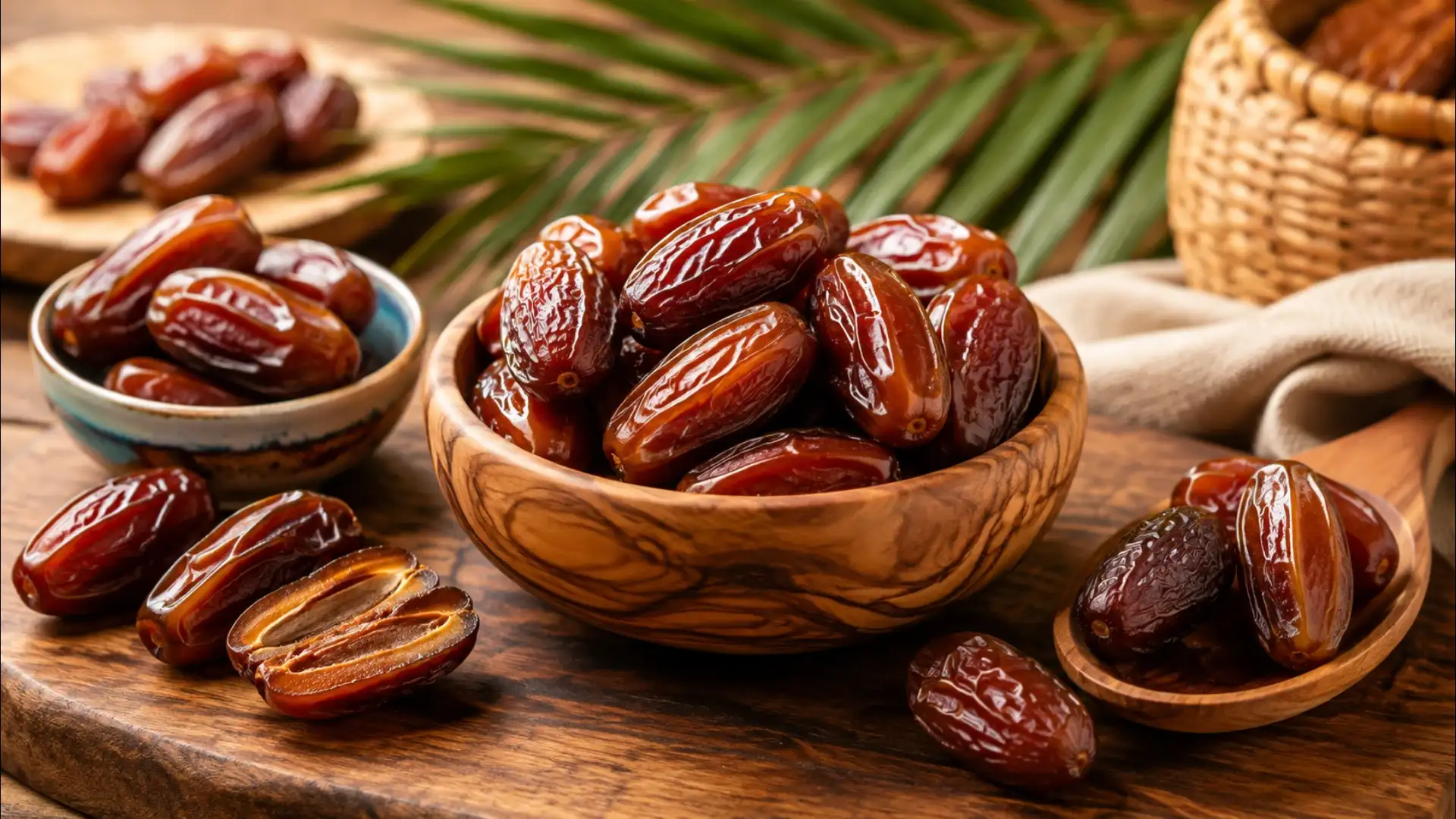
You can tell whether dates are dried by their appearance. Wrinkled skin indicates that they are dried, whereas smooth skin indicates freshness.
Depending on the variety, fresh dates are fairly small and range in color from bright red to bright yellow. Commonly consumed varieties include Medjool and Deglet Noor dates.
Despite being relatively high in calories, dates contain important vitamins and minerals, along with a significant amount of fiber.
A 40-gram (1.4-ounce) serving of dates contains:
Fiber supports digestive health by preventing constipation and promoting regular bowel movements. In a 2015 study, 21 people who consumed seven dates per day for 21 days experienced improved stool frequency and a significant increase in bowel movements compared with when they did not eat dates.
Antioxidants protect your cells from free radicals, which are unstable molecules that can cause harmful reactions in the body and contribute to disease.
Some of the most powerful antioxidants found in dates include:
You can tell whether dates are dried by their appearance. Wrinkled skin indicates that they are dried, whereas smooth skin indicates freshness.
Depending on the variety, fresh dates are fairly small and range in color from bright red to bright yellow. Commonly consumed varieties include Medjool and Deglet Noor dates.
They’re Nutritious
Dates provide a variety of nutrients. Since they are dried, they are more calorie-dense per gram than fresh fruit. However, standard serving sizes are smaller, so a serving of dates contains a similar number of calories to a serving of other fruits.Despite being relatively high in calories, dates contain important vitamins and minerals, along with a significant amount of fiber.
You may also like
- When fear delays healing: A woman's journey through breast cancer brings focus on awareness
- Kanjivaram Weaving: A Kanchipuram startup is reimagining a 400-year-old tradition
- From Kingfisher Villa to King's Mansion: Actor-entrepreneur Sachiin Joshi begins new chapter for Goa's iconic address
- Can satellite connectivity be a boon during disasters?
- Dull Skin and Dead Skin Buildup? Try This Simple Coffee Face Pack at Home
A 40-gram (1.4-ounce) serving of dates contains:
- Calories: 113
- Carbohydrates: 30 grams (g)
- Fiber: 3.2 g
- Protein: 0.98 g
- Potassium: 262 milligrams (mg), or 6% of the Daily Value (DV)
- Magnesium: 17.2 mg, or 4% of the DV
- Copper: 0.08 mg, or 9% of the DV
- Iron: 0.4 mg, or 2% of the DV
- Vitamin B6: Approximately 0.07 mg, or 4% of the DV
They’re High in Fiber
Getting enough fiber is important for your overall health. With just over 3 grams of fiber in a 40-gram serving, adding dates to your diet is an excellent way to increase your fiber intake.Fiber supports digestive health by preventing constipation and promoting regular bowel movements. In a 2015 study, 21 people who consumed seven dates per day for 21 days experienced improved stool frequency and a significant increase in bowel movements compared with when they did not eat dates.
They’re Rich in Antioxidants
Dates provide a variety of antioxidants that offer several health benefits, including reducing the risk of certain diseases.Antioxidants protect your cells from free radicals, which are unstable molecules that can cause harmful reactions in the body and contribute to disease.
Some of the most powerful antioxidants found in dates include:
- Flavonoids: Studies suggest that flavonoids may help reduce the risk of type 2 diabetes, cardiovascular disease, and certain types of cancer.
- Carotenoids: Carotenoids may promote heart health and help reduce the risk of certain eye disorders, such as macular degeneration.
- Phenolic acids: Known for their anti-inflammatory properties, phenolic acids may help lower the risk of heart disease and certain cancers.






Loving Newspoint? Download the app now
