
Why Buffets Never Lose Money, The Clever Psychology Behind "Unlimited" Food

Almost everyone has had that one friend. The one who announces before entering a buffet, "Today I'm going to recover every rupee." They skip breakfast. They loosen their belts before the meal even starts. They walk in with the confidence of someone who's about to outsmart the restaurant.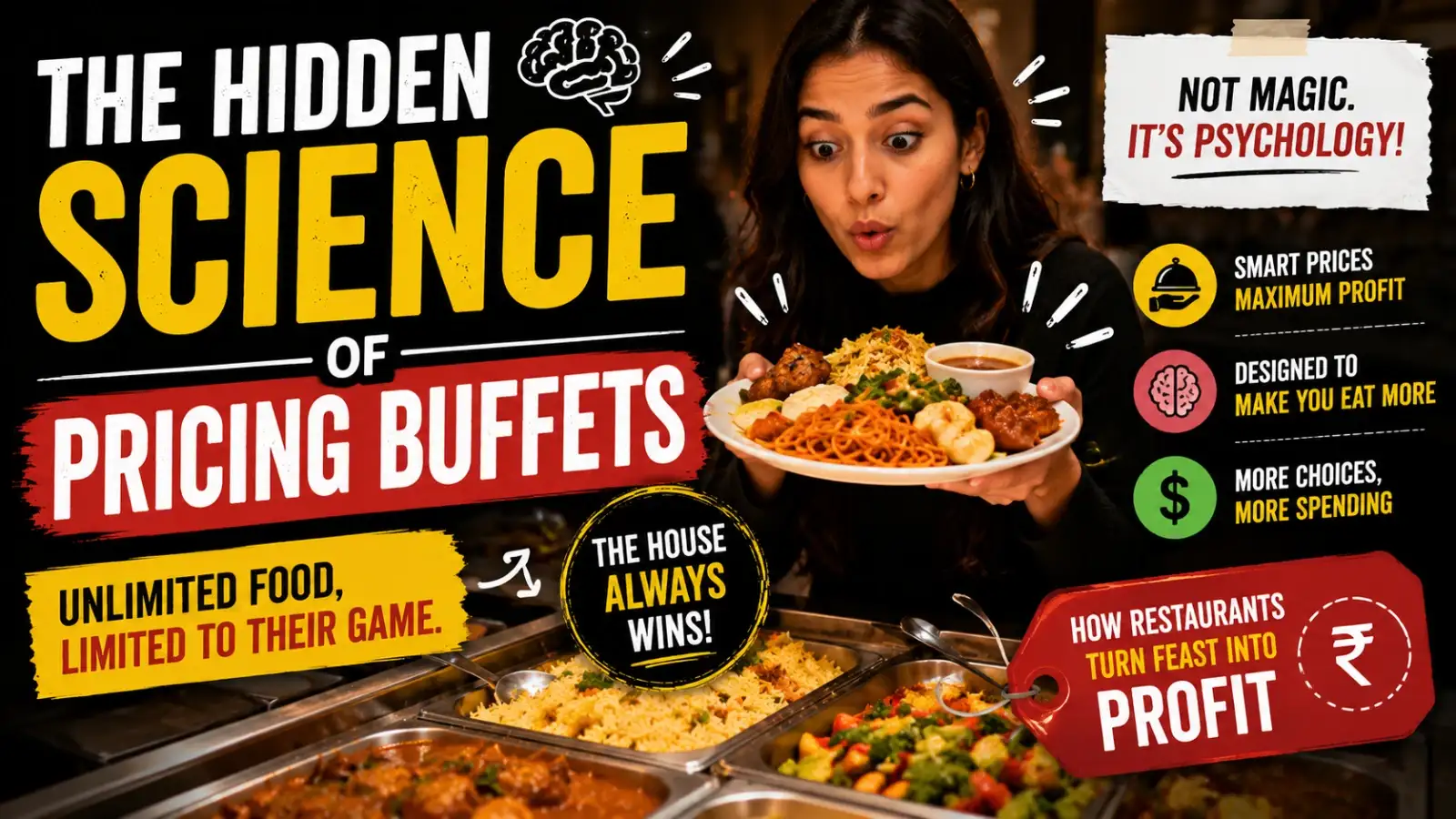
An hour later, they're sitting back in their chair, completely full, wondering why dessert suddenly feels impossible. The restaurant, meanwhile, carries on as if nothing happened. Which raises an interesting question. If people can eat as much as they want, how do buffets still make money?
The answer has very little to do with people having small appetites. It has a lot to do with understanding how people behave when they're surrounded by endless choices.
Instead of asking ourselves, "How hungry am I?" we start asking, "How much can I eat?" The meal quietly turns into a challenge. Ironically, that's exactly where most people lose. Because the excitement of unlimited food usually fades long before the food actually runs out.
So you take "just a little" of everything. By the time you've sampled ten different dishes, you're already feeling full. Not because you've eaten huge portions. Because variety tricks your brain into eating more than you realise.
Researchers have long observed that when we're offered more choices, we often keep tasting instead of stopping. The buffet isn't encouraging you to eat one massive meal. It's encouraging you to keep saying, "I'll just try this too."
By the time they reach the premium dishes, the grilled meats, seafood, or expensive desserts, they're already much closer to being full than they expected. It's not a trick; it's simply thoughtful design.
You take another spoonful because it looks good. Not because you're still hungry. Our eyes often convince us our stomach has more room than it actually does.
Children, older adults, people on diets, and those who fill up quickly balance out the handful of heavy eaters. The restaurant isn't calculating your plate. It's calculating everyone's. And over hundreds of customers, the numbers usually work in its favour.
Maybe that's the real product buffets are selling, not unlimited food. The feeling of unlimited choice.
You'll get distracted by variety, you'll take more than you need, you'll slow down halfway through, And you'll almost certainly leave saying the same thing everyone says after a buffet: "I definitely ate too much." Maybe that's the smartest part of buffet pricing. It doesn't depend on controlling the food. It understands the people eating it.
An hour later, they're sitting back in their chair, completely full, wondering why dessert suddenly feels impossible. The restaurant, meanwhile, carries on as if nothing happened. Which raises an interesting question. If people can eat as much as they want, how do buffets still make money?
The answer has very little to do with people having small appetites. It has a lot to do with understanding how people behave when they're surrounded by endless choices.
The Word "Unlimited" Changes Everything
There's something oddly satisfying about hearing the word unlimited. Even before we've looked at the menu, it feels like we're getting a great deal. That's because the word doesn't just describe the food; it changes our mindset.Instead of asking ourselves, "How hungry am I?" we start asking, "How much can I eat?" The meal quietly turns into a challenge. Ironically, that's exactly where most people lose. Because the excitement of unlimited food usually fades long before the food actually runs out.
More Choices, Smaller Appetites
Walk around any buffet and you'll notice something interesting. There are dozens of dishes. You want to try the pasta, the biryani, the noodles, the grilled vegetables, the salads, the desserts, and somehow still leave room for ice cream.So you take "just a little" of everything. By the time you've sampled ten different dishes, you're already feeling full. Not because you've eaten huge portions. Because variety tricks your brain into eating more than you realise.
Researchers have long observed that when we're offered more choices, we often keep tasting instead of stopping. The buffet isn't encouraging you to eat one massive meal. It's encouraging you to keep saying, "I'll just try this too."
The First Few Dishes Are Never an Accident
Ever noticed that rice, pasta, bread, potatoes, or salads are often among the first things you see? That's usually intentional. These foods are filling, relatively inexpensive, and help satisfy hunger early. Most people don't notice because they're excited to start eating.By the time they reach the premium dishes, the grilled meats, seafood, or expensive desserts, they're already much closer to being full than they expected. It's not a trick; it's simply thoughtful design.
We Eat With Our Eyes Before Our Stomach
Buffets are as much about presentation as they are about food. Large counters, colourful dishes, attractive lighting, and beautifully arranged desserts create the feeling of abundance. When everything looks delicious, it's surprisingly difficult to make practical decisions.You take another spoonful because it looks good. Not because you're still hungry. Our eyes often convince us our stomach has more room than it actually does.
The Real Business Isn't the Big Eaters
People often think buffets lose money because of that one person who eats six plates of food. In reality, restaurants don't rely on averages. They rely on groups. For every guest with an enormous appetite, there are several others who eat lightly.Children, older adults, people on diets, and those who fill up quickly balance out the handful of heavy eaters. The restaurant isn't calculating your plate. It's calculating everyone's. And over hundreds of customers, the numbers usually work in its favour.
Maybe the Best Part of a Buffet Isn't the Food
The funny thing is, people rarely leave a buffet talking about how much they saved. They talk about the experience. The excitement of seeing so many options. The family conversations. The desserts everyone insisted they had no space for. The fun of trying something they wouldn't normally order.Maybe that's the real product buffets are selling, not unlimited food. The feeling of unlimited choice.
Unlimited Doesn't Always Mean Unlimited Value
The next time you're standing in front of a buffet planning your strategy, remember this: The restaurant probably isn't hoping you'll eat less. It's simply counting on you being human.You'll get distracted by variety, you'll take more than you need, you'll slow down halfway through, And you'll almost certainly leave saying the same thing everyone says after a buffet: "I definitely ate too much." Maybe that's the smartest part of buffet pricing. It doesn't depend on controlling the food. It understands the people eating it.
Next Story