
Home Fire Safety: How to Prepare a Simple Family Escape Plan

A fire emergency can develop quickly, leaving little time to decide how to leave a building. In such situations, family members may become confused about which route to take or where to meet after getting outside.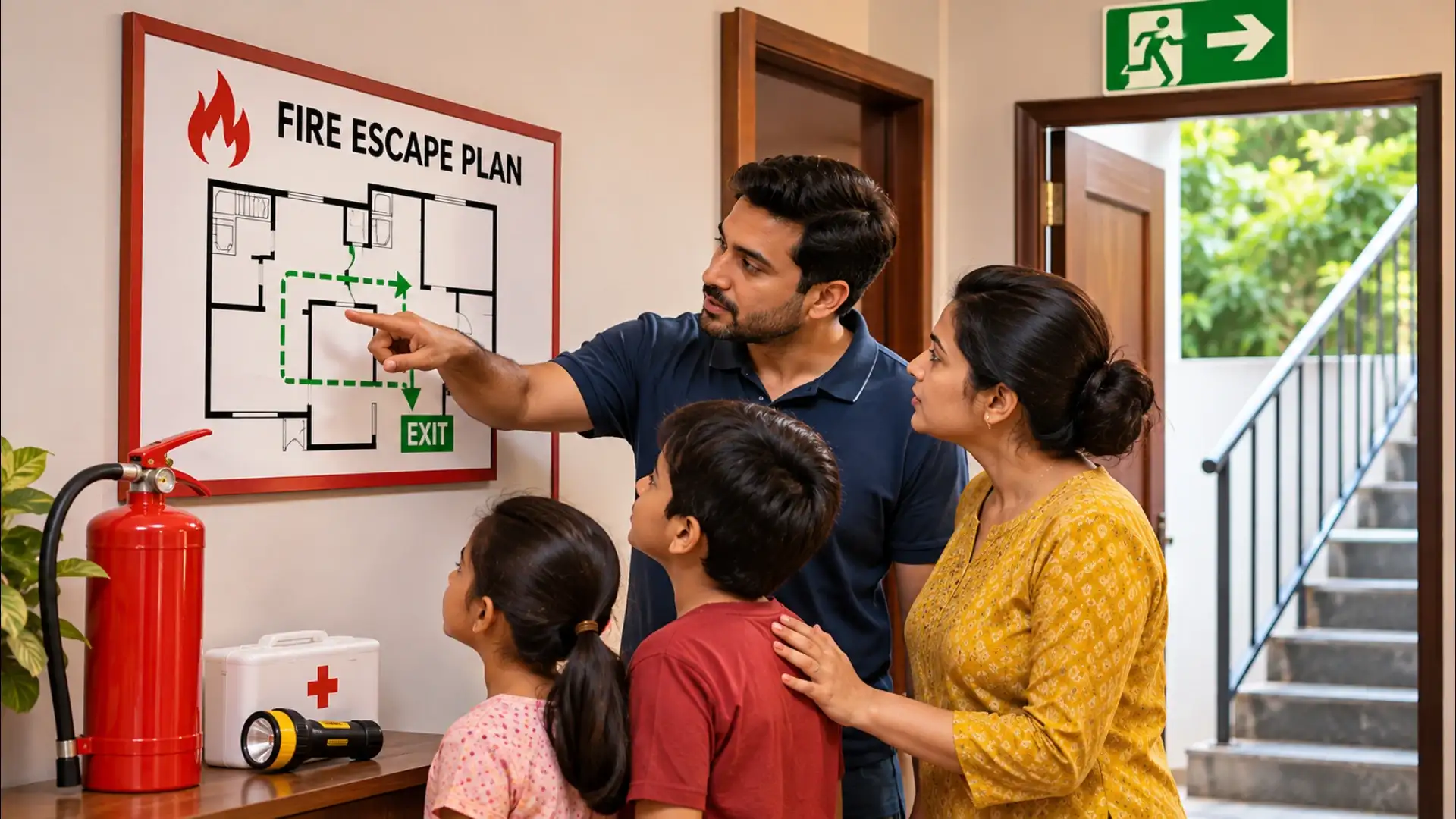
A household fire escape plan helps everyone understand the available exits and the actions to follow. It does not require complicated equipment. A clear route, basic preparation and regular practice can make the plan easier to remember.
In a flat, check the location of the staircase and the nearest building exit. Residents should know the route from their floor to the outside without depending on the lift.
Keep corridors, staircases and doorways free from unnecessary storage. Shoes, boxes, furniture and other objects should not obstruct the route.
If windows are being considered as an alternative exit, assess whether they can be opened safely and whether there is a suitable way to reach the ground. Do not assume that every window is a safe escape route.
Place a copy where family members can easily see it. Children should be shown the exits in a way they can understand.
If there are elderly residents, young children or people who need assistance with movement, decide in advance how help will be provided. Assign responsibility to an adult who can assist them without delaying the evacuation of others.
The purpose is to help family members check who has reached safety. It also prevents people from repeatedly entering the building to look for someone who may already be outside.
Children should know the meeting point and understand that they must not go back inside after leaving.
Explain that lifts should not be used during a fire emergency. Residents should follow the building's fire instructions and use the designated staircases or escape routes.
In apartment buildings, learn where the fire alarms and emergency exits are located. Local police and fire service guidance also advises keeping escape routes clear and taking electrical precautions.
Keep candles, lamps and incense away from curtains, paper and other combustible materials. Matches and lighters should be stored beyond the reach of young children.
Follow the manufacturer's safety instructions for cooking appliances and gas equipment. Have electrical work carried out by a qualified professional.
In India, the national emergency number is 112 and the fire helpline is 101.
A plan is useful only when everyone knows it. Reviewing the routes and practising the steps periodically can help households respond more calmly during an emergency.
A household fire escape plan helps everyone understand the available exits and the actions to follow. It does not require complicated equipment. A clear route, basic preparation and regular practice can make the plan easier to remember.
Identify the available exits
Start by looking at every room in the house. Identify the main door and any other safe exit that can be used if the usual route is blocked.In a flat, check the location of the staircase and the nearest building exit. Residents should know the route from their floor to the outside without depending on the lift.
Keep corridors, staircases and doorways free from unnecessary storage. Shoes, boxes, furniture and other objects should not obstruct the route.
If windows are being considered as an alternative exit, assess whether they can be opened safely and whether there is a suitable way to reach the ground. Do not assume that every window is a safe escape route.
Draw a simple household map
Prepare a basic floor plan showing rooms, doors, windows and exit routes. Mark the main escape route and an alternative route wherever one is available.Place a copy where family members can easily see it. Children should be shown the exits in a way they can understand.
If there are elderly residents, young children or people who need assistance with movement, decide in advance how help will be provided. Assign responsibility to an adult who can assist them without delaying the evacuation of others.
Choose an outdoor meeting point
Every family should agree on a meeting place outside the building. It could be a clearly identified location at a safe distance from the entrance.The purpose is to help family members check who has reached safety. It also prevents people from repeatedly entering the building to look for someone who may already be outside.
Children should know the meeting point and understand that they must not go back inside after leaving.
Practise the plan
Walk through the escape routes with all household members. Show everyone how doors open and where the stairs lead.Explain that lifts should not be used during a fire emergency. Residents should follow the building's fire instructions and use the designated staircases or escape routes.
You may also like
- Sharvari Brings Disco Glamour to Abu Jani Sandeep Khosla's Fashion Show
- Psychology says toddlers who run off more than walk may be a sign of curiosity and development rather than misbehaviour
- “I drink my own urine”: Paresh Rawal reveals why he drank it for 15 days after a serious leg injury and who recommended the unusual remedy
- Does the Season of Birth Affect a Baby's Health? What Parents Should Know
- 15 Effective Home Remedies to Treat Cracked Heels in Winters
In apartment buildings, learn where the fire alarms and emergency exits are located. Local police and fire service guidance also advises keeping escape routes clear and taking electrical precautions.
Reduce everyday fire risks
Check that electrical appliances and wiring are in good condition. Avoid connecting too many appliances to one socket, and replace damaged plugs or switches.Keep candles, lamps and incense away from curtains, paper and other combustible materials. Matches and lighters should be stored beyond the reach of young children.
Follow the manufacturer's safety instructions for cooking appliances and gas equipment. Have electrical work carried out by a qualified professional.
What to do during an emergency
Raise the alarm, leave the building through a safe route and do not stop to collect belongings. Once outside, stay out and contact the fire service.In India, the national emergency number is 112 and the fire helpline is 101.
A plan is useful only when everyone knows it. Reviewing the routes and practising the steps periodically can help households respond more calmly during an emergency.






Loving Newspoint? Download the app now
