
How Ants Build Underground Colonies and Create Remarkable Underground Cities

Ants may be tiny insects, but they are among nature’s most skilled builders. Beneath gardens, forests and open fields, they create vast underground colonies that can house thousands or even millions of ants, depending on the species. These hidden networks contain tunnels, chambers and storage areas designed to support every aspect of colony life. Built entirely through teamwork, these underground homes provide protection from predators and harsh weather while ensuring the colony functions efficiently. Understanding how ants build underground colonies reveals the extraordinary organisation and engineering abilities of one of the planet’s most successful insects.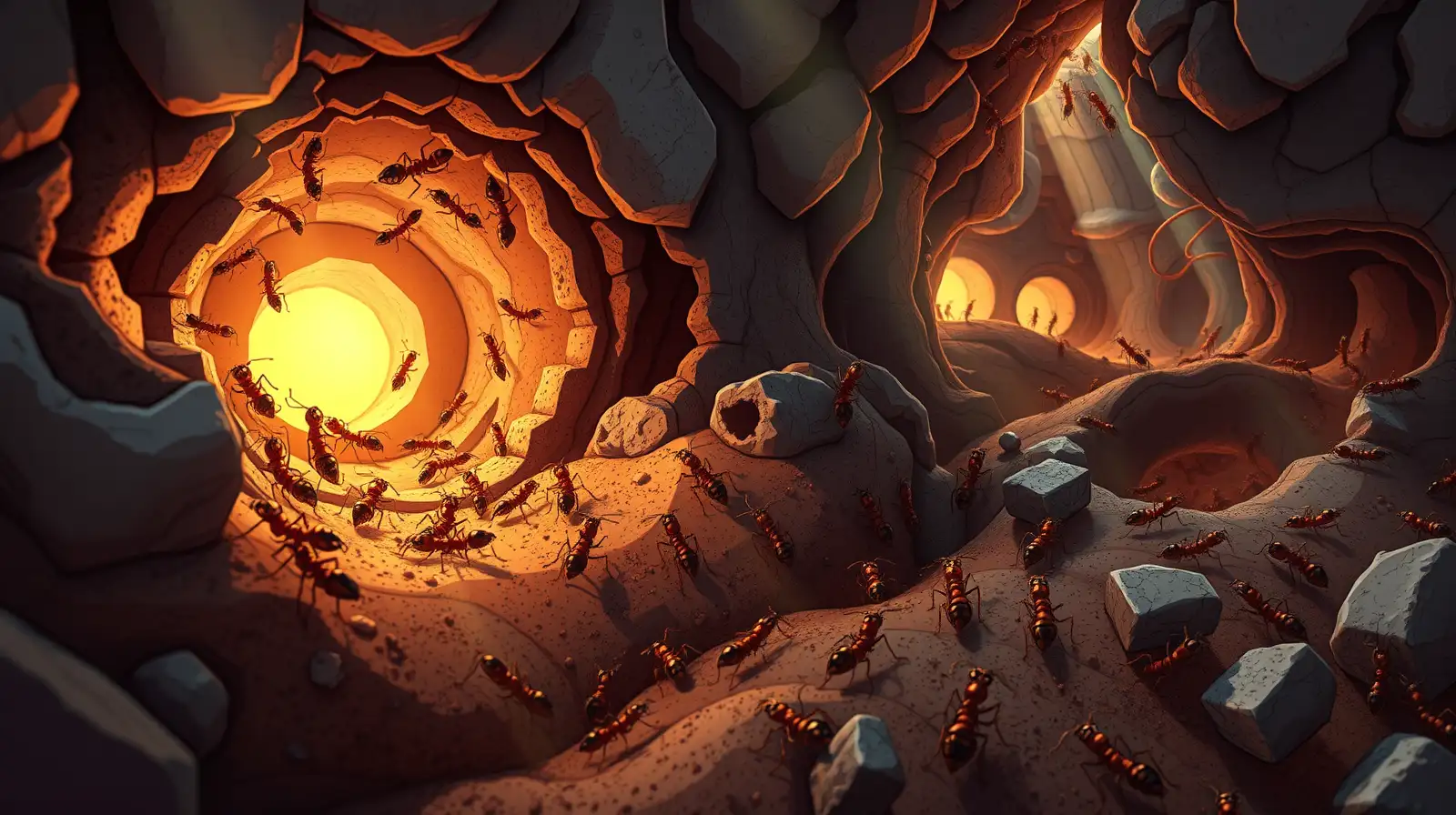
Once the first worker ants emerge, they take over all construction duties. From this point onwards, the colony expands steadily as more workers hatch and contribute to digging and maintenance.
The underground ant nests contain specialised chambers for different purposes. Some rooms house the queen and developing larvae, while others store food or provide resting areas for worker ants. The design allows the colony to remain organised and functional.
The tunnels also provide multiple routes through the colony, enabling ants to move quickly while reducing the risk if part of the nest is damaged. This efficient layout improves the colony's chances of survival.
As the colony grows, workers continually repair damaged tunnels, remove waste and expand the nest to accommodate increasing numbers. This constant maintenance keeps the insect colonies healthy and productive.
Ants demonstrate that remarkable engineering does not require advanced technology. Through cooperation, persistence and instinct, they create underground colonies that support thriving communities for years. Their hidden cities remain one of nature's finest examples of teamwork, proving that even the smallest creatures can achieve extraordinary feats when they work together.
How Ants Begin a New Colony
A new colony usually starts when a fertilised queen ant finds a suitable location with loose, workable soil. She digs a small chamber underground where she lays her first batch of eggs.Once the first worker ants emerge, they take over all construction duties. From this point onwards, the colony expands steadily as more workers hatch and contribute to digging and maintenance.
Digging Tunnels and Chambers
Worker ants use their powerful jaws to loosen soil and carry tiny particles to the surface. Working together, they gradually create an intricate network of tunnels that connect different parts of the nest.The underground ant nests contain specialised chambers for different purposes. Some rooms house the queen and developing larvae, while others store food or provide resting areas for worker ants. The design allows the colony to remain organised and functional.
You may also like
- The reason this mother accepted the title of 'World's Ugliest Woman' will break your heart
- Spider-Man: Brand New Day's Trailer Breaks Records with 590.8 Million Views
- Danish proverb of the day: “Don't sail out farther than you…”
- The Extraordinary Journey of Mako Nishimura: From Yakuza to Redemption
- Fridge Safety: This Woman Got A Shock While Cleaning Her Fridge, Don't Make These Mistakes
Smart Design for Survival
An ant colony is carefully planned to meet the needs of its inhabitants. Many nests include ventilation passages that allow fresh air to circulate, helping regulate temperature and humidity underground.The tunnels also provide multiple routes through the colony, enabling ants to move quickly while reducing the risk if part of the nest is damaged. This efficient layout improves the colony's chances of survival.
Teamwork Makes Construction Possible
No single ant directs the building process. Instead, each worker responds to environmental cues and simple behavioural patterns. Together, thousands of ants complete complex construction projects through coordinated effort.As the colony grows, workers continually repair damaged tunnels, remove waste and expand the nest to accommodate increasing numbers. This constant maintenance keeps the insect colonies healthy and productive.
Ants demonstrate that remarkable engineering does not require advanced technology. Through cooperation, persistence and instinct, they create underground colonies that support thriving communities for years. Their hidden cities remain one of nature's finest examples of teamwork, proving that even the smallest creatures can achieve extraordinary feats when they work together.






More from our partners


Loving Newspoint? Download the app now
