
How Ants Build Underground Colonies and Create Remarkable Underground Cities

Ants may be tiny insects, but they are among nature’s most skilled builders. Beneath gardens, forests and open fields, they create vast underground colonies that can house thousands or even millions of ants, depending on the species. These hidden networks contain tunnels, chambers and storage areas designed to support every aspect of colony life. Built entirely through teamwork, these underground homes provide protection from predators and harsh weather while ensuring the colony functions efficiently. Understanding how ants build underground colonies reveals the extraordinary organisation and engineering abilities of one of the planet’s most successful insects.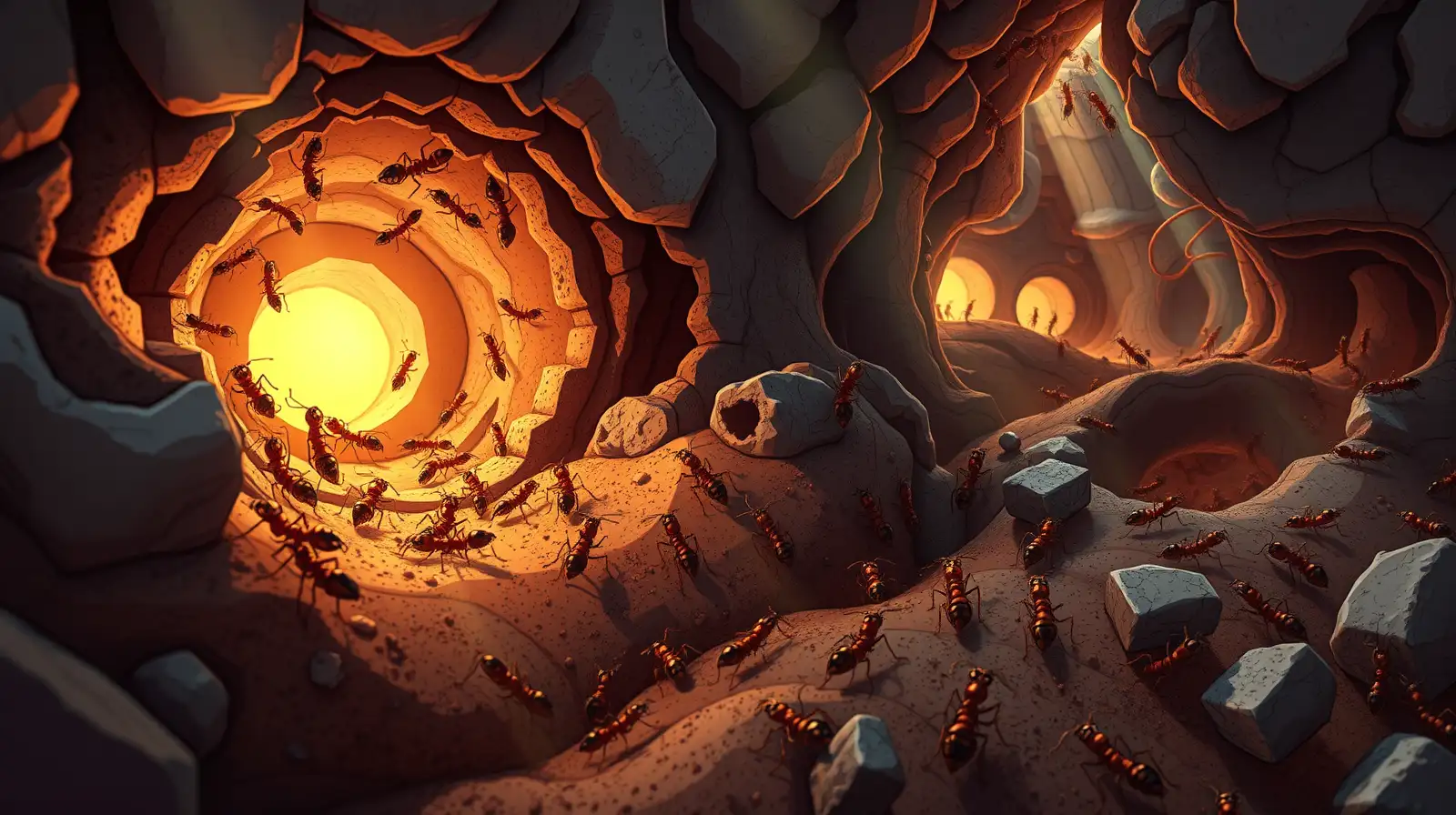
Once the first worker ants emerge, they take over all construction duties. From this point onwards, the colony expands steadily as more workers hatch and contribute to digging and maintenance.
The underground ant nests contain specialised chambers for different purposes. Some rooms house the queen and developing larvae, while others store food or provide resting areas for worker ants. The design allows the colony to remain organised and functional.
How Ants Begin a New Colony
A new colony usually starts when a fertilised queen ant finds a suitable location with loose, workable soil. She digs a small chamber underground where she lays her first batch of eggs.Once the first worker ants emerge, they take over all construction duties. From this point onwards, the colony expands steadily as more workers hatch and contribute to digging and maintenance.
Digging Tunnels and Chambers
Worker ants use their powerful jaws to loosen soil and carry tiny particles to the surface. Working together, they gradually create an intricate network of tunnels that connect different parts of the nest.The underground ant nests contain specialised chambers for different purposes. Some rooms house the queen and developing larvae, while others store food or provide resting areas for worker ants. The design allows the colony to remain organised and functional.
Next Story