
How Fast Is Light Really? Surprising Facts That Change Everything

The speed of light is one of the most fundamental constants in physics and an enduring source of fascination for scientists and curious minds alike. At approximately 299,792 kilometres per second in a vacuum, it is the ultimate speed limit of the universe. Yet, beyond this well-known figure lie numerous surprising facts about how light behaves and influences our understanding of space and time. According to experts, these fascinating details reveal the extraordinary nature of light and its role in shaping modern science.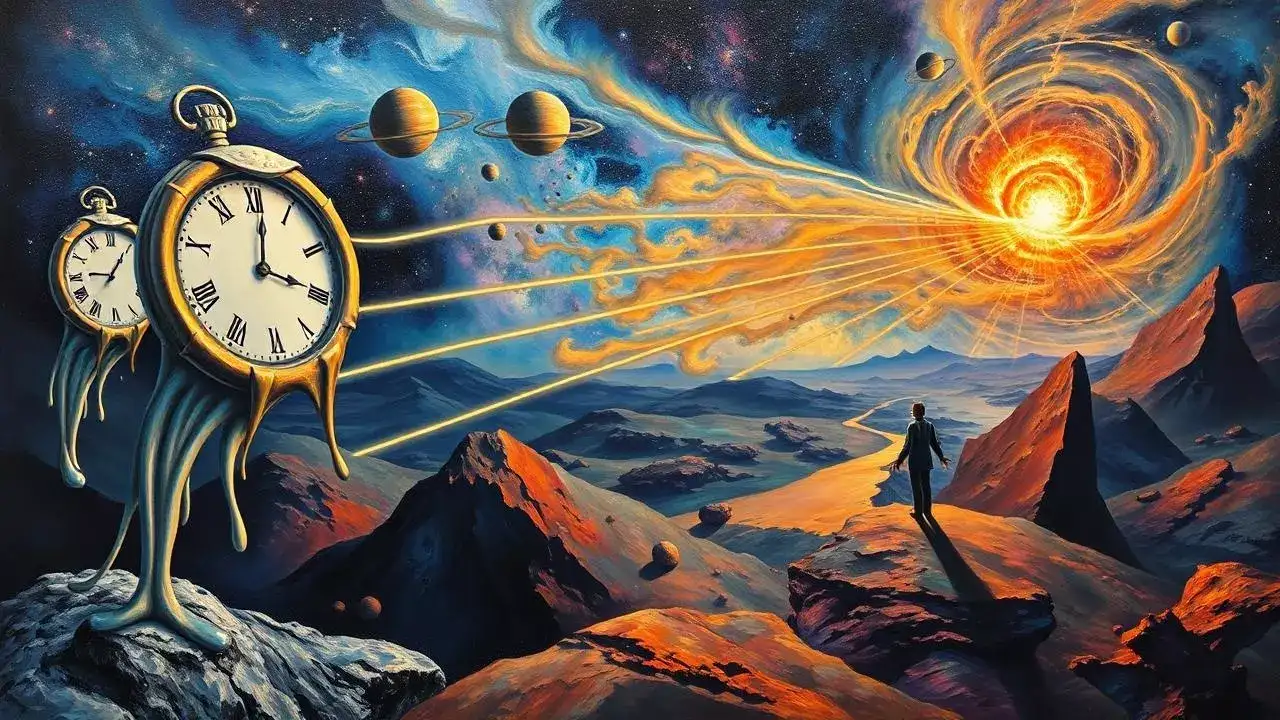
The speed of light is far more than just a numerical value; it is a gateway to understanding the universe at its deepest level. From the constancy of its speed to its wave-particle duality and its impact on time and space, light continues to surprise and inspire scientists. According to experts, exploring these fascinating facts not only enriches our knowledge but also sparks curiosity about the mysteries that still lie ahead in physics.
The Exact Speed and Its Unchanging Nature
The speed of light in a vacuum is precisely defined as 299,792,458 metres per second. This value is so fundamental that it forms the basis for the definition of the metre itself. Unlike most physical constants, the speed of light is invariant, meaning it remains constant regardless of the motion of the observer or the source of light. This remarkable property underpins Albert Einstein’s theory of relativity and revolutionised our understanding of the universe.Light Slows Down in Different Mediums
While light travels fastest in a vacuum, it slows down significantly when passing through other materials such as water, glass, or air. This reduction in speed causes phenomena like refraction, which is why a straw in a glass of water appears bent. The amount by which light slows depends on the material’s refractive index, a concept crucial in optics and lens design.You may also like
- The Path to Inner Wisdom Begins with True Education
- Quote of the Day by Pythagoras, "Do not go to bed until you have gone over the day three times in your mind. What wrong...."
- Pankaj Tripathi to be Honored as Artist of Distinction at IFFM 2026
- 5 Self-Care Tips for New Sleep-Deprived Moms
- Mature women rave about £15 foundation that's 'light' but gives 'flawless' skin
Light Has Both Wave and Particle Properties
One of the most surprising aspects of light is its dual nature. It behaves both as a wave, capable of interference and diffraction, and as a particle called a photon. This wave-particle duality puzzled physicists for decades and is a cornerstone of quantum mechanics, revealing that light defies simple categorisation.Nothing Can Travel Faster Than Light
According to Einstein’s theory of special relativity, the speed of light represents an unbreakable cosmic speed limit. No information or matter can travel faster than light, making it the fastest messenger in the universe. This limitation has profound implications for communication, causality, and the structure of space-time itself.Light Can Be 'Slowed' to Almost a Standstill
In groundbreaking experiments, physicists have managed to slow light down dramatically using ultra-cold atomic gases and specialised materials known as Bose-Einstein condensates. In some cases, light has been reduced to just a few metres per second, a staggering contrast to its usual speed in a vacuum.The Speed of Light Connects to Time and Space
The finite speed of light means that when we observe distant stars and galaxies, we are essentially looking back in time. Light from the Sun takes about 8 minutes and 20 seconds to reach Earth, so we see the Sun as it was over eight minutes ago. For faraway galaxies, the light we observe today may have started its journey millions or even billions of years ago, giving astronomers a glimpse into the distant past.The Speed of Light and Mass-Energy Equivalence
The famous equation E=mc², formulated by Einstein, highlights the intimate relationship between mass and energy, with the speed of light squared acting as the conversion factor. This formula is fundamental in nuclear physics and explains the enormous energy released in nuclear reactions.The speed of light is far more than just a numerical value; it is a gateway to understanding the universe at its deepest level. From the constancy of its speed to its wave-particle duality and its impact on time and space, light continues to surprise and inspire scientists. According to experts, exploring these fascinating facts not only enriches our knowledge but also sparks curiosity about the mysteries that still lie ahead in physics.






Loving Newspoint? Download the app now
