
Why Birds on Isolated Islands Stop Feeling Fear

On remote islands, bird populations often evolve in conditions that seem almost ideal, no predators, stable food sources, and little need for constant escape. Over time, this safety reshapes how they live. This phenomenon, widely studied by scientists, is known as Island Syndrome. It describes how isolation gradually alters bird behavior, body structure, and reproduction. What begins as a peaceful refuge slowly becomes a place where survival strategies shift in unexpected ways.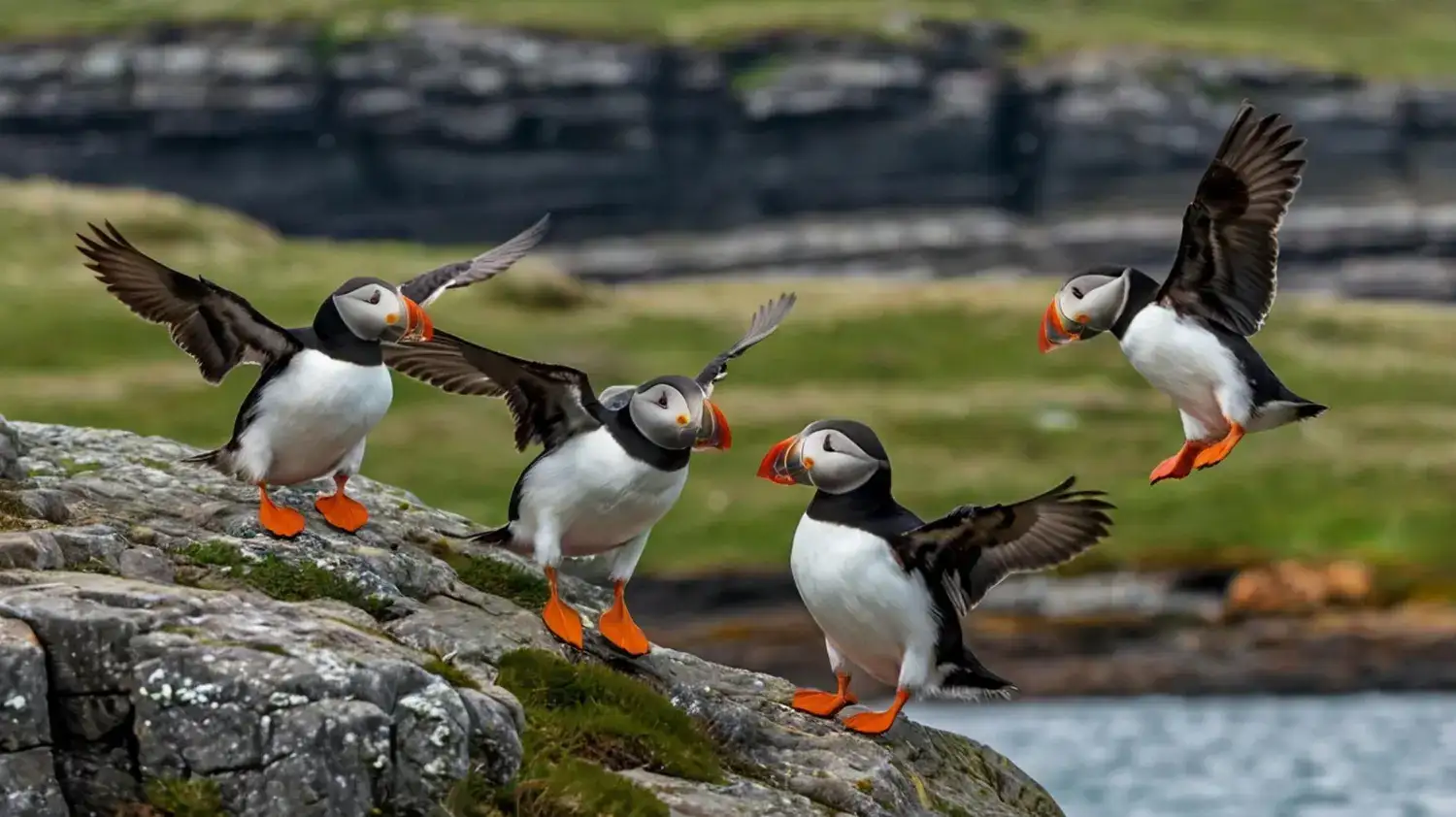
Fear fades when danger disappears
In environments without predators, many island birds lose their instinctive caution. They become unusually calm, often approaching threats that mainland species would instantly avoid. This lack of fear is not a defect but an adaptation to long-term safety. However, it becomes a serious weakness when new predators are introduced. Animals brought by humans, such as rats or cats, can devastate populations that have never learned to recognize danger. A once-efficient survival style suddenly turns into vulnerability.
Flight becomes less necessary over generations
When escaping predators is no longer a daily challenge, flying stops being as essential. Energy that once supported strong wings is redirected toward body growth or other survival needs. Over generations, some island birds develop smaller wings, heavier bodies, and reduced flight ability. A few species even lose the ability to fly entirely. Evolution favors efficiency over tradition, and in safe environments, flight can gradually fade away because it is no longer worth the energy cost.
Fewer eggs, higher risk
Island birds often produce smaller clutches compared to mainland species. Stable environments reduce the need for large numbers of offspring, so parents invest more care in fewer chicks. This strategy works well when conditions remain unchanged. But it also creates fragility. If disease, habitat loss, or predators suddenly appear, populations recover slowly because there are fewer young birds to replace losses.
Hidden danger in isolation
Isolation once protected island species, but it now exposes a new weakness: limited immunity. Many island birds have never encountered major diseases, leaving them defenseless against modern outbreaks like avian influenza. With global movement and environmental change, even remote ecosystems are no longer safe from infection. Combined with habitat loss and invasive species, this creates a fast-moving threat that evolution cannot easily counter.
Island birds remain one of nature’s clearest examples of adaptation in action. Their story shows how life perfectly adjusts to its surroundings, but also how fragile that balance becomes when the environment changes too quickly.
Fear fades when danger disappears
In environments without predators, many island birds lose their instinctive caution. They become unusually calm, often approaching threats that mainland species would instantly avoid. This lack of fear is not a defect but an adaptation to long-term safety. However, it becomes a serious weakness when new predators are introduced. Animals brought by humans, such as rats or cats, can devastate populations that have never learned to recognize danger. A once-efficient survival style suddenly turns into vulnerability. Flight becomes less necessary over generations
When escaping predators is no longer a daily challenge, flying stops being as essential. Energy that once supported strong wings is redirected toward body growth or other survival needs. Over generations, some island birds develop smaller wings, heavier bodies, and reduced flight ability. A few species even lose the ability to fly entirely. Evolution favors efficiency over tradition, and in safe environments, flight can gradually fade away because it is no longer worth the energy cost.Fewer eggs, higher risk
Island birds often produce smaller clutches compared to mainland species. Stable environments reduce the need for large numbers of offspring, so parents invest more care in fewer chicks. This strategy works well when conditions remain unchanged. But it also creates fragility. If disease, habitat loss, or predators suddenly appear, populations recover slowly because there are fewer young birds to replace losses. Hidden danger in isolation
Isolation once protected island species, but it now exposes a new weakness: limited immunity. Many island birds have never encountered major diseases, leaving them defenseless against modern outbreaks like avian influenza. With global movement and environmental change, even remote ecosystems are no longer safe from infection. Combined with habitat loss and invasive species, this creates a fast-moving threat that evolution cannot easily counter.Island birds remain one of nature’s clearest examples of adaptation in action. Their story shows how life perfectly adjusts to its surroundings, but also how fragile that balance becomes when the environment changes too quickly.
Next Story