
How Kangaroos Hop Efficiently And Travel Long Distances With Remarkable Energy Saving Ability

Kangaroos are among the most recognisable animals in the world, known for their unusual movement style and impressive jumping ability. Native to Australia, these marsupials have evolved a highly efficient way of travelling across vast landscapes. Unlike most mammals that walk or run using all four limbs, kangaroos move primarily by hopping. What makes this movement truly fascinating is not just the speed or distance they achieve, but the remarkable way their bodies conserve energy while doing it.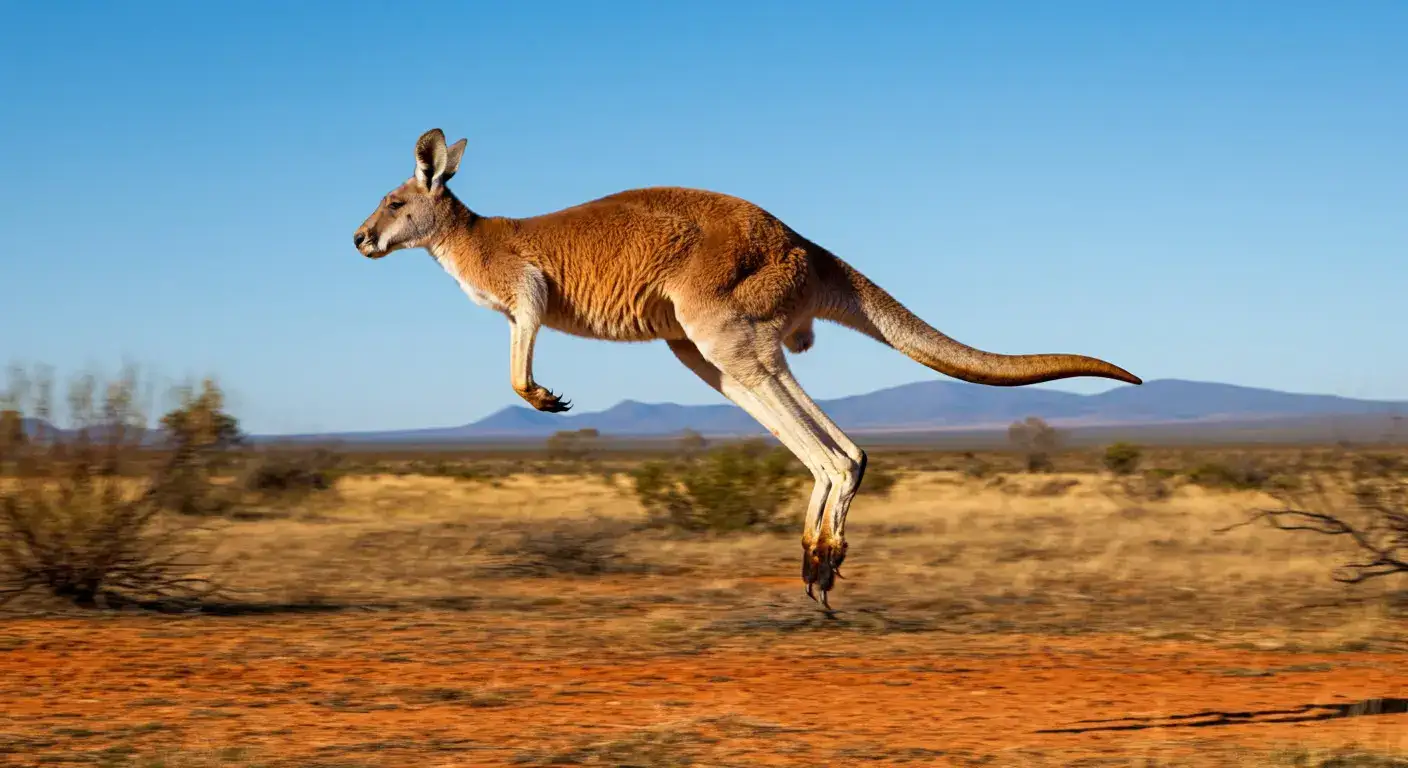
Scientists have studied kangaroo locomotion for decades because it challenges common assumptions about animal movement. Normally, larger animals use more energy as they move faster. Kangaroos, however, break this pattern. Their bodies are specially adapted to make hopping increasingly energy-efficient at higher speeds. This unique mechanism allows them to travel long distances in search of food and water while surviving the harsh conditions of the Australian outback.
Their feet are also specially designed for stability and propulsion. Long and narrow, they help push the animal forward during each hop. The large central toe acts almost like a spring-loaded lever, giving kangaroos better balance and control.
Because the hind legs move together rather than separately, kangaroos can produce smooth and rhythmic motion. This coordinated action helps reduce wasted energy and allows them to maintain speed for extended periods.
This process dramatically reduces the amount of muscular effort required. Instead of relying entirely on muscles for every leap, kangaroos recycle energy through their tendons. Scientists compare this mechanism to a spring system because it allows repeated movement with minimal energy loss.
The faster a kangaroo moves, the more effectively this spring-like system works. This means that travelling at higher speeds does not require proportionally more energy, making hopping surprisingly economical.
When hopping at speed, the tail helps maintain balance and direction. Since kangaroos leap with both hind legs simultaneously, the tail counterbalances the body and prevents tipping forward.
Research has also shown that the tail generates forward propulsion during certain types of movement. Its muscular structure makes it one of the strongest body parts of the animal, contributing to both support and motion.
This natural breathing rhythm means kangaroos do not need to spend additional energy controlling respiration while moving. Their movement and breathing work together automatically, increasing efficiency even further.
This adaptation becomes especially important in Australia’s dry and demanding climate, where conserving energy and water can make a major difference to survival.
Large red kangaroos can reach speeds of more than 50 kilometres per hour during short bursts. More importantly, they can maintain moderate speeds over long periods while using relatively little energy compared to similarly sized running animals.
This ability gives kangaroos an important survival advantage. In environments where resources are scattered and temperatures are extreme, efficient movement allows them to conserve valuable energy reserves.
Few animals use hopping as their primary large-scale movement method. Smaller animals such as rabbits and frogs hop too, but kangaroos have taken this form of locomotion to a much more advanced level.
Their body structure, including a lightweight upper body, muscular hindquarters and flexible spine, is perfectly adapted for this specialised movement style. Evolution has shaped them into highly efficient travellers suited to the Australian environment.
From spring-like tendons and powerful hind legs to balanced tails and synchronised breathing, kangaroos demonstrate how evolution can produce remarkably efficient systems. Their movement not only helps them survive but also continues to inspire scientific research into robotics, prosthetics and energy-efficient engineering.
Kangaroos remain one of the animal kingdom’s most fascinating creatures, proving that sometimes the most unusual ways of moving can also be the smartest.
Scientists have studied kangaroo locomotion for decades because it challenges common assumptions about animal movement. Normally, larger animals use more energy as they move faster. Kangaroos, however, break this pattern. Their bodies are specially adapted to make hopping increasingly energy-efficient at higher speeds. This unique mechanism allows them to travel long distances in search of food and water while surviving the harsh conditions of the Australian outback.
Powerful Hind Legs Drive Their Movement
The most obvious feature responsible for kangaroo hopping is their extremely strong hind legs. These legs contain large muscles that generate the force needed for powerful leaps. Unlike many animals that distribute weight across four limbs, kangaroos rely almost entirely on their back legs when moving quickly.Their feet are also specially designed for stability and propulsion. Long and narrow, they help push the animal forward during each hop. The large central toe acts almost like a spring-loaded lever, giving kangaroos better balance and control.
Because the hind legs move together rather than separately, kangaroos can produce smooth and rhythmic motion. This coordinated action helps reduce wasted energy and allows them to maintain speed for extended periods.
Elastic Tendons Work Like Springs
One of the biggest reasons kangaroos hop efficiently lies in their tendons. These elastic tissues function much like stretched rubber bands. When a kangaroo lands after a hop, the tendons in its legs store energy from the impact. As the animal pushes off again, that stored energy is released to power the next jump.This process dramatically reduces the amount of muscular effort required. Instead of relying entirely on muscles for every leap, kangaroos recycle energy through their tendons. Scientists compare this mechanism to a spring system because it allows repeated movement with minimal energy loss.
The faster a kangaroo moves, the more effectively this spring-like system works. This means that travelling at higher speeds does not require proportionally more energy, making hopping surprisingly economical.
The Tail Plays A Crucial Supporting Role
A kangaroo’s tail is far more than a simple balancing tool. It acts almost like a fifth limb that contributes significantly to movement and stability. During slow movement, kangaroos often use their tail along with their front limbs while shifting their hind legs forward.When hopping at speed, the tail helps maintain balance and direction. Since kangaroos leap with both hind legs simultaneously, the tail counterbalances the body and prevents tipping forward.
Research has also shown that the tail generates forward propulsion during certain types of movement. Its muscular structure makes it one of the strongest body parts of the animal, contributing to both support and motion.
Efficient Breathing During Hopping
Another remarkable feature of kangaroo movement is the way their breathing synchronises with hopping. As a kangaroo lands, its internal organs move in a way that pushes air out of the lungs. During take-off, the body expands again, drawing fresh air back in.This natural breathing rhythm means kangaroos do not need to spend additional energy controlling respiration while moving. Their movement and breathing work together automatically, increasing efficiency even further.
This adaptation becomes especially important in Australia’s dry and demanding climate, where conserving energy and water can make a major difference to survival.
Built For Long-Distance Travel
Kangaroos are capable of covering large distances across open terrain. In search of food and water, they may travel many kilometres in a single day. Their efficient hopping style helps them do this without exhausting themselves.Large red kangaroos can reach speeds of more than 50 kilometres per hour during short bursts. More importantly, they can maintain moderate speeds over long periods while using relatively little energy compared to similarly sized running animals.
This ability gives kangaroos an important survival advantage. In environments where resources are scattered and temperatures are extreme, efficient movement allows them to conserve valuable energy reserves.
How Kangaroos Differ From Other Animals
Most mammals depend on walking, trotting or running. These forms of movement involve repeated muscular effort that becomes increasingly demanding at higher speeds. Kangaroos are different because their hopping system relies heavily on stored elastic energy.Few animals use hopping as their primary large-scale movement method. Smaller animals such as rabbits and frogs hop too, but kangaroos have taken this form of locomotion to a much more advanced level.
Their body structure, including a lightweight upper body, muscular hindquarters and flexible spine, is perfectly adapted for this specialised movement style. Evolution has shaped them into highly efficient travellers suited to the Australian environment.
A Fascinating Example Of Natural Engineering
The way kangaroos hop efficiently is considered one of nature’s most impressive examples of biomechanical design. Every part of their body works together to reduce energy waste while maximising movement.From spring-like tendons and powerful hind legs to balanced tails and synchronised breathing, kangaroos demonstrate how evolution can produce remarkably efficient systems. Their movement not only helps them survive but also continues to inspire scientific research into robotics, prosthetics and energy-efficient engineering.
Kangaroos remain one of the animal kingdom’s most fascinating creatures, proving that sometimes the most unusual ways of moving can also be the smartest.
Next Story