
World Environment Day: How Much Plastic Does an Average Indian Family Use Every Year

As of 2026, an average Indian uses an estimated 11 to 14 kilograms of plastic every year. For a family of four, that adds up to around 44 to 56 kilograms of plastic annually. The surprising thing is that most families don't feel like they use that much plastic. After all, nobody goes out to buy plastic itself. We buy groceries, order food, receive online deliveries, and pick up everyday essentials. Plastic simply comes along with almost everything we bring home with us. Over time, it has become such a normal part of daily life, that we can barely even notice it anymore.
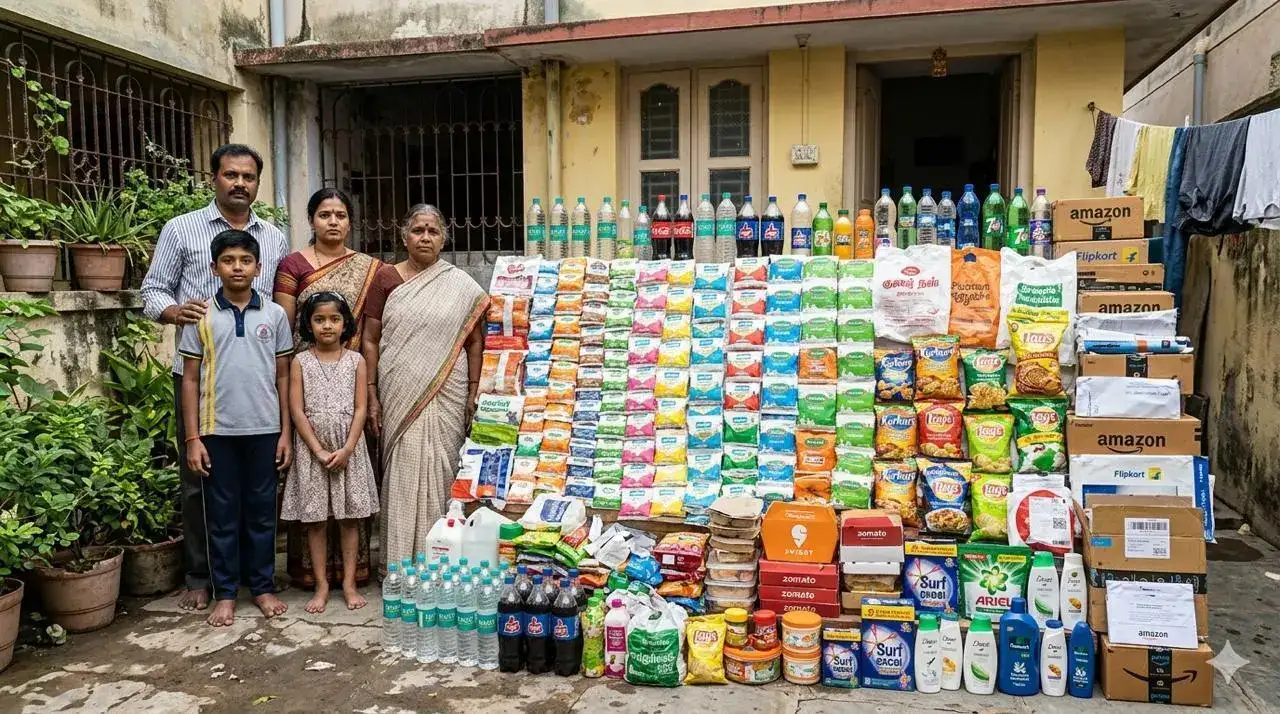
A Look Inside Our Homes
Take a quick look around a typical Indian kitchen. There might be empty milk packets in the dustbin, oil bottles on the shelf, snack wrappers tucked away in a drawer, and food delivery containers waiting to be reused as tools, for miscellaneous stuff at home. None of these things seem important alone, but together, they create a steady mountain of waste that grows a little bigger every day. Most of us throw these items away without thinking twice. The problem is that while we forget about them quickly, they fail to disappear just as fast.A Small Footprint, A Big Problem
Compared to many developed countries, Indians use less plastic per person. In countries like the United States, plastic consumption can exceed 100 kilograms per person every year. Yet India's challenge is different. With a population of more than 1.4 billion people, even a smaller amount of plastic per person adds up to a huge amount of waste. Today, India generates more than 9 million tonnes of plastic waste every year. Although recycling has improved in many places, a large amount of plastic still ends up in landfills, drains, rivers, and open dumping sites. Some types of packaging, especially snack wrappers and multilayered packets, are difficult to recycle and often become part of the growing waste problem.The Real Issue
Plastic itself is not the enemy here. It helps in a variety of things at home, in keeping the food fresh, in storing things, and has become a useful part of modern life. The real issue here is that many plastic items are used for only a few minutes but remain in the environment for years. A grocery bag might carry vegetables home for half an hour, A chip packet may be opened and thrown away in seconds. Yet both can stay around for long after their expiry date.The Plastic We Bring Home
Plastic pollution often feels like a problem happening not at our homes, so we don't take it, as seriously, as it happens in oceans, rivers, or overflowing landfills. But in reality, it starts much closer to home, or even inside it. It begins in our kitchens, in our shopping bags, in our online deliveries, and in the items we throw away every day. The next time you empty your dustbin, take a moment and look at what's inside it. You may find that the biggest source of plastic waste, isn't so very far from you, it’s right in front of you.





More from our partners


Loving Newspoint? Download the app now
