
How Octopuses Solve Puzzles And What Their Remarkable Intelligence Reveals About The Underwater World

Octopuses have long fascinated scientists because of their remarkable ability to solve problems. Although they are invertebrates, they display behaviours that suggest sophisticated learning and flexible decision-making. Research has shown that octopuses can explore unfamiliar objects, learn from experience and adapt their behaviour when faced with new challenges. These abilities are supported by a highly developed nervous system, making octopuses among the most intelligent invertebrates known to science. While their intelligence differs from that of mammals or birds, it is well suited to the demands of life in the ocean, where finding food and avoiding predators often require innovative solutions.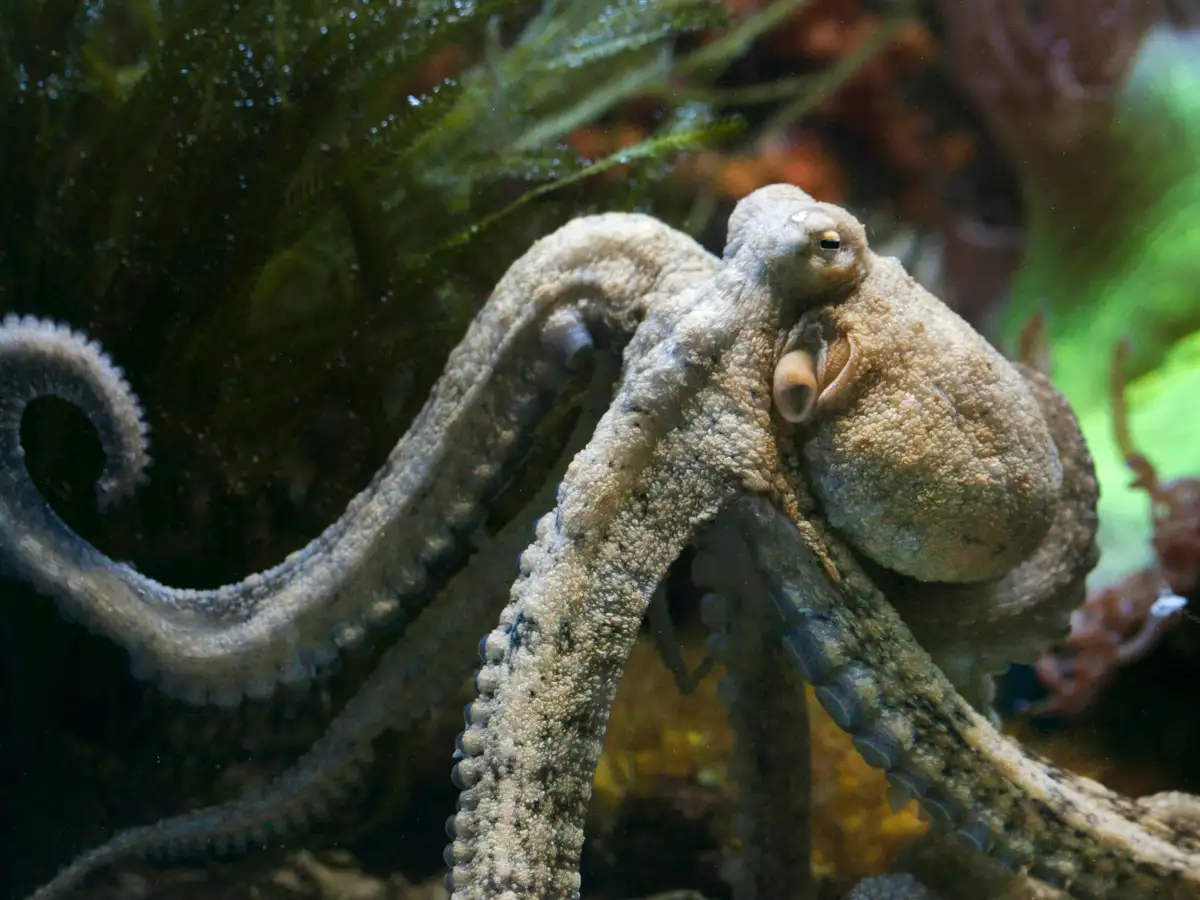
This unique arrangement helps octopuses manipulate objects with remarkable precision, an important ability when exploring their surroundings or searching for food.
In research settings, some octopuses have successfully completed tasks such as opening screw-top jars or removing lids from containers to reach food. These activities demonstrate behavioural flexibility rather than simple repetitive actions.
A Highly Developed Nervous System
Unlike vertebrates, an octopus has a nervous system that is distributed throughout its body. While its brain plays a central role in processing information, a large proportion of its neurons are located in its arms. This allows the arms to carry out complex movements and respond to touch and other sensory information while remaining coordinated with the brain.This unique arrangement helps octopuses manipulate objects with remarkable precision, an important ability when exploring their surroundings or searching for food.
Learning Through Exploration
Scientists have observed octopuses investigating unfamiliar objects by touching, grasping and manipulating them with their arms and suckers. Rather than relying on instinct alone, they often learn through exploration and repeated experience.In research settings, some octopuses have successfully completed tasks such as opening screw-top jars or removing lids from containers to reach food. These activities demonstrate behavioural flexibility rather than simple repetitive actions.
Next Story