
Why Red Oxide Floors Kept Old Indian Homes Cool Without Any AC

There is a particular feeling to an old Indian house in summer, the moment your bare feet leave the doormat and meet the floor, there is a drop. Not a dramatic chill, but a steady, reliable coolness that tiles and marble rarely match. That floor was almost certainly red oxide, and the coolness was not a coincidence.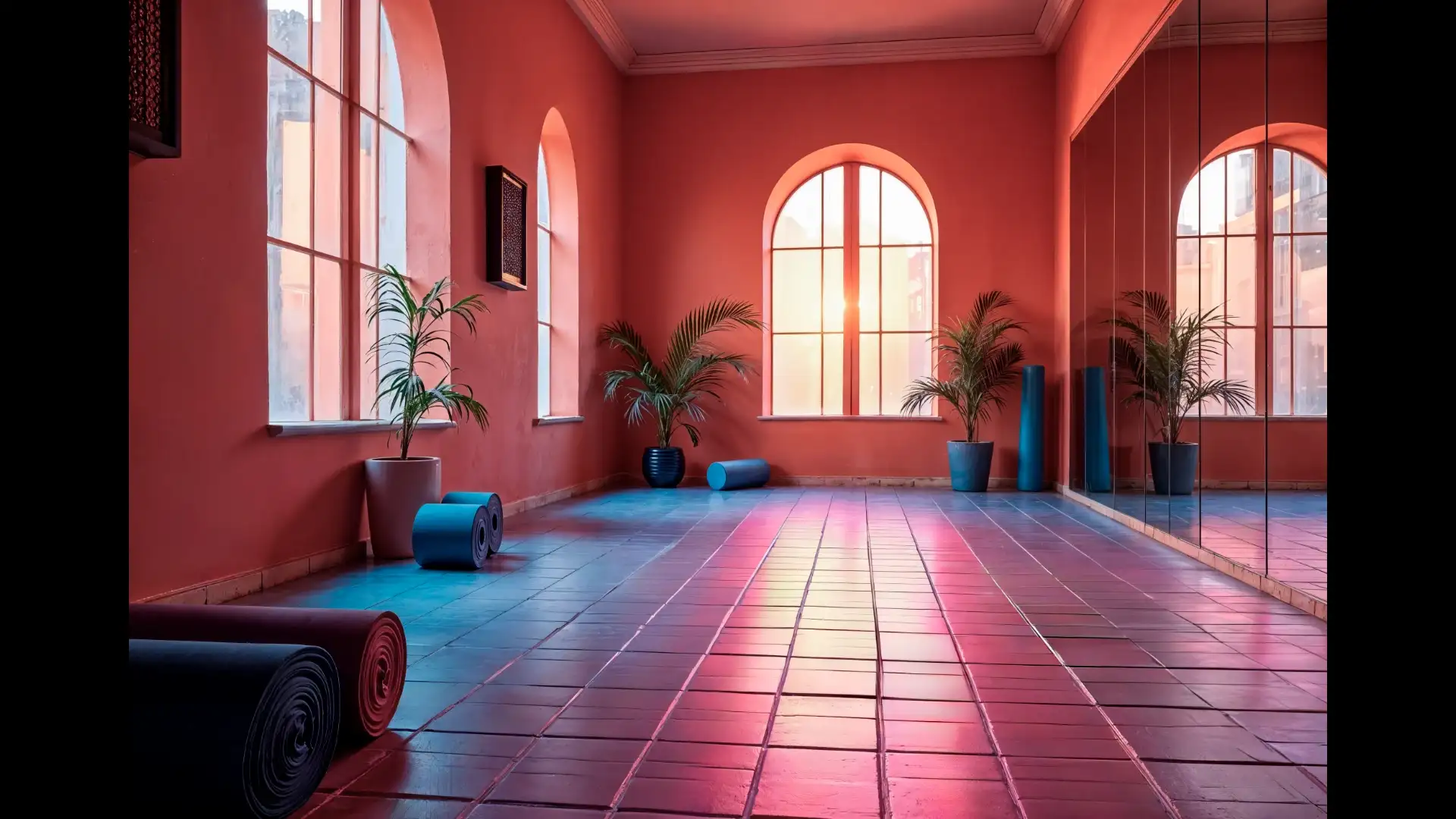
What Red Oxide Actually Is
Red oxide flooring is a mix of white cement, red oxide pigment, iron oxide, the same compound that makes soil and rust red, and a fine aggregate, usually river sand. The mixture is poured directly over a rough concrete base, levelled by hand, and then polished over several sessions with increasingly fine carborundum stones. The final surface is sealed with linseed oil, which soaks into the pores and hardens there. No glaze, no fired ceramic, no synthetic resin. The material is essentially a very dense, very fine concrete with a mineral pigment throughout.Because the pigment runs through the full depth of the pour and is not a surface coating, chips and scratches do not expose a different colour underneath. The floor ages into itself rather than degrading.The Physics of Why It Stays Cool
The coolness comes from two physical properties working together: thermal mass and low thermal conductivity.Thermal mass is a material's ability to absorb heat and hold it without quickly transferring it elsewhere. Red oxide, like all dense mineral materials, has high thermal mass. During the cooler hours of the night, the floor absorbs the ambient temperature of the room and stores it. When the day heats up, the floor releases that stored coolness slowly, acting as a buffer between the hot air above and the earth below.Low thermal conductivity means heat moves through the material slowly. When you stand on a red oxide floor, it draws warmth from your feet, which is why it feels cool, but it does not transmit the outdoor heat downward into the slab quickly either. Glazed ceramic tiles conduct heat faster. Marble conducts it faster still, which is why marble feels dramatically cold in winter and heats up more sharply in summer.Old homes compounded this effect through design. Thick walls, small windows, deep verandahs, and high ceilings kept direct sunlight off the floor for most of the day. The floor never had a chance to heat up, so it never had heat to release.You may also like
- One year, many milestones: OutStation celebrates its debut era with a new mixtape
- Donate these 5 things on Kartiki Ekadashi, this will bring happiness and prosperity to your home
- Fatty Liver Is Not Just a Digestive Problem: Doctors Warn of Serious Risks to Heart Health
- Psychology says people who reach railway stations hours before their train arrives may be managing more than punctuality: How anticipatory anxiety, fear of missing out and the need for control make some travellers arrive unusually early
- Psychology says people who feel guilty asking friends to return money they borrowed may be struggling with the fear of making a relationship uncomfortable; research across three countries examined why lenders avoid asking for repayment
The Role of Linseed Oil and the Polished Surface
The linseed oil finish is not decorative. When raw linseed oil is worked into the surface and left to oxidise, it polymerises, it cross-links into a hard resin inside the pores of the cement. This does two things. It reduces the floor's porosity, so water and stains do not penetrate easily. And it creates a surface that can be re-polished rather than replaced when it dulls.The polishing itself matters. A smooth, dense surface reflects radiant heat rather than absorbing it. The same principle explains why a light-coloured, smooth wall stays cooler than a rough, dark one. The carborundum polishing that finishes a red oxide floor compresses and smooths the surface at a microscopic level, improving both its reflectivity and its resistance to moisture.In many homes, the floor was polished by hand every few years, sometimes with a half-coconut shell used as a buffer. The labour was significant, but it renewed the surface rather than wearing it down.Why It Disappeared
Red oxide flooring requires skilled labour at every stage, mixing, pouring, levelling, and polishing. Each phase has a time window. The mix must be poured and worked before it sets. The polishing must begin at the right point in the curing process. A floor laid by someone who did not know these windows would crack, pit, or powder.As construction accelerated from the 1980s onward, the economics shifted. Ceramic and vitrified tiles could be laid quickly by workers with less specialised training. They required no curing period, no polishing, and no re-sealing. A contractor could finish a floor in a fraction of the time.The skilled masons who knew red oxide work, the right water-to-cement ratio, the timing of the carborundum passes, the amount of oil the surface would take, were not replaced as they retired. The knowledge thinned out rather than being formally lost.What Made It More Than Just a Floor
The colour itself carried meaning in many parts of India. Red oxide's terracotta tone connected to older traditions of red clay floors, which were swept and re-coated with a thin layer of red earth mixed with water, a practice called lippan in some regions, simply "coating the floor" in others. The red oxide floor was, in part, a more durable, more urban version of that older practice.In Kerala, the floor was often waxed and buffed until it reflected the ceiling. In Tamil Nadu, it was the surface on which kolam was drawn each morning, the white rice-flour pattern standing out against the dark red. In Maharashtra, the floor of a puja room was invariably red oxide, the colour associated with auspiciousness and the earth.The floor was not just a thermal solution. It was part of how a house understood itself.Coolness, in the old Indian home, was not delivered from above through a machine. It came up from the ground, stored overnight, held through the morning, and released as the day climbed. Red oxide was the material that made that exchange possible, a floor that remembered the night and shared it with the afternoon.





Loving Newspoint? Download the app now
