
How to Grow Mint at Home Without It Taking Over the Pot

Mint is a favourite for home gardeners because it grows readily and can be used in chutneys, drinks, chaas and everyday cooking.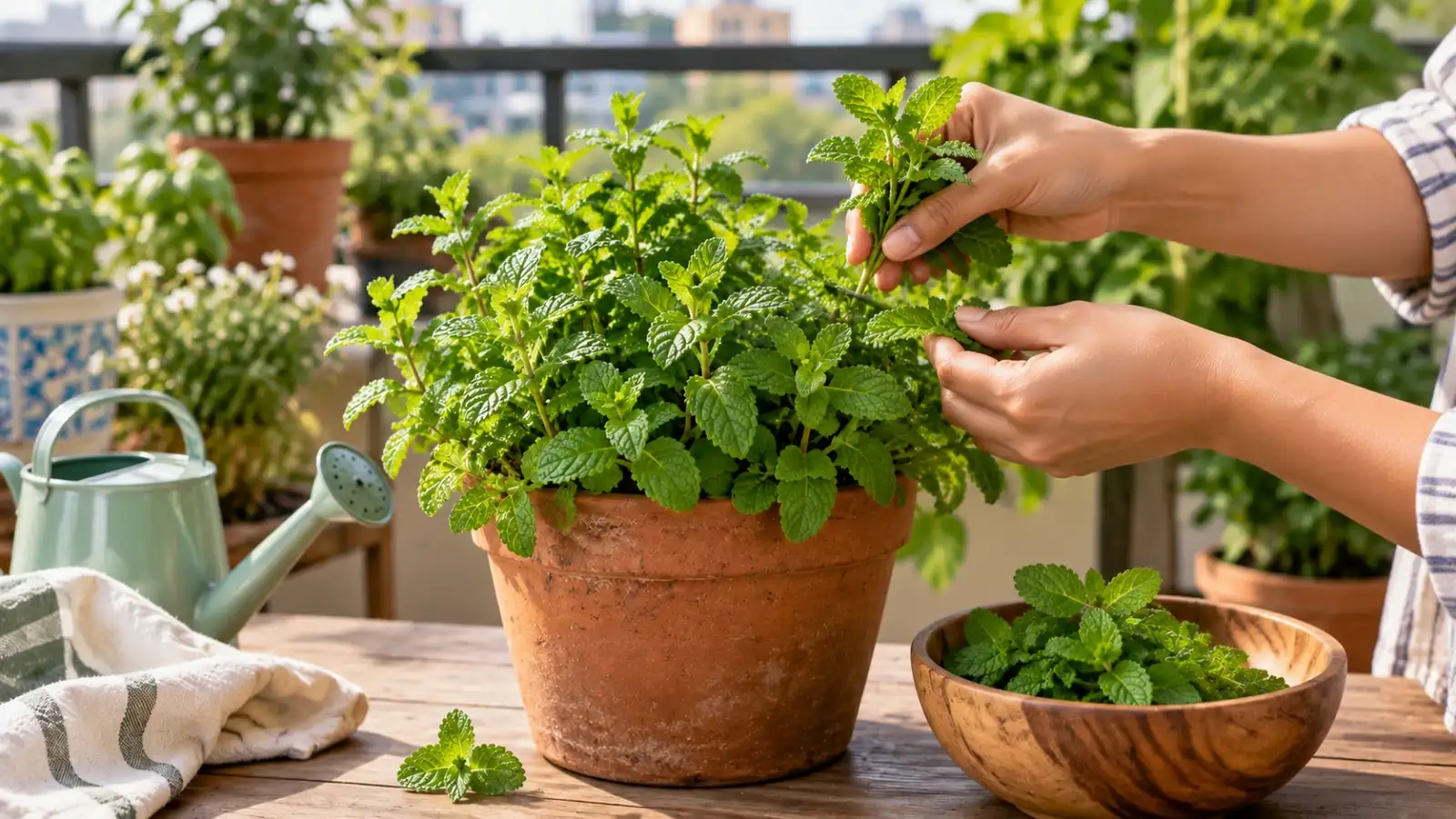
Its biggest advantage can also become its biggest problem. Mint spreads vigorously when it has suitable growing conditions, particularly when planted directly in open soil.
For a balcony or small home garden, growing it in a container is a much easier way to keep it under control.
Instead of planting mint alongside slower-growing herbs, use a dedicated pot. This limits its growing area and makes regular pruning much easier.
Choose a container with drainage holes so excess water can escape.
In India's hotter regions, harsh afternoon sunlight can be challenging for container plants. A spot with bright light and some protection from intense afternoon heat can be useful.
Watch the plant rather than following a rigid schedule.
Check the top layer of soil regularly. If it feels dry, water the plant thoroughly and allow excess water to drain away.
During hot weather, container plants may dry out faster, so they need more frequent checking.
Instead of waiting for long stems to take over the pot, trim the plant regularly. Cutting above a healthy set of leaves encourages fresh growth and gives you mint to use in the kitchen.
Remove weak, damaged or overcrowded growth as needed.
You can divide an established plant and move some of it into another container rather than allowing one pot to become excessively congested.
With regular harvesting, adequate moisture and a suitable container, mint can remain productive without becoming the garden bully.
Its biggest advantage can also become its biggest problem. Mint spreads vigorously when it has suitable growing conditions, particularly when planted directly in open soil.
For a balcony or small home garden, growing it in a container is a much easier way to keep it under control.
Choose a Separate Pot
One of the simplest rules for growing mint is to give it its own container.Instead of planting mint alongside slower-growing herbs, use a dedicated pot. This limits its growing area and makes regular pruning much easier.
Choose a container with drainage holes so excess water can escape.
Give It Light Without Overdoing It
Mint generally grows well in bright conditions, although the exact amount of sunlight it tolerates can depend on the local climate and growing conditions.In India's hotter regions, harsh afternoon sunlight can be challenging for container plants. A spot with bright light and some protection from intense afternoon heat can be useful.
Watch the plant rather than following a rigid schedule.
You may also like
- Celebrating Radha Ashtami: A Festival of Love and Devotion
- Understanding the Effects of Mars Transit in Cancer on Zodiac Signs
- Rock Salt: Why is only rock salt consumed during fasts in Hinduism? What is the reason behind this?
- Meet 69-year-old Kishori Kudecha, who started running at 60 and now has 45+ podium finishes, completed a 42 km marathon and a 50 km ultramarathon, proving age is no barrier
- What Are Infantile Spasms and How Are They Different From Normal Baby Movements?
Keep the Soil Moist
Mint likes consistently moist soil, but that does not mean the pot should remain waterlogged.Check the top layer of soil regularly. If it feels dry, water the plant thoroughly and allow excess water to drain away.
During hot weather, container plants may dry out faster, so they need more frequent checking.
Pruning Is Your Secret Weapon
Regular harvesting is one of the easiest ways to keep mint manageable.Instead of waiting for long stems to take over the pot, trim the plant regularly. Cutting above a healthy set of leaves encourages fresh growth and gives you mint to use in the kitchen.
Remove weak, damaged or overcrowded growth as needed.
Do Not Ignore the Roots
If mint becomes severely crowded, it may need repotting.You can divide an established plant and move some of it into another container rather than allowing one pot to become excessively congested.
With regular harvesting, adequate moisture and a suitable container, mint can remain productive without becoming the garden bully.






Loving Newspoint? Download the app now
