
This Authentic Thai Green Curry Is Easier Than You Think

Thai green curry is celebrated for its vibrant flavors, creamy texture, and fragrant blend of herbs and spices. While it is often prepared with chicken or seafood, the vegetarian version is just as delicious and satisfying. Packed with colorful vegetables, rich coconut milk, and aromatic green curry paste, this comforting dish brings authentic Thai flavors straight to your kitchen.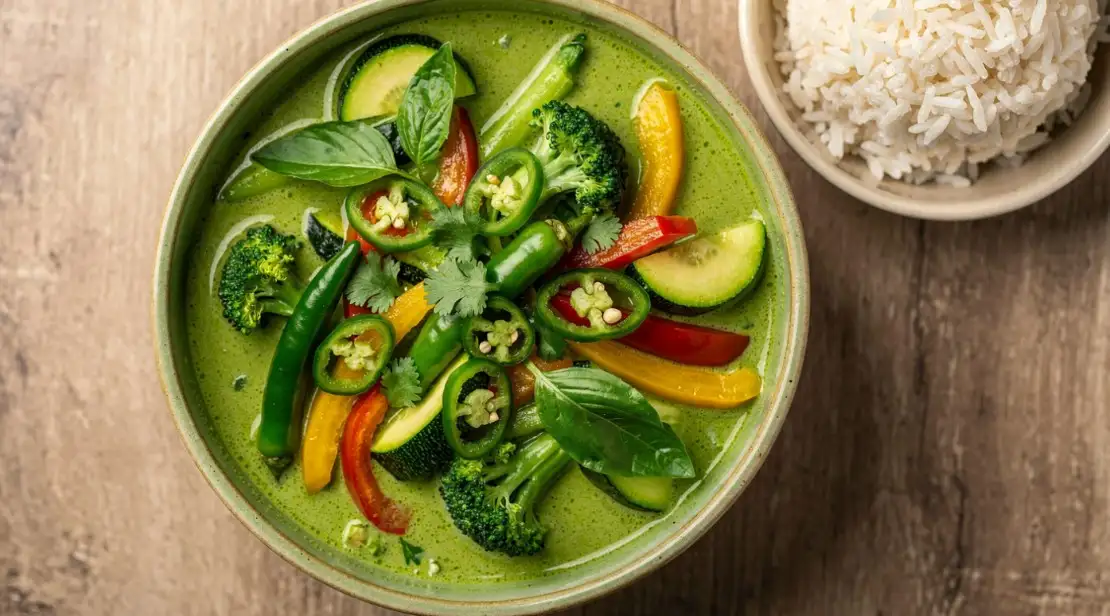
What Makes Thai Green Curry Special?
Thai green curry, known as Gaeng Keow Wan, gets its signature green color from fresh green chilies. Unlike many curries that rely heavily on dried spices, Thai green curry uses fresh ingredients such as lemongrass, galangal, makrut lime zest, garlic, and herbs to create its distinctive flavor profile. The result is a curry that is creamy, mildly sweet, spicy, and deeply aromatic.
Ingredients
For the Green Curry Paste
For the Curry
Step 1: Prepare the Curry Paste
Toast the coriander seeds, cumin seeds, and white peppercorns in a dry pan until fragrant. Grind them into a fine powder. Blend or pound together the chilies, shallots, garlic, lemongrass, galangal, lime zest, coriander stems, and toasted spices until a smooth paste forms.
Step 2: Cook the Curry Paste
Heat half of the coconut milk in a wok or deep pan over medium heat. Allow it to simmer gently until it thickens slightly. Add the green curry paste and cook for 2-3 minutes, stirring continuously until fragrant.
Step 3: Add the Vegetables
Stir in the broccoli, bell pepper, mushrooms, zucchini, and baby corn. Mix well so the vegetables are coated with the curry paste.
Step 4: Simmer the Curry
Pour in the remaining coconut milk and add the torn makrut lime leaves. Bring the mixture to a gentle simmer and cook for 10–15 minutes, or until the vegetables are tender but still retain some bite.
Step 5: Season and Finish
Add the soy sauce and palm sugar. Stir well and taste the curry, adjusting the seasoning if needed. Just before serving, add the Thai basil leaves and allow them to wilt into the curry.
Serving Suggestions
Serve the vegetarian Thai green curry hot with steamed jasmine rice. For a complete Thai-inspired meal, pair it with fresh cucumber salad, spring rolls, or stir-fried vegetables.
Tips for the Best Vegetarian Thai Green Curry
Vegetarian Thai green curry is proof that simple ingredients can create extraordinary flavors. With its creamy coconut base, fresh vegetables, and aromatic herbs, this Thai classic offers a delicious balance of sweet, spicy, and savory notes. Whether you're exploring Thai cuisine for the first time or recreating a favorite restaurant dish, this homemade curry is a rewarding and flavorful choice.
What Makes Thai Green Curry Special?
Thai green curry, known as Gaeng Keow Wan, gets its signature green color from fresh green chilies. Unlike many curries that rely heavily on dried spices, Thai green curry uses fresh ingredients such as lemongrass, galangal, makrut lime zest, garlic, and herbs to create its distinctive flavor profile. The result is a curry that is creamy, mildly sweet, spicy, and deeply aromatic. Ingredients
For the Green Curry Paste
- 8-10 green Thai chilies
- 2 shallots, chopped
- 4 garlic cloves
- 1 stalk lemongrass, sliced
- 1-inch piece galangal, sliced
- Zest of 1 makrut lime (or regular lime)
- A handful of coriander stems
- 1 teaspoon coriander seeds
- ½ teaspoon cumin seeds
- ½ teaspoon white peppercorns
For the Curry
- 400 ml coconut milk
- 1 cup broccoli florets
- 1 red bell pepper, sliced
- 1 cup mushrooms, halved
- 1 small zucchini, sliced
- 1 cup baby corn
- 4-5 makrut lime leaves, torn
- 1 tablespoon soy sauce
- 1 teaspoon palm sugar or brown sugar
- A handful of Thai basil leaves
- Steamed jasmine rice for serving
Step 1: Prepare the Curry Paste
Toast the coriander seeds, cumin seeds, and white peppercorns in a dry pan until fragrant. Grind them into a fine powder. Blend or pound together the chilies, shallots, garlic, lemongrass, galangal, lime zest, coriander stems, and toasted spices until a smooth paste forms.You may also like
- UP Board Academic Calendar 2026-27 Released: Know When Pre-Board and Board Exams Will Take Place
- Rs 2,000 under the PM Kisan Yojana will be credited to accounts on June 20; here is how to check your status..
- Indian airline baggage rules 2026: Air India, IndiGo, SpiceJet, Akasa & Alliance Air baggage norms explained
- Even after running 2 ACs, the bill came to zero, the picture changed due to PM Surya Ghar Yojana..
- Salmon sperm skincare in India: PDRN serums vs salmon facials explained
Step 2: Cook the Curry Paste
Heat half of the coconut milk in a wok or deep pan over medium heat. Allow it to simmer gently until it thickens slightly. Add the green curry paste and cook for 2-3 minutes, stirring continuously until fragrant. Step 3: Add the Vegetables
Stir in the broccoli, bell pepper, mushrooms, zucchini, and baby corn. Mix well so the vegetables are coated with the curry paste.Step 4: Simmer the Curry
Pour in the remaining coconut milk and add the torn makrut lime leaves. Bring the mixture to a gentle simmer and cook for 10–15 minutes, or until the vegetables are tender but still retain some bite. Step 5: Season and Finish
Add the soy sauce and palm sugar. Stir well and taste the curry, adjusting the seasoning if needed. Just before serving, add the Thai basil leaves and allow them to wilt into the curry. Serving Suggestions
Serve the vegetarian Thai green curry hot with steamed jasmine rice. For a complete Thai-inspired meal, pair it with fresh cucumber salad, spring rolls, or stir-fried vegetables. Tips for the Best Vegetarian Thai Green Curry
- Use full-fat coconut milk for a richer texture.
- Thai basil adds an authentic flavor and is worth seeking out if available.
- Adjust the number of green chilies to suit your preferred spice level.
- Avoid overcooking the vegetables to maintain their color and texture.
- Tofu can be added for extra protein and a heartier meal.
Vegetarian Thai green curry is proof that simple ingredients can create extraordinary flavors. With its creamy coconut base, fresh vegetables, and aromatic herbs, this Thai classic offers a delicious balance of sweet, spicy, and savory notes. Whether you're exploring Thai cuisine for the first time or recreating a favorite restaurant dish, this homemade curry is a rewarding and flavorful choice.






More from our partners


Loving Newspoint? Download the app now
