
What Makes Rajasthani Ghevar Different from Other Indian Sweets?

Ghevar is one of Rajasthan's best-known traditional sweets. Its distinctive disc shape and porous, honeycomb-like texture set it apart from many other Indian desserts. It is particularly associated with festive occasions, including Teej and Raksha Bandhan, and is commonly found in sweet shops across Rajasthan during these celebrations.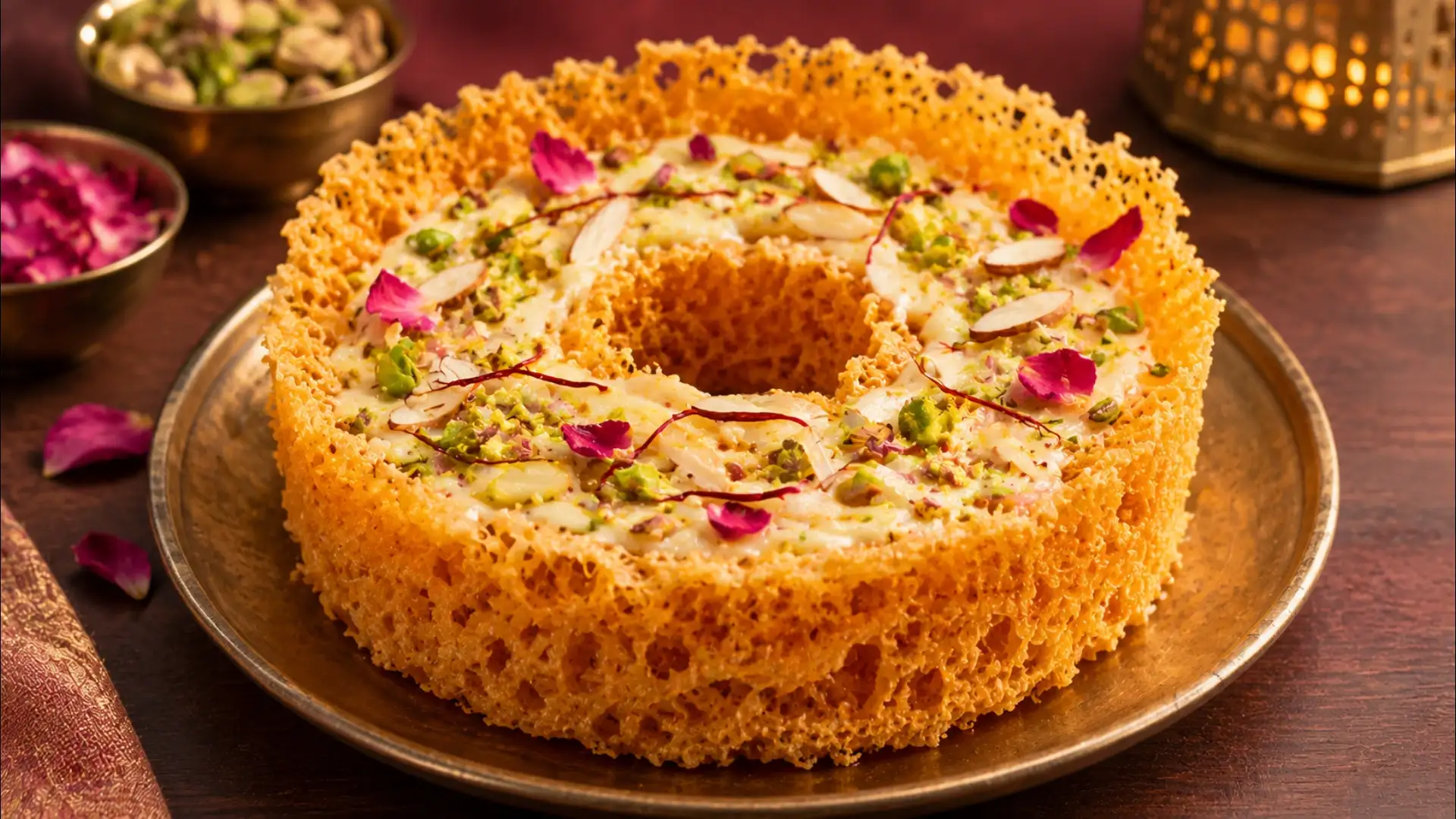
Although ghevar looks intricate, its basic ingredients are relatively simple. The characteristic texture, however, depends on the consistency of the batter, the temperature of the ghee and the way it is poured into the hot cooking medium.
Ghevar is also available in different styles. Plain ghevar is coated with sugar syrup, while varieties such as malai ghevar and mawa ghevar include richer toppings. Nuts and saffron are often added as decoration.
A hole in the centre is part of the sweet's traditional appearance. The porous texture develops through the way the batter is added and cooked in the hot medium. The process requires care because the liquid batter can splutter.
Once the disc turns crisp and develops a light golden colour, it is carefully removed and drained.
For malai ghevar, a layer of thickened milk is added on top. Mawa ghevar uses a richer topping made with reduced milk solids. Chopped almonds, pistachios and saffron strands are common garnishes.
Its texture, presentation and festive associations make ghevar an important part of Rajasthan's food heritage.
Although ghevar looks intricate, its basic ingredients are relatively simple. The characteristic texture, however, depends on the consistency of the batter, the temperature of the ghee and the way it is poured into the hot cooking medium.
What Goes into Ghevar?
The basic batter is made with refined flour, ghee and chilled water. Some preparations include a little milk, while others use water alone. Sugar syrup is used to sweeten the cooked disc.Ghevar is also available in different styles. Plain ghevar is coated with sugar syrup, while varieties such as malai ghevar and mawa ghevar include richer toppings. Nuts and saffron are often added as decoration.
How the Texture Is Created
The batter is prepared to a thin consistency and poured gradually into hot ghee or oil in a deep, round vessel. The mixture spreads and forms a layered structure as it cooks.You may also like
- Gen Z, can AI score you a Black Friday steal?
- Device Calibration: Why an Old Machine Is Not a Cheaper Option
- Rupee Jumps as Sensex Surges 1,502 Points: What Changed Now?
- Sterilisation Standards in Aesthetic Clinics: What to Check Before You Book
- Single-Use Needles and Cannulas: What Reuse Actually Risks
A hole in the centre is part of the sweet's traditional appearance. The porous texture develops through the way the batter is added and cooked in the hot medium. The process requires care because the liquid batter can splutter.
Once the disc turns crisp and develops a light golden colour, it is carefully removed and drained.
Adding the Sweetness
After cooling slightly, the ghevar is dipped in sugar syrup or the syrup is poured over it. The amount of syrup determines how sweet and moist the final preparation becomes.For malai ghevar, a layer of thickened milk is added on top. Mawa ghevar uses a richer topping made with reduced milk solids. Chopped almonds, pistachios and saffron strands are common garnishes.
Why It Is Linked to Festivals
Ghevar is closely associated with the monsoon festival season in Rajasthan. It is exchanged among families and given as part of festive gifting traditions. Its availability during this period has made it a familiar seasonal sweet.Buying and Storing Ghevar
Fresh ghevar should have a crisp structure and should not feel excessively oily. Topped varieties containing dairy generally need more careful storage than plain ghevar. Follow the seller's storage instructions and consume it within the recommended period.Its texture, presentation and festive associations make ghevar an important part of Rajasthan's food heritage.






Loving Newspoint? Download the app now
