
Homemade Hummus That Tastes Better Than Store-Bought

Creamy, smooth, and packed with flavor, hummus is one of the most popular Middle Eastern dips enjoyed around the world. While store-bought versions are convenient, homemade hummus offers a fresher taste and a silkier texture. With a few simple ingredients and the right technique, you can recreate restaurant-style hummus in your own kitchen.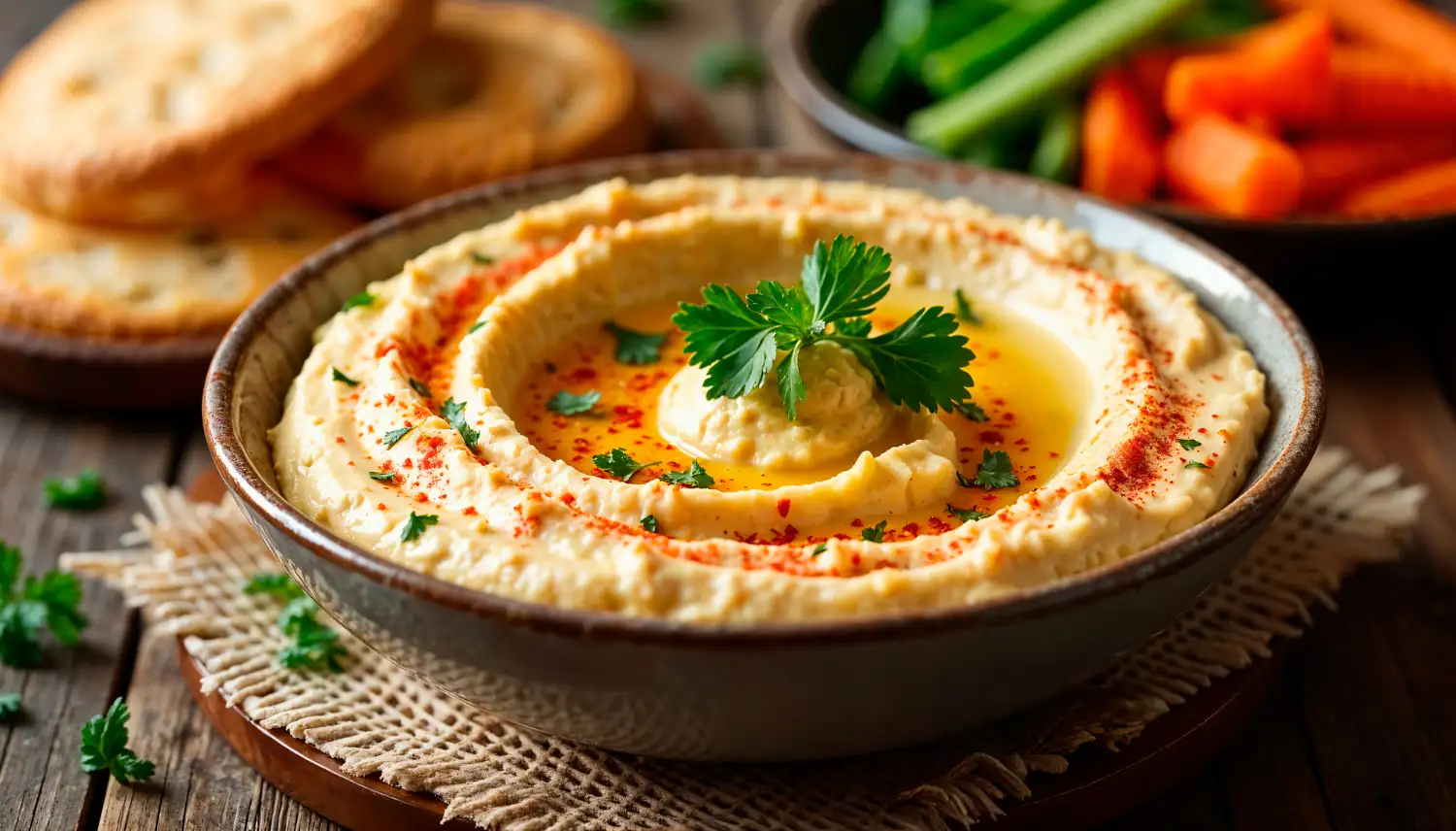
What Makes Restaurant-Style Hummus Different?
The best restaurant hummus is exceptionally smooth, light, and creamy. This texture comes from using quality chickpeas, blending thoroughly, and balancing ingredients like tahini, lemon juice, and garlic. A generous drizzle of olive oil and a few simple garnishes complete the dish.
Ingredients
Step 1: Prepare the Chickpeas
For extra-smooth hummus, use well-cooked chickpeas. If using canned chickpeas, rinse them thoroughly. Some cooks prefer removing the skins for an even creamier result, though this step is optional.
Step 2: Blend the Tahini and Lemon Juice
Add tahini and lemon juice to a food processor. Blend for about one minute until the mixture becomes light and creamy. This step helps create a smoother final texture.
Step 3: Add Garlic and Seasonings
Add the garlic, salt, and cumin. Blend again until the ingredients are fully incorporated and aromatic.
Step 4: Process the Chickpeas
Add the chickpeas and blend continuously. Scrape down the sides of the processor as needed. The mixture will begin to thicken and become smooth.
Step 5: Adjust the Texture
While blending, gradually add cold water or ice water, one tablespoon at a time. This helps create the fluffy, silky texture commonly found in restaurants.
Step 6: Taste and Fine-Tune
Taste the hummus and adjust the seasoning. Add more lemon juice for brightness, salt for flavor, or tahini for a richer taste if desired.
Serving Like a Restaurant
Spread the hummus onto a shallow serving plate using the back of a spoon. Create gentle swirls on the surface and drizzle with olive oil. Garnish with paprika, chopped parsley, whole chickpeas, or toasted pine nuts for an elegant presentation.
What to Serve with Hummus
Hummus pairs wonderfully with:
Storage Tips
Store homemade hummus in an airtight container in the refrigerator for up to four days. Stir before serving and add a small drizzle of olive oil if it becomes slightly thick after chilling.
Making restaurant-style hummus at home is surprisingly easy and requires only a handful of pantry staples. By blending the ingredients properly and using cold water for a silky finish, you can create a delicious, creamy dip that rivals your favorite restaurant version.
What Makes Restaurant-Style Hummus Different?
The best restaurant hummus is exceptionally smooth, light, and creamy. This texture comes from using quality chickpeas, blending thoroughly, and balancing ingredients like tahini, lemon juice, and garlic. A generous drizzle of olive oil and a few simple garnishes complete the dish. Ingredients
- 2 cups cooked chickpeas (or one 400g can, drained and rinsed)
- ¼ cup tahini
- 2 tablespoons fresh lemon juice
- 1 small garlic clove
- 2 tablespoons extra-virgin olive oil
- ½ teaspoon ground cumin (optional)
- ½ teaspoon salt, or to taste
- 2 to 4 tablespoons cold water or ice water
Step 1: Prepare the Chickpeas
For extra-smooth hummus, use well-cooked chickpeas. If using canned chickpeas, rinse them thoroughly. Some cooks prefer removing the skins for an even creamier result, though this step is optional.Step 2: Blend the Tahini and Lemon Juice
Add tahini and lemon juice to a food processor. Blend for about one minute until the mixture becomes light and creamy. This step helps create a smoother final texture. Step 3: Add Garlic and Seasonings
Add the garlic, salt, and cumin. Blend again until the ingredients are fully incorporated and aromatic.You may also like
- Chinese proverb of the day: "An inch of time cannot be bought with an inch of gold" - a timeless lesson on the one thing money can never replace
- “I felt like a princess”: Who was the man that made Akshata Murty's childhood so special?
- FROM DEHRADUN TO HOLLYWOOD: CONNECTING INDIA'S MEDIEVAL CRAFT TO THE WORLD
- From allergies to stomach upsets: 5 things one must keep in mind during a medical emergency while travelling
- Rain Check: The Monsoon Essentials Every Man Needs This Season
Step 4: Process the Chickpeas
Add the chickpeas and blend continuously. Scrape down the sides of the processor as needed. The mixture will begin to thicken and become smooth. Step 5: Adjust the Texture
While blending, gradually add cold water or ice water, one tablespoon at a time. This helps create the fluffy, silky texture commonly found in restaurants. Step 6: Taste and Fine-Tune
Taste the hummus and adjust the seasoning. Add more lemon juice for brightness, salt for flavor, or tahini for a richer taste if desired. Serving Like a Restaurant
Spread the hummus onto a shallow serving plate using the back of a spoon. Create gentle swirls on the surface and drizzle with olive oil. Garnish with paprika, chopped parsley, whole chickpeas, or toasted pine nuts for an elegant presentation.What to Serve with Hummus
Hummus pairs wonderfully with: - Warm pita bread
- Fresh cucumber and carrot sticks
- Bell pepper slices
- Falafel
- Grilled vegetables
- Wraps and sandwiches
Storage Tips
Store homemade hummus in an airtight container in the refrigerator for up to four days. Stir before serving and add a small drizzle of olive oil if it becomes slightly thick after chilling. Making restaurant-style hummus at home is surprisingly easy and requires only a handful of pantry staples. By blending the ingredients properly and using cold water for a silky finish, you can create a delicious, creamy dip that rivals your favorite restaurant version.






More from our partners


Loving Newspoint? Download the app now
