
World Environment Day 2026: How Many Trees Does One Person Need to Offset Their Carbon Footprint?

Every year, World Environment Day encourages people to think about their impact on the planet and explore ways to reduce it. One of the most common questions is: How many trees does a person need to plant to offset their carbon footprint ? While the answer is not exact, scientists and environmental organizations use average carbon emissions and tree carbon absorption rates to make reasonable estimates.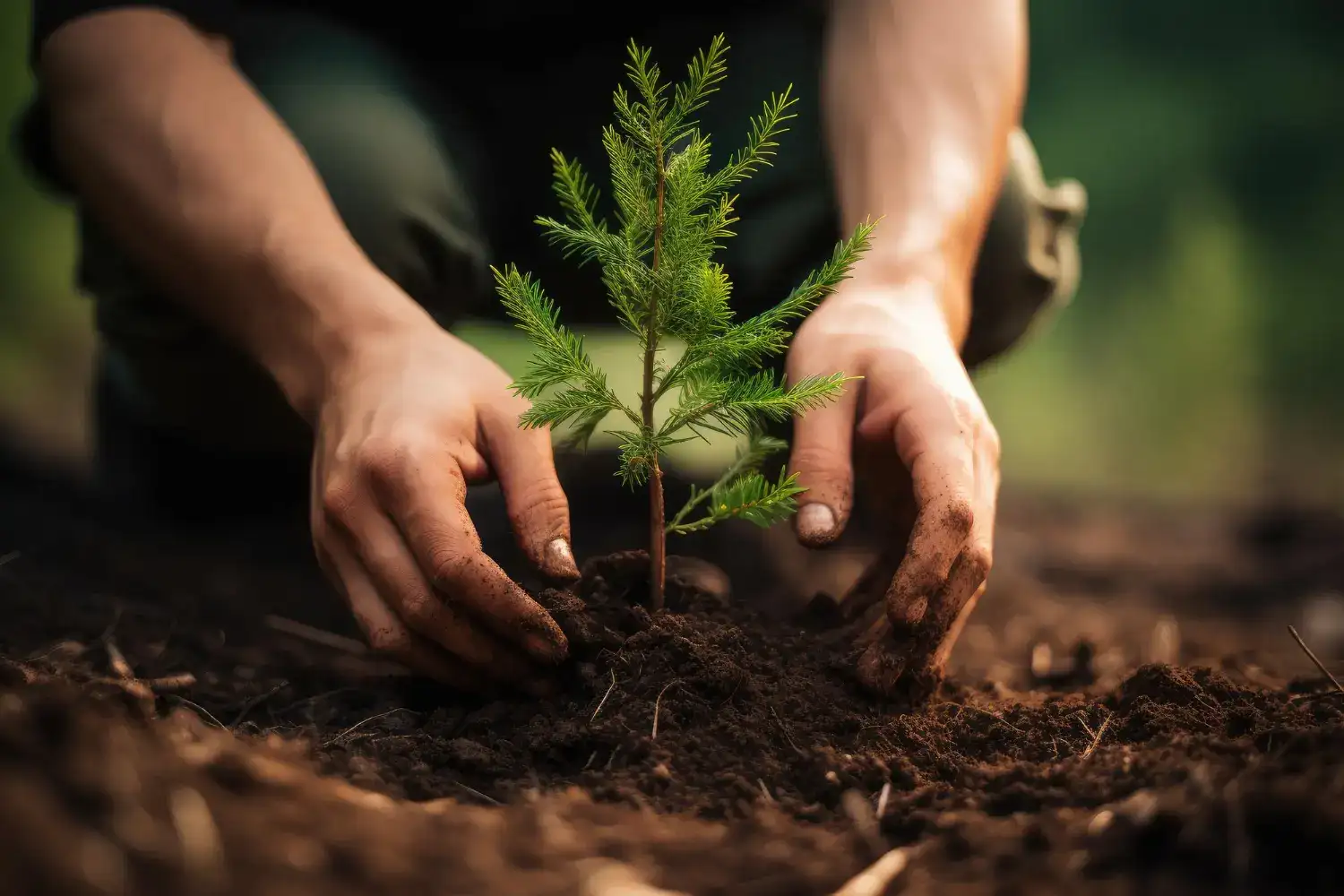
Understanding Your Carbon Footprint
A carbon footprint refers to the total amount of greenhouse gases, mainly carbon dioxide (CO₂), generated by a person's activities. These emissions come from transportation, electricity use, food consumption, shopping habits, and other daily activities.
The size of a carbon footprint varies greatly depending on where a person lives and their lifestyle.
How Much CO₂ Does a Tree Absorb?
A mature tree can absorb approximately 10 to 25 kilograms of CO₂ per year, depending on its species, age, climate, and growing conditions. For broad calculations, many experts use an average of around 20 kilograms of CO₂ absorbed annually by a mature tree.
However, newly planted trees absorb far less carbon during their early years. It can take decades for a tree to reach its full carbon-capturing potential.
The Global Average: Around 250 to 300 Trees
According to international emissions data, the average person worldwide generates roughly 4 to 5 tonnes of CO₂ annually.
If one mature tree absorbs about 20 kilograms of CO₂ each year, offsetting a global average carbon footprint would require approximately 250 to 300 mature trees.
This figure is often used as a broad global benchmark, though actual numbers vary depending on local conditions and individual lifestyles.
India: Fewer Trees Needed Than the Global Average
India's per-capita carbon emissions remain significantly lower than those of many developed countries. On average, an Indian citizen emits around 2 tonnes of CO₂ annually.
Using the same absorption estimate of 20 kilograms per tree per year, an average Indian would need roughly 100 mature trees to offset their annual carbon emissions.
While this number is lower than the global average, India's large population means collective action remains crucial for achieving climate goals.
USA and Other Developed Nations: Much Higher Numbers
Residents of high-income countries generally have much larger carbon footprints due to greater energy consumption, transportation use, and consumption patterns.
For example, the average American produces around 14 to 15 tonnes of CO₂ annually. Offsetting this amount would require approximately 700 to 750 mature trees.
Similar estimates apply to several developed nations where per-capita emissions remain substantially above the global average.
Why Planting Trees Alone Is Not Enough
Tree planting is an important environmental tool, but it is not a complete solution to climate change. Trees require land, water, and long-term protection to survive. In addition, carbon absorption occurs gradually over many years.
Experts emphasize that reducing emissions at the source is even more important. Using public transport, conserving electricity, reducing food waste, adopting renewable energy, and consuming responsibly can significantly lower a person's carbon footprint.
The Bigger Message of World Environment Day
The idea of planting hundreds of trees to offset one person's emissions highlights the scale of the climate challenge. Trees are powerful allies in the fight against global warming, but meaningful change also requires cleaner energy, sustainable lifestyles, and responsible consumption.
This World Environment Day 2026, planting a tree is a great start, but reducing emissions every day can make an even bigger difference for the planet's future.
Disclaimer: The information presented in this article is for general awareness and informational purposes only. NewsPoint does not independently verify the accuracy of the data. All figures, estimates, and statistics mentioned are based on publicly available online sources at the time of writing. Readers are advised to refer to official reports and research publications for the most up-to-date information.
Understanding Your Carbon Footprint
A carbon footprint refers to the total amount of greenhouse gases, mainly carbon dioxide (CO₂), generated by a person's activities. These emissions come from transportation, electricity use, food consumption, shopping habits, and other daily activities. The size of a carbon footprint varies greatly depending on where a person lives and their lifestyle.
How Much CO₂ Does a Tree Absorb?
A mature tree can absorb approximately 10 to 25 kilograms of CO₂ per year, depending on its species, age, climate, and growing conditions. For broad calculations, many experts use an average of around 20 kilograms of CO₂ absorbed annually by a mature tree. However, newly planted trees absorb far less carbon during their early years. It can take decades for a tree to reach its full carbon-capturing potential.
The Global Average: Around 250 to 300 Trees
According to international emissions data, the average person worldwide generates roughly 4 to 5 tonnes of CO₂ annually. If one mature tree absorbs about 20 kilograms of CO₂ each year, offsetting a global average carbon footprint would require approximately 250 to 300 mature trees.
This figure is often used as a broad global benchmark, though actual numbers vary depending on local conditions and individual lifestyles.
India: Fewer Trees Needed Than the Global Average
India's per-capita carbon emissions remain significantly lower than those of many developed countries. On average, an Indian citizen emits around 2 tonnes of CO₂ annually.You may also like
- Kidney Disease: Kidney disease will become the fifth leading cause of death by 2040, a frightening revelation in the Lancet report.
- Visceral Fat: Can a person who looks thin on the outside actually be fat on the inside? Learn why.
- Marriage Problems: Toxic in-laws are dangerous in reality, not in TV serials. Use these methods to deal with them.
- This sibling is likely to burn out before age 35, and the reason isn't pressure, but this one thing parents ask them to do
- The 3-Ingredient Lifesaver: How to Mix a Perfect WHO-Standard ORS at Home
Using the same absorption estimate of 20 kilograms per tree per year, an average Indian would need roughly 100 mature trees to offset their annual carbon emissions.
While this number is lower than the global average, India's large population means collective action remains crucial for achieving climate goals.
USA and Other Developed Nations: Much Higher Numbers
Residents of high-income countries generally have much larger carbon footprints due to greater energy consumption, transportation use, and consumption patterns. For example, the average American produces around 14 to 15 tonnes of CO₂ annually. Offsetting this amount would require approximately 700 to 750 mature trees.
Similar estimates apply to several developed nations where per-capita emissions remain substantially above the global average.
Why Planting Trees Alone Is Not Enough
Tree planting is an important environmental tool, but it is not a complete solution to climate change. Trees require land, water, and long-term protection to survive. In addition, carbon absorption occurs gradually over many years. Experts emphasize that reducing emissions at the source is even more important. Using public transport, conserving electricity, reducing food waste, adopting renewable energy, and consuming responsibly can significantly lower a person's carbon footprint.
The Bigger Message of World Environment Day
The idea of planting hundreds of trees to offset one person's emissions highlights the scale of the climate challenge. Trees are powerful allies in the fight against global warming, but meaningful change also requires cleaner energy, sustainable lifestyles, and responsible consumption. This World Environment Day 2026, planting a tree is a great start, but reducing emissions every day can make an even bigger difference for the planet's future.
Disclaimer: The information presented in this article is for general awareness and informational purposes only. NewsPoint does not independently verify the accuracy of the data. All figures, estimates, and statistics mentioned are based on publicly available online sources at the time of writing. Readers are advised to refer to official reports and research publications for the most up-to-date information.






More from our partners


Loving Newspoint? Download the app now
