
How Turtles Survive Under Frozen Lakes In Winter

Winter transforms lakes into thick sheets of ice, creating one of nature’s most extreme environments. Yet, surprisingly, many turtles survive beneath the frozen surface. The question is: what happens to turtles when lakes freeze solid, and how do they endure such harsh conditions?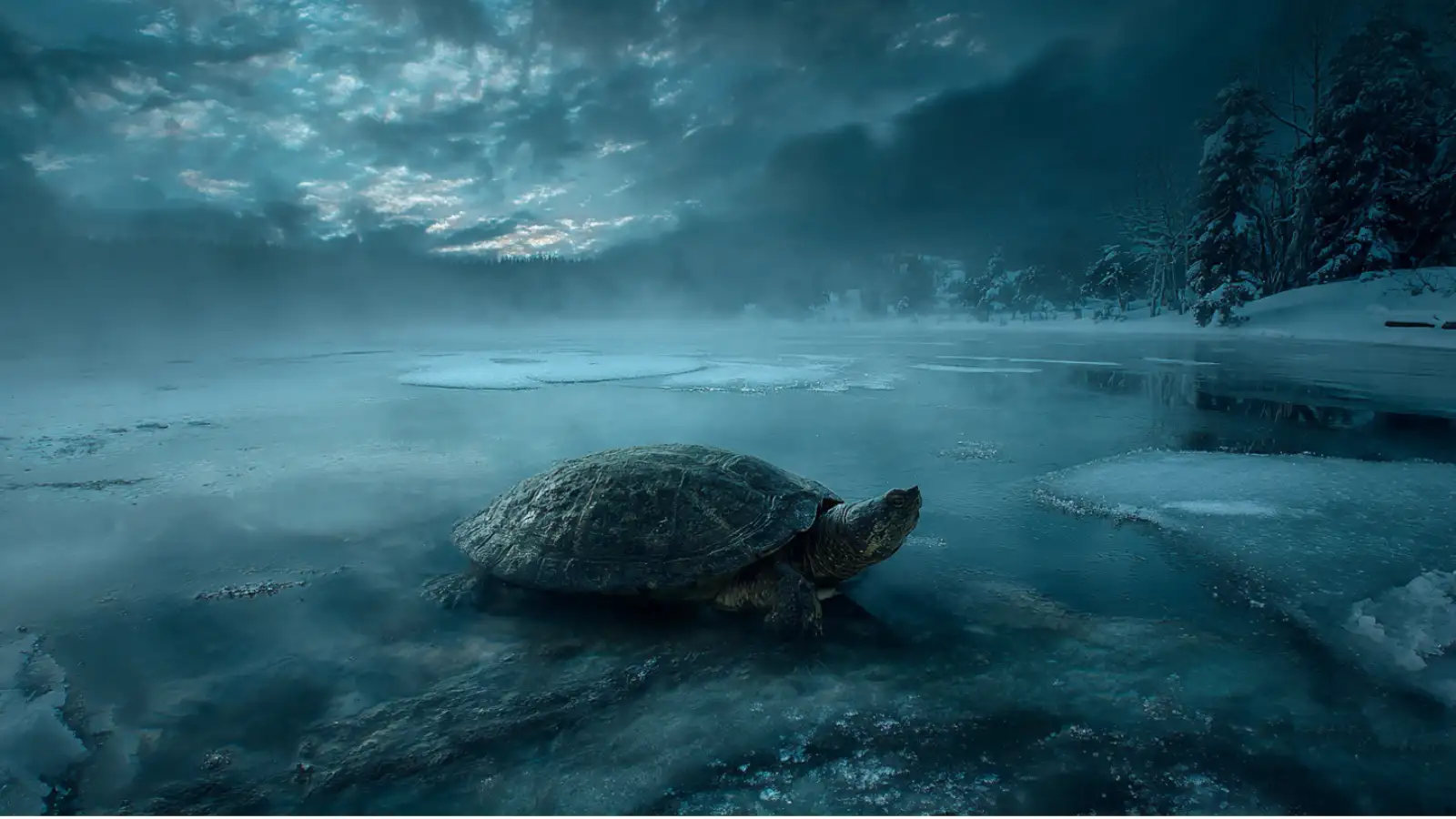
The answer lies in one of the most fascinating cold-blooded animal survival strategies in the natural world.
Rather than freezing solid, turtles settle at the bottom of the lake where temperatures remain just above freezing.
This remarkable adaptation allows turtles to survive for months without surfacing for air, making them one of the most resilient freshwater reptiles in winter conditions.
Read More: Why Nature Makes Male Octopuses Give Up Their Arm
However, this process produces lactic acid, which turtles neutralise using calcium carbonate from their shells and bones. This biological buffering system is a key part of reptile cold-weather adaptation science.
This behaviour is a crucial part of turtle hibernation in frozen lakes, also known as brumation.
This transition is one of the most impressive examples of seasonal reptile survival behaviour in nature.
Their ability to slow life processes to such an extreme level shows how powerful evolutionary adaptations in reptiles can be when responding to environmental challenges.
So, what happens to turtles when lakes freeze solid? They don’t freeze, flee, or die they slow down life itself. Through metabolic suppression, oxygen absorption through skin, and biochemical defences, turtles survive months under ice in a state of near-suspended animation. It is one of nature’s most remarkable examples of aquatic winter survival.
The answer lies in one of the most fascinating cold-blooded animal survival strategies in the natural world.
Do Turtles Freeze or Escape?
Unlike birds or mammals, turtles cannot simply migrate long distances when temperatures drop. Instead, many freshwater species remain in the same lake, even as it freezes over. Species such as painted turtles and snapping turtles rely on a unique form of aquatic winter survival adaptation to endure months of ice cover.Rather than freezing solid, turtles settle at the bottom of the lake where temperatures remain just above freezing.
How Turtles Survive Without Breathing
One of the most extraordinary aspects of turtle winter survival is their ability to drastically slow their metabolism. As oxygen levels in frozen lakes drop, turtles switch from normal breathing to absorbing small amounts of oxygen through their skin and throat lining, a process known as cloacal respiration.This remarkable adaptation allows turtles to survive for months without surfacing for air, making them one of the most resilient freshwater reptiles in winter conditions.
Read More: Why Nature Makes Male Octopuses Give Up Their Arm
The Role of “Supercooling” and Anaerobic Survival
When oxygen becomes extremely limited, turtles enter a state similar to suspended animation. Their heart rate slows to just a few beats per minute, and they rely on anaerobic metabolism, meaning they can survive without oxygen for long periods.However, this process produces lactic acid, which turtles neutralise using calcium carbonate from their shells and bones. This biological buffering system is a key part of reptile cold-weather adaptation science.
Why They Don’t Freeze Solid
Even when lakes freeze completely on the surface, the water at the bottom remains liquid due to thermal layering. Turtles position themselves in this slightly warmer zone, often burying themselves in mud. This prevents them from freezing and allows them to maintain minimal metabolic activity.This behaviour is a crucial part of turtle hibernation in frozen lakes, also known as brumation.
What Happens When Spring Arrives
As temperatures rise and ice melts, oxygen levels gradually return to normal. Turtles slowly reactivate their metabolism, emerging from their dormant state. They begin feeding, moving, and restoring full activity levels after months of near stillness.This transition is one of the most impressive examples of seasonal reptile survival behaviour in nature.
A Masterclass in Survival
The survival of turtles in frozen lakes highlights the incredible adaptability of wildlife. While freezing conditions would be fatal for most animals, turtles have evolved complex physiological systems to endure them.Their ability to slow life processes to such an extreme level shows how powerful evolutionary adaptations in reptiles can be when responding to environmental challenges.
So, what happens to turtles when lakes freeze solid? They don’t freeze, flee, or die they slow down life itself. Through metabolic suppression, oxygen absorption through skin, and biochemical defences, turtles survive months under ice in a state of near-suspended animation. It is one of nature’s most remarkable examples of aquatic winter survival.
Next Story