
How Woodpeckers Peck Trees Without Damaging Their Brains

Watching a woodpecker hammer away at a tree can leave anyone wondering how such a small bird withstands repeated, high-speed impacts. Some species peck thousands of times in a single day while searching for insects, excavating nesting cavities or communicating with other woodpeckers. For humans, similar forces could cause serious head injuries. Yet woodpeckers carry on without obvious signs of concussion. According to ornithologists and biomechanical researchers, this remarkable ability isn't due to a single feature but rather a combination of specialised adaptations that help reduce and manage the forces generated with every strike.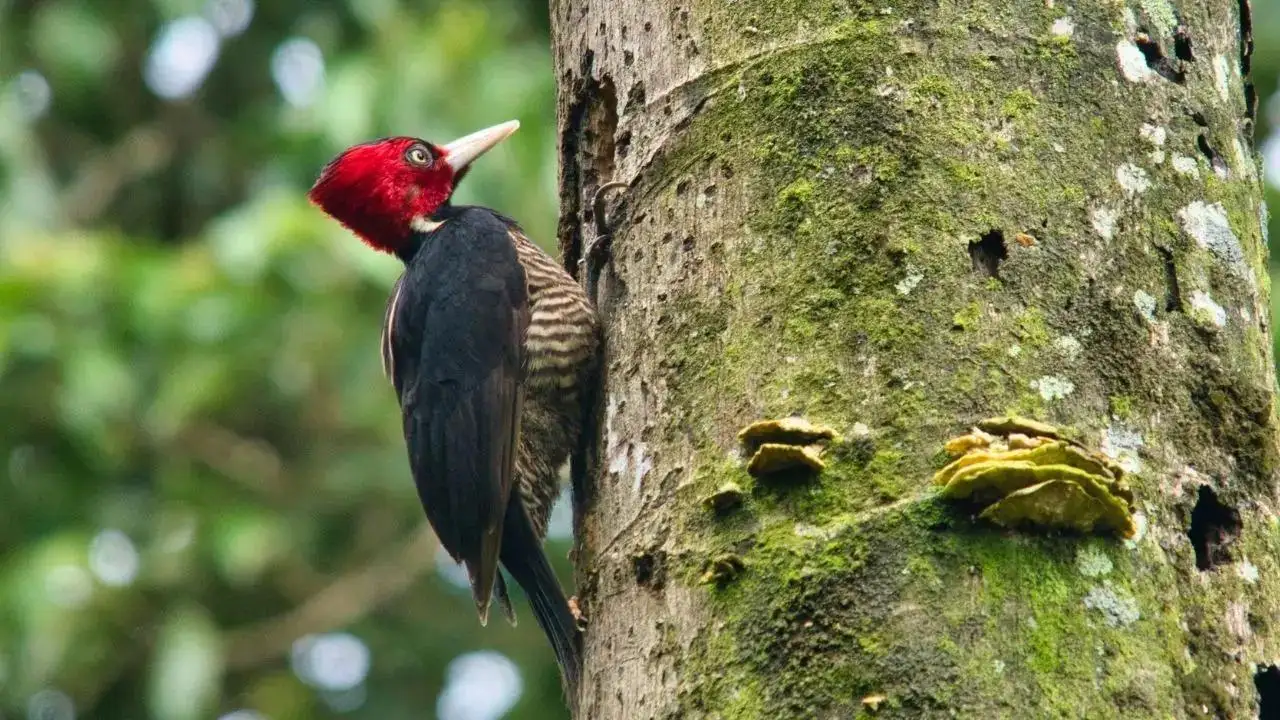
Between the beak and the brain are specialised tissues and a relatively small amount of cerebrospinal fluid, which limits excessive movement of the brain inside the skull during pecking. Together, these features help reduce mechanical stress caused by repeated impacts.
Scientists believe this structure not only supports the tongue during feeding but may also help distribute forces generated during pecking, although the exact extent of its protective role continues to be studied.
Strong neck muscles help guide each impact with precision, while their body remains firmly supported by stiff tail feathers and specially adapted feet that grip tree trunks securely.
Researchers continue to study these birds because their natural design could inspire improved protective equipment, including helmets and shock-absorbing materials. Woodpeckers remain one of nature's most fascinating examples of evolutionary engineering, demonstrating how specialised anatomy can solve challenges that would otherwise seem impossible.
A Skull Designed To Absorb Impact
One of the woodpecker's greatest advantages is the structure of its skull. According to researchers, the bones are arranged to distribute impact forces more efficiently than those of many other birds.Between the beak and the brain are specialised tissues and a relatively small amount of cerebrospinal fluid, which limits excessive movement of the brain inside the skull during pecking. Together, these features help reduce mechanical stress caused by repeated impacts.
You may also like
- Home Buying Tips: It's not just the price of the house; you may have to pay lakhs even after registration—know the full cost before buying.
- Pitbull fans shave their heads after record-breaking concert to win huge prize
- Major move by the Election Commission: SIR forms can now be submitted online from anywhere; casting a vote becomes easier.
- Alia Bhatt just wore a Banarasi saree with a twist, and it's unlike the usual festive drape
- Can Monsoon Weather Affect Your Oral Health? Signs, Risks, and Dental Care Tips
A Special Tongue Bone Plays A Role
Woodpeckers possess an unusually long tongue supported by the hyoid apparatus, a set of bones and cartilage that wraps around the back of the skull in many species before extending towards the beak.Scientists believe this structure not only supports the tongue during feeding but may also help distribute forces generated during pecking, although the exact extent of its protective role continues to be studied.
Precision Pecking Makes A Difference
It's not just anatomy that keeps woodpeckers safe. Their pecking technique is equally important. According to experts, the birds strike trees in a straight, controlled motion, minimising twisting forces that are more likely to cause injury.Strong neck muscles help guide each impact with precision, while their body remains firmly supported by stiff tail feathers and specially adapted feet that grip tree trunks securely.
Evolution's Remarkable Engineering
Rather than relying on a single protective feature, woodpeckers benefit from several adaptations working together. Their strong beaks, shock-managing skull structure, specialised tongue-support system and controlled pecking behaviour all contribute to their ability to withstand repeated impacts.Researchers continue to study these birds because their natural design could inspire improved protective equipment, including helmets and shock-absorbing materials. Woodpeckers remain one of nature's most fascinating examples of evolutionary engineering, demonstrating how specialised anatomy can solve challenges that would otherwise seem impossible.






Loving Newspoint? Download the app now
