
How Woodpeckers Peck Trees Without Damaging Their Brains

Watching a woodpecker hammer away at a tree can leave anyone wondering how such a small bird withstands repeated, high-speed impacts. Some species peck thousands of times in a single day while searching for insects, excavating nesting cavities or communicating with other woodpeckers. For humans, similar forces could cause serious head injuries. Yet woodpeckers carry on without obvious signs of concussion. According to ornithologists and biomechanical researchers, this remarkable ability isn't due to a single feature but rather a combination of specialised adaptations that help reduce and manage the forces generated with every strike.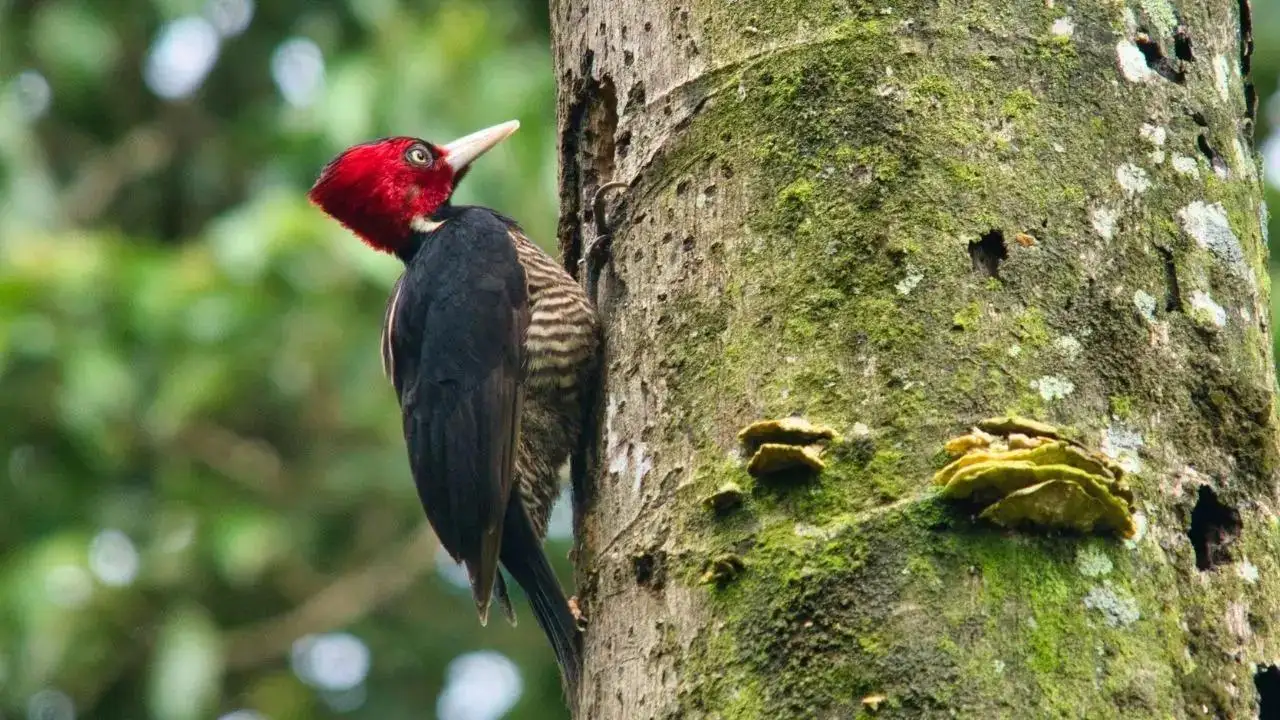
Between the beak and the brain are specialised tissues and a relatively small amount of cerebrospinal fluid, which limits excessive movement of the brain inside the skull during pecking. Together, these features help reduce mechanical stress caused by repeated impacts.
A Skull Designed To Absorb Impact
One of the woodpecker's greatest advantages is the structure of its skull. According to researchers, the bones are arranged to distribute impact forces more efficiently than those of many other birds.Between the beak and the brain are specialised tissues and a relatively small amount of cerebrospinal fluid, which limits excessive movement of the brain inside the skull during pecking. Together, these features help reduce mechanical stress caused by repeated impacts.