
In the 1970s, an Indian forest officer raised a tiger cub as his daughter and never recovered after she died


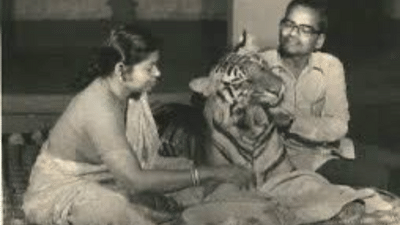
Some stories sound too strange to be true until you realise they're real. A tiger sleeping on a bed, paws resting on a man's chest, refusing food from anyone but two specific people who fed her with their own hands. That was Khairi, a Royal Bengal tigress raised not in a zoo or a circus, but inside the actual home of a forest officer in Odisha. And the man who raised her, Saroj Raj Choudhury , never really got over losing her.
How a stray cub ended up in a forest officer's houseThe story starts on 5 October 1974, when members of the Kharia tribal community, out gathering honey deep in the core area of Similipal Tiger Reserve , stumbled on an abandoned tiger cub near the Khairi river in Mayurbhanj district. Not knowing what else to do, they carried her straight to Saroj Raj Choudhury, who at the time was the founder and first Field Director of the Similipal Tiger Reserve. He named her Khairi, after the river where she'd been found, and what began as an emergency rescue slowly turned into something nobody quite expected.
A tiger that grew up as a family member, not a petChoudhury didn't cage her, and he didn't chain her either. Khairi grew up inside his official bungalow as what people close to the family later called a "free-living family member," alongside Choudhury's wife, Nihar Nalini Swain, who became her foster mother in every practical sense. She was hand-fed mutton and milk powder, and she reportedly refused to eat from anyone else's hands but theirs. She played with them the way any large, affectionate animal might.
The forest officer who turned love into serious scienceWhat makes this story more than just a heartwarming oddity is what Choudhury did alongside raising her. He wasn't just an animal lover indulging a soft spot, he was a trained wildlife conservationist who used his access to Khairi to document things about tiger behaviour that had never been recorded before, including insights into pheromones, mating patterns, and territoriality. He's also remembered as the pioneer behind India's pugmark census technique , the method used to count tigers by their paw prints, which formed the backbone of India's tiger census right up until camera traps took over in 2004. In 1977, he wrote it all down in a book called Khairi: The Beloved Tigress, a work that still holds value for researchers studying big cat behaviour today.
An attempt to send her back to the wild that didn't workChoudhury did try, more than once, to reintroduce Khairi into the forest so she could mate and live as a wild tigress. It never worked. Other tigers reportedly rejected her, likely because she carried the unmistakable scent of humans after years of living among them. Each time, she made her way back home. Whatever bond had formed between her and the Choudhury family, it seemed, couldn't simply be undone by returning her to where she biologically belonged.
A rabid dog, a tragic ending, and a man who never recoveredThe story turns heartbreaking in 1981. A rabid dog broke into her enclosure and bit her, and Khairi contracted rabies. She fought the illness for months before her condition became severe enough that doctors recommended euthanasia. Khairi was put to sleep. He never really recovered from it. He died just two years later, in 1983, the same year the Government of India honoured him posthumously with the Padma Shri for his contribution to wildlife conservation. His wife Nihar Nalini Swain passed away in 2021 at the age of 88.
So this wasn't ever really a story about a man keeping a tiger as a pet in the way that phrase usually gets used. It was closer to a man and his wife raising a daughter who happened to be one of the most dangerous animals on the planet, and somehow, for seven strange and quietly extraordinary years, that arrangement worked.
How a stray cub ended up in a forest officer's houseThe story starts on 5 October 1974, when members of the Kharia tribal community, out gathering honey deep in the core area of Similipal Tiger Reserve , stumbled on an abandoned tiger cub near the Khairi river in Mayurbhanj district. Not knowing what else to do, they carried her straight to Saroj Raj Choudhury, who at the time was the founder and first Field Director of the Similipal Tiger Reserve. He named her Khairi, after the river where she'd been found, and what began as an emergency rescue slowly turned into something nobody quite expected.
A tiger that grew up as a family member, not a petChoudhury didn't cage her, and he didn't chain her either. Khairi grew up inside his official bungalow as what people close to the family later called a "free-living family member," alongside Choudhury's wife, Nihar Nalini Swain, who became her foster mother in every practical sense. She was hand-fed mutton and milk powder, and she reportedly refused to eat from anyone else's hands but theirs. She played with them the way any large, affectionate animal might.
The forest officer who turned love into serious scienceWhat makes this story more than just a heartwarming oddity is what Choudhury did alongside raising her. He wasn't just an animal lover indulging a soft spot, he was a trained wildlife conservationist who used his access to Khairi to document things about tiger behaviour that had never been recorded before, including insights into pheromones, mating patterns, and territoriality. He's also remembered as the pioneer behind India's pugmark census technique , the method used to count tigers by their paw prints, which formed the backbone of India's tiger census right up until camera traps took over in 2004. In 1977, he wrote it all down in a book called Khairi: The Beloved Tigress, a work that still holds value for researchers studying big cat behaviour today.
An attempt to send her back to the wild that didn't workChoudhury did try, more than once, to reintroduce Khairi into the forest so she could mate and live as a wild tigress. It never worked. Other tigers reportedly rejected her, likely because she carried the unmistakable scent of humans after years of living among them. Each time, she made her way back home. Whatever bond had formed between her and the Choudhury family, it seemed, couldn't simply be undone by returning her to where she biologically belonged.
A rabid dog, a tragic ending, and a man who never recoveredThe story turns heartbreaking in 1981. A rabid dog broke into her enclosure and bit her, and Khairi contracted rabies. She fought the illness for months before her condition became severe enough that doctors recommended euthanasia. Khairi was put to sleep. He never really recovered from it. He died just two years later, in 1983, the same year the Government of India honoured him posthumously with the Padma Shri for his contribution to wildlife conservation. His wife Nihar Nalini Swain passed away in 2021 at the age of 88.
So this wasn't ever really a story about a man keeping a tiger as a pet in the way that phrase usually gets used. It was closer to a man and his wife raising a daughter who happened to be one of the most dangerous animals on the planet, and somehow, for seven strange and quietly extraordinary years, that arrangement worked.
Next Story